The New York Times ran 12,817 words on lunar nuclear reactors and still missed the fuel supply story
A Neutron Bytes critique of the NYT's 4 October 2026 lunar reactor piece finds the paper buried the technical facts - HALEU supply, TRISO fuel safety, and wireless power - under a cascade of risk warnings.
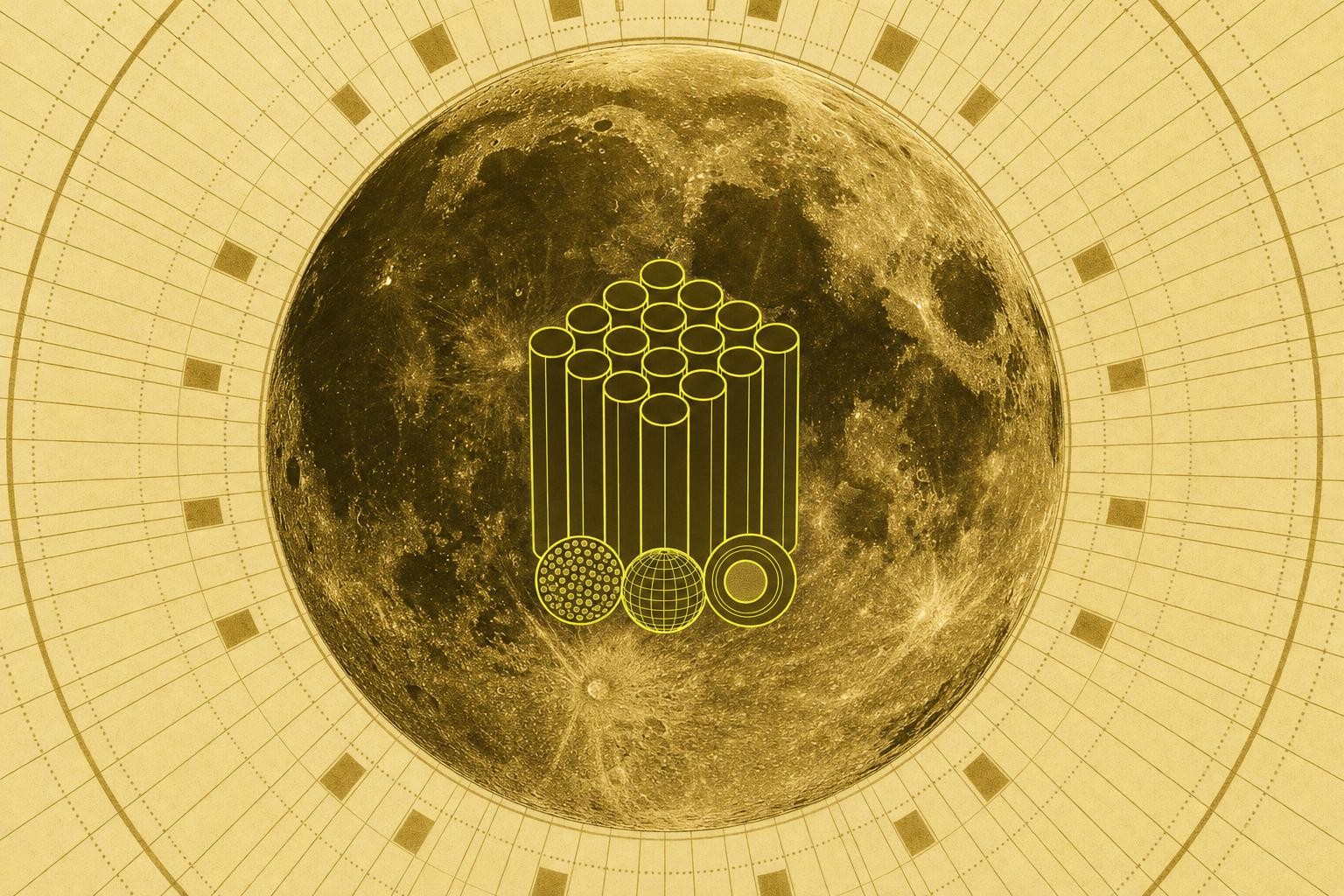
On 4 October 2026, the New York Times published a front-page story by Selam Gebrekidan headlined "Superpowers Racing to Put Nuclear Reactors on Moon," with a subhead warning of "Radioactive Risks From a Rocket Mishap or Lunar Meltdown."[1] The piece ran to 12,817 words and framed the U.S.-Russia-China competition for a lunar power foothold almost entirely through the lens of catastrophe.[1] The nuclear engineering community's response has been pointed: the risks are real, but the paper left out most of the technical story.
What the NYT got right
The strategic stakes are not in dispute. The U.S. and China both want to establish a moon base, search for frozen water at the lunar south pole, and use it as a staging point for deeper solar system missions, and both regard a nuclear reactor as the centerpiece of that ambition. Russia has an agreement with China to have a lunar reactor operational by 2036; NASA wants to beat that by several years.[1]
The Times correctly noted that HALEU - high-assay low-enriched uranium, enriched to between 5% and 19.75% U-235 - is currently in short supply in the U.S., and that Russia has historically held the upper hand on inventories.[1] The paper also quoted Edwin Lyman of the Union of Concerned Scientists, who told the Times that introducing nuclear power into a space race "could take a potentially more dangerous turn."[1]
Former DOE Assistant Secretary of Nuclear Energy Katy Huff, now department chair at the University of Wisconsin-Madison, did get the closing line: "It is entirely possible to put a reactor on the moon."[1] But that quote appeared at the very end of a very long piece that had spent most of its length in the other direction.
What the paper missed
The Neutron Bytes critique, published 10 October 2026, identifies three substantive gaps.[1]
The HALEU supply chain already exists. The Times flagged the fuel shortage without reporting what DOE has done about it. According to Neutron Bytes:[1]
- DOE has obligated up to $2.7 billion to establish a base supply chain for HALEU in the form of uranium hexafluoride (UF6)
- An additional $900 million was awarded to Centrus to produce UF6
- A further $800 million has been awarded in fuel fabrication contracts
Three U.S. microreactor developers - Antares, Radiant, and Valar - have already reached zero-power criticality milestones using HALEU TRISO fuel.[1] In September 2026, NASA awarded Antares Nuclear a contract for a ground-based demonstration of a nuclear propulsion rocket using HALEU fuel, aimed at eventual flight qualification.[1]
The fuel itself is designed not to melt. The paper's meltdown framing rests on an implicit assumption that a lunar microreactor would behave like a large light-water reactor. It would not. TRISO (Tristructural Isotropic) particle fuel consists of a uranium-based kernel coated in multiple layers of carbon and ceramic, engineered to retain fission products under all foreseeable adverse conditions - including the loss of active cooling.[1] Power ratings for the lunar system will be measured in kilowatts, well below 10 MW, in solid fuel form.[1] NASA's Fission Surface Power program has specified HALEU enriched to 19.75% U-235 for all Phase 1 contractor designs, which include teams led by Intuitive Machines/X-energy and Lockheed Martin.
Wireless power transmission eliminates the cable risk. The Times illustrated its coverage with a conceptual image of a cable running from reactor to crew habitat. NASA is actively working to eliminate that cable. The agency is developing wireless electrical power transmission in the vacuum of space, which would allow the reactor to be sited well away from crew quarters - removing both the radiation exposure concern and the need to ship heavy cable spools from Earth.[1]
The actual worst-case scenario
Nuclear engineers who have looked at this closely reach a different conclusion than the Times subhead implies. A realistic worst-case is not a Chernobyl-style explosion but a reactor that simply stops working - cutting power to a lunar base during the two-week lunar night, when solar panels produce nothing and temperatures drop sharply. The failure risk is an engineering and reliability problem, not primarily a radiological one.
NASA's Fission Surface Power program targets a minimum 20 kW reactor for lunar surface deployment by 2030, with ambitions scaling to 40-100 kWe depending on mission requirements. DOE will supply approximately 400 kg of HALEU for both ground demonstrations and the flight reactor, under a memorandum of understanding signed with NASA on 13 January 2026.
What to watch
The near-term signal is whether NASA's contractor downselect - required within one year of the White House initiative - produces a design that can meet the 2030 launch window. The HALEU supply chain is now funded; the open question is whether fuel fabrication throughput and launch vehicle readiness converge on the same schedule. Coverage that treats the fuel shortage as an unresolved problem is already out of date.
The images and texts on this page were created with the help of AI.
Related
 Markets & Policy
Beacon of Hope food pantry in Marshall, NC switches on first microgrid in state's $5 million Helene resilience program
Beacon of Hope Food Pantry in Marshall, NC has energised the first of 26 planned microgrids in a $5 million state program - but domestic-content rules are narrowing which sites can follow.
13 Oct 2026 Markets & Policy
Bannock County, Idaho set to vote this fall on reversing its 2024 utility-scale renewables ban
Bannock County commissioners will vote this fall on a new ordinance that would lift a March 2024 ban on utility-scale solar and wind - and add nuclear - after Hecate Energy pulled out entirely.
13 Oct 2026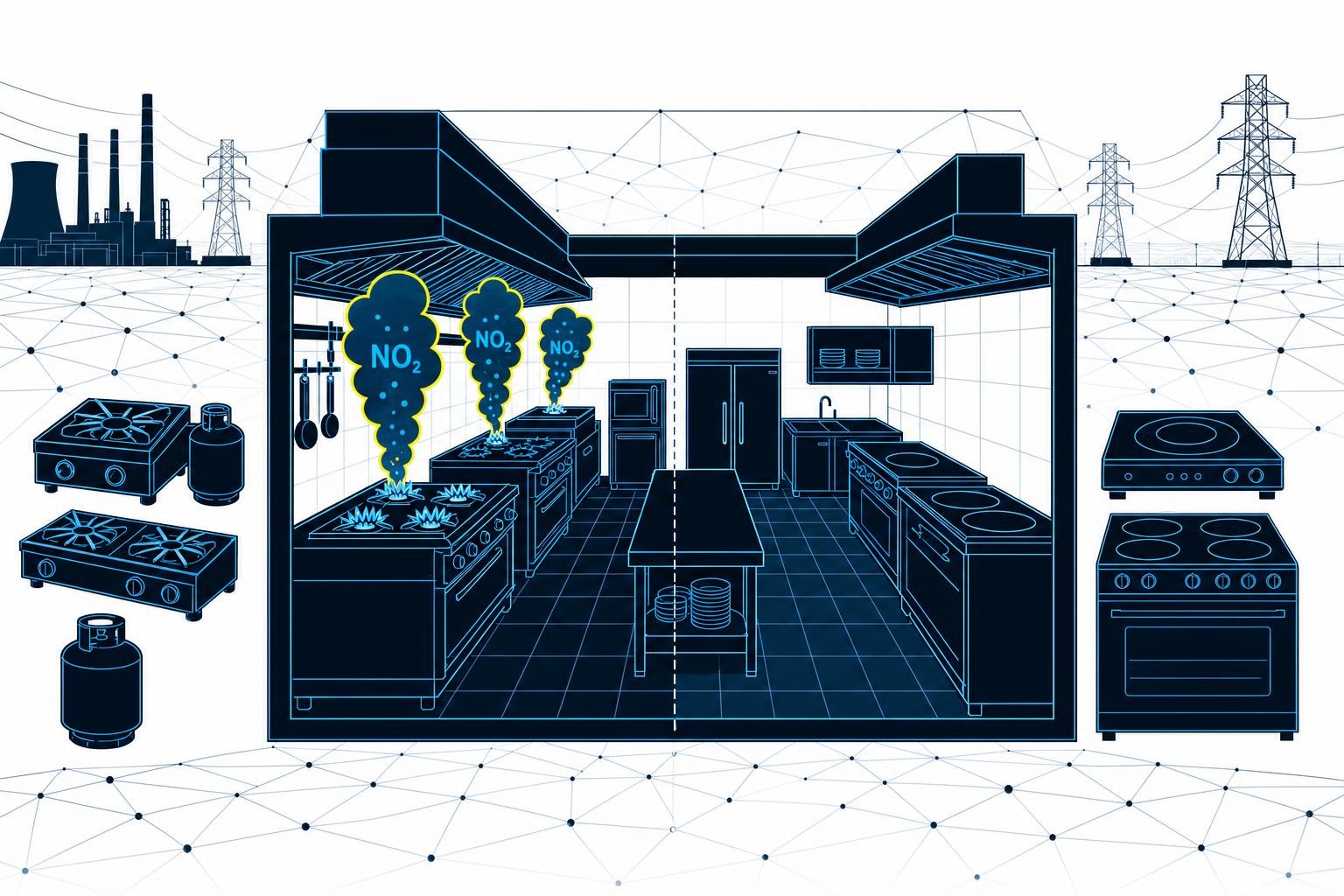 Markets & Policy
First U.S. study of real commercial kitchens finds gas and propane appliances push NO₂ above EPA limits in 70% of sites
A peer-reviewed study published 6 October 2026 in Environmental Research Letters finds gas and propane commercial kitchens routinely exceed EPA nitrogen dioxide limits, while all-electric kitchens do not.
13 Oct 2026