Bannock County, Idaho set to vote this fall on reversing its 2024 utility-scale renewables ban
Bannock County commissioners will vote this fall on a new ordinance that would lift a March 2024 ban on utility-scale solar and wind - and add nuclear - after Hecate Energy pulled out entirely.
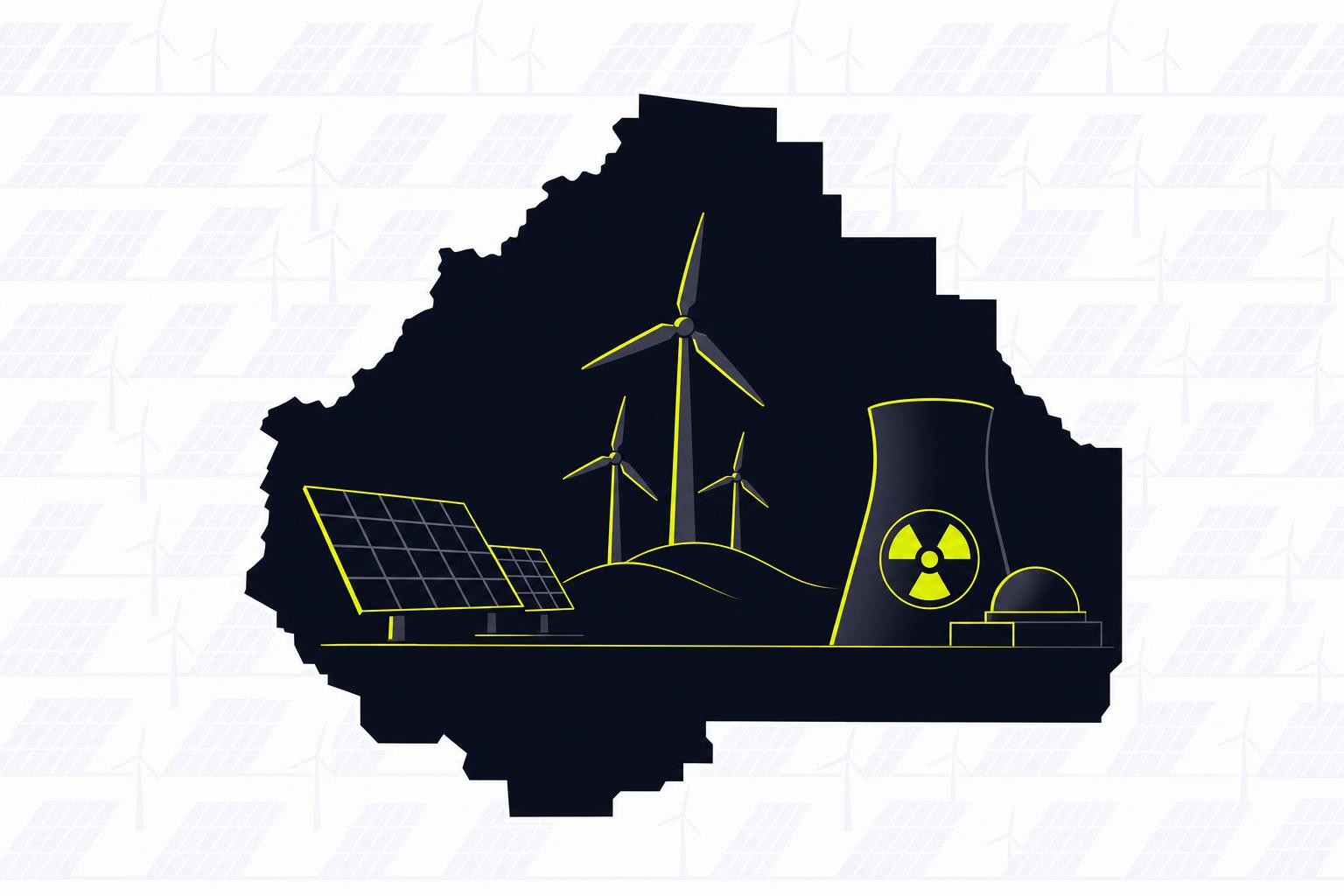
Bannock County, Idaho's three-person commission is set to vote this fall on an ordinance that would overturn a ban on utility-scale solar and wind development passed in March 2024 by a 2-1 vote[1]. The proposed replacement language would permit solar, wind, and nuclear energy in the county[1], a reversal driven by lost developer contracts, foregone tax revenue, and a state-level demand crunch that is only deepening.
How the ban passed - and who is now trying to undo it
The original moratorium was initiated by Commissioner Jeff Hough himself in late 2023, after he learned that Chicago-based Hecate Energy and Moab, Utah-based Balanced Rock Power were approaching landowners about solar projects near the Populus substation in south Bannock County[1]. Hough wanted a regulatory framework in place before developers moved; what he got instead was a permanent ban.
The ordinance passed by a 2-1 vote. Hough was the lone dissenter. Since that vote in March 2024, Hough has become chair of the county commission and has dedicated himself to overturning the ordinance.
The community split sharply. Opponents organized ahead of a February 2024 public hearing, and the meeting attracted such interest that it was moved from the county courthouse to a local high school auditorium in south Bannock County. More than two dozen speakers, nearly all from south Bannock County, showed up; the vast majority testified in opposition to solar.
The cost of the ban so far
The consequences for landowners and the county's tax base have been concrete.
- One landowner signed a one-year contract with Hecate in 2023 to option about 400 acres for solar development. Hecate declined to renew in 2024 because of the ordinance and has since pulled out of the county altogether.
- Balanced Rock's proposed Harmon Solar Project - a 300 MW solar facility with a 1,200 MWh on-site battery energy storage system - has stalled because of the ban[1].
- One landowner's contract with Balanced Rock expires at the end of this year; he believes renewal hinges on the county overturning the ban, and fears the company could follow Hecate out of the county.
The fiscal argument is straightforward. In 2024, renewable energy projects in neighboring Power County and Bingham County generated $909,000 and $639,000 in property tax revenue, respectively[1]. Counties with bans in place, one official wrote, "will watch the projects - and the money - go elsewhere."
Idaho's demand problem makes the timing acute
The state-level energy picture adds urgency. Idaho Power's 2025 Integrated Resource Plan projects that peak demand will grow by nearly 1,000 MW in the five years from 2026 to 2031[1], driven by population growth, data centers, and industrial expansion. Idaho Power projects that electricity demand over the next five years will equal the total growth experienced over the previous four decades combined.
In 2025, nearly one in four U.S. counties had some kind of ban, moratorium, or impediment to clean energy development, up from 15% of counties in 2023[1]. More than 60% of counties with bans are rural, according to a Daily Yonder and Canary Media analysis of data from USA Today and the Sabin Center for Climate Change Law at Columbia University. Bucking this national trend and reversing the ban would put Bannock County back in play at a moment when Idaho needs all the energy it can get.
Nuclear as the political bridge
Opposition to solar in south Bannock County has not softened. In December 2025, volunteer fire departments in Downey and Lava Hot Springs sent letters to the county commissioners warning that they were unprepared to fight battery fires and would need special equipment and training to do so.
The inclusion of nuclear in the proposed ordinance appears designed to bring skeptics along. A January 2026 Bannock County survey drew more than 700 responses, with 90% of respondents indicating favorable views toward nuclear energy[1]. Some clean energy advocates are optimistic that support for nuclear energy could help overturn the ban.
The commission has not set a specific vote date. Whether the two commissioners who backed the 2024 ban will support the new language - or whether the nuclear provision is enough to shift the political calculus - is the question to watch as the fall hearing schedule takes shape.
The images and texts on this page were created with the help of AI.
Related
 Markets & Policy
Beacon of Hope food pantry in Marshall, NC switches on first microgrid in state's $5 million Helene resilience program
Beacon of Hope Food Pantry in Marshall, NC has energised the first of 26 planned microgrids in a $5 million state program - but domestic-content rules are narrowing which sites can follow.
13 Oct 2026 Markets & Policy
First U.S. study of real commercial kitchens finds gas and propane appliances push NO₂ above EPA limits in 70% of sites
A peer-reviewed study published 6 October 2026 in Environmental Research Letters finds gas and propane commercial kitchens routinely exceed EPA nitrogen dioxide limits, while all-electric kitchens do not.
13 Oct 2026 Storage
Marinus Link turns first sod at Heybridge as Tasmania's 750 MW Bass Strait cable enters construction
Construction has formally begun on Marinus Link's 750 MW HVDC interconnector after a sod-turning ceremony at Heybridge, Tasmania on 2 October 2026, backed by AU$5 billion in public finance.
13 Oct 2026