Marinus Link turns first sod at Heybridge as Tasmania's 750 MW Bass Strait cable enters construction
Construction has formally begun on Marinus Link's 750 MW HVDC interconnector after a sod-turning ceremony at Heybridge, Tasmania on 2 October 2026, backed by AU$5 billion in public finance.
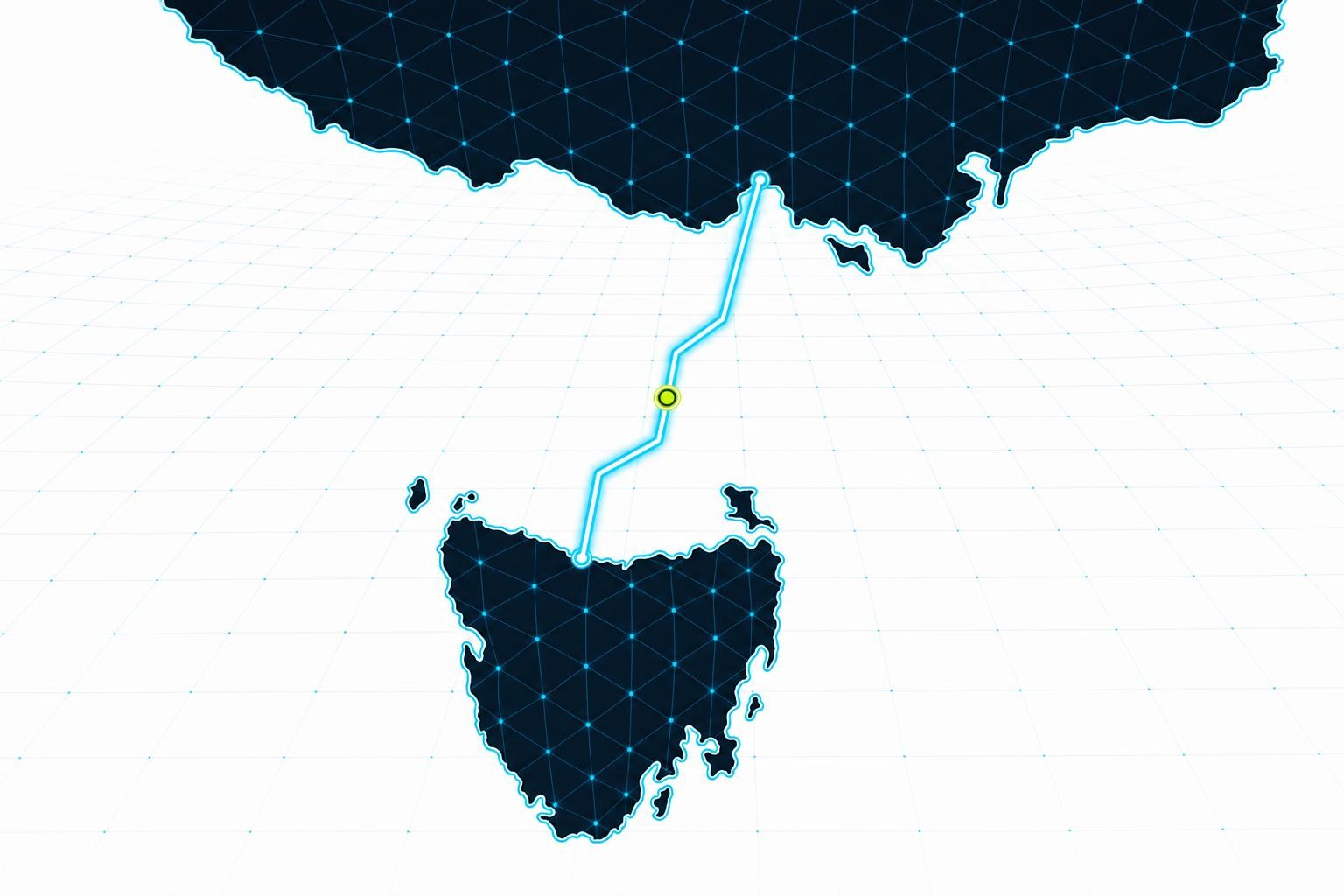
Construction has formally begun on Stage 1 of the Marinus Link project after government, business and community leaders gathered at Heybridge in North West Tasmania on 2 October 2026 for an official sod-turning ceremony[1]. The event marks the transition from approvals and financing into active civil and electrical works on what will be a 750 MW high-voltage direct current (HVDC) interconnector stretching 345 km between Tasmania and Victoria's Latrobe Valley.
What is being built
Project Marinus comprises two interdependent components. The first is Marinus Link itself - a 255 km subsea cable crossing Bass Strait from Heybridge near Burnie to Waratah Bay on Victoria's south coast, then 90 km underground through Gippsland to the Latrobe Valley. The second is the North West Transmission Developments (NWTD), an upgrade of Tasmania's north-west transmission network running from Palmerston to Burnie that will increase capacity and enable connection to the new cable.
Stage 1 of the NWTD will cover 130 km and is due in service by 2030. Active works have already started between Sheffield and Burnie, including access tracks, fencing, tower foundations and works at the Sheffield Substation. On the Marinus Link side, cable and converter technology manufacturing and construction activities will ramp up into 2027, beginning at the Heybridge and Hazelwood North converter stations, the Sandy Point shore crossing, and along the underground cable route in Gippsland.
The interconnector is designed as a two-way link. It will allow Tasmania to import cheap mainland solar and wind energy to conserve water in its dams, then export dispatchable hydro power back to the mainland when prices are high - the operational logic that underpins the broader Battery of the Nation concept.
Financing and cost
Financial close for Marinus Link Stage 1 was reached in September 2025, with the Clean Energy Finance Corporation (CEFC) committing AU$3.8 billion in concessional debt through the Rewiring the Nation fund. The CEFC followed that in May 2026 with a further AU$1.2 billion commitment to the NWTD, enabling that component to also reach financial close.
The three governments - federal, Victorian and Tasmanian - hold equity stakes of 49%, 33.3% and 17.7% respectively, with Tasmania's contribution capped at AU$103.5 million. Total Stage 1 costs stand at approximately:
- AU$3.89 billion for the Marinus Link cable and converter stations
- AU$1.14 billion for the North West Transmission Developments
- A AU$346 million federal government grant applied directly to reduce customer charges
Marinus Link's own analysis forecasts wholesale electricity price reductions of AU$15 per MWh in Tasmania and AU$17 per MWh in Victoria compared to a no-project scenario, with households in both states expected to save AU$25-AU$36 annually once the project is operational.
Battery of the Nation context
Marinus Link is the critical enabling infrastructure for Hydro Tasmania's Battery of the Nation programme. Tasmania currently holds approximately 27% of Australia's total freshwater dam storage capacity, with more than 2,600 MW of installed hydro capacity across 30 power stations and more than 50 major dams. The existing Basslink interconnector - a 500 MW HVDC link to Victoria - is the island's sole connection to the National Electricity Market.
The first 750 MW Marinus cable unlocks flexibility in the existing hydro portfolio and opens potential for capacity upgrades, including at the Tarraleah scheme. A second 750 MW cable, if sanctioned, would enable a new long-duration pumped hydro project at Lake Cethana: 750 MW with 20 hours of storage. Hydro Tasmania has identified between 1,500 MWh and 3,500 MWh of pumped hydro potential across the state that the Battery of the Nation programme could develop.
Stage 2 of Marinus Link — the second 750 MW cable bringing total interconnector capacity to 1,500 MW — has not yet received a final investment decision. The Lake Cethana pumped hydro project is contingent on Stage 2 proceeding.
What to watch
The project's completion target is late 2030, with commissioning expected in 2030-31. 119 businesses and suppliers have already been engaged across Project Marinus, including 59 from North and North West Tasmania. The near-term milestones to track are the notice to proceed to head contractors for the NWTD civil works, ramp-up of converter station construction at Heybridge and Hazelwood North through 2027, and any government signal on a timeline for a Stage 2 investment decision - the trigger that would unlock the Lake Cethana pumped hydro project and the full Battery of the Nation storage ambition.
The images and texts on this page were created with the help of AI.
Related
 Markets & Policy
Beacon of Hope food pantry in Marshall, NC switches on first microgrid in state's $5 million Helene resilience program
Beacon of Hope Food Pantry in Marshall, NC has energised the first of 26 planned microgrids in a $5 million state program - but domestic-content rules are narrowing which sites can follow.
13 Oct 2026 Markets & Policy
Bannock County, Idaho set to vote this fall on reversing its 2024 utility-scale renewables ban
Bannock County commissioners will vote this fall on a new ordinance that would lift a March 2024 ban on utility-scale solar and wind - and add nuclear - after Hecate Energy pulled out entirely.
13 Oct 2026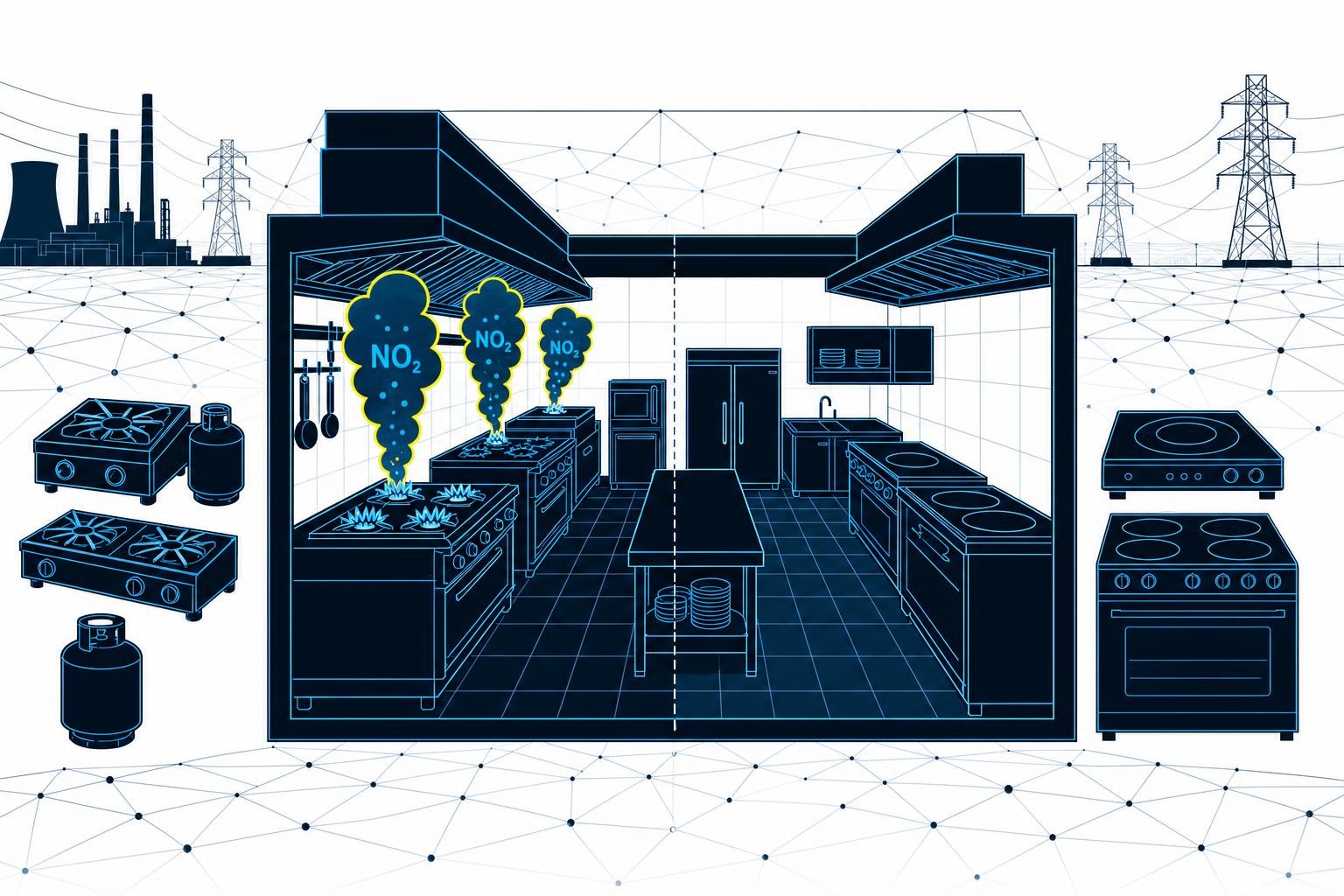 Markets & Policy
First U.S. study of real commercial kitchens finds gas and propane appliances push NO₂ above EPA limits in 70% of sites
A peer-reviewed study published 6 October 2026 in Environmental Research Letters finds gas and propane commercial kitchens routinely exceed EPA nitrogen dioxide limits, while all-electric kitchens do not.
13 Oct 2026