Section 232 tariffs trigger two US aluminum smelter restarts, but the power arithmetic still does not add up
Two US aluminum smelter restarts announced in 2026 will add more than 20% to primary output, but electricity costs and Missouri's large-load tariff remain structural ceilings on any broader revival.
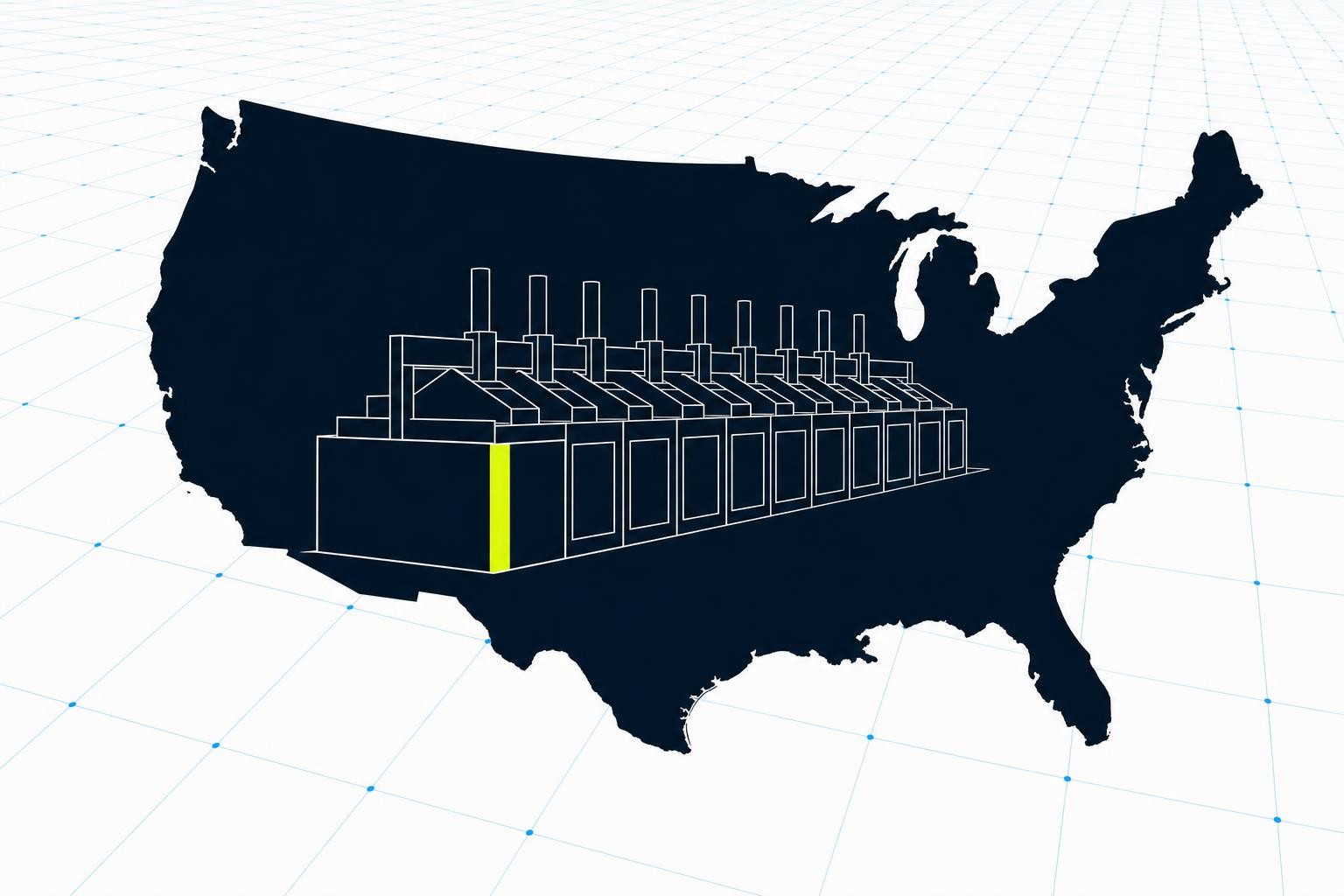
Two US primary aluminum smelters are coming back online in 2026, the clearest sign yet that the Trump administration's Section 232 tariffs have shifted the industry's investment calculus. But the structural barrier that hollowed out American smelting over four decades - electricity cost - has not moved, and in some states it has quietly gotten worse[1].
What is restarting, and why
On 1 July 2026, Magnitude 7 Metals announced it would restart potline one at its Marston, Missouri smelter before the end of the year, adding approximately 75,000 metric tons of annual production[1]. The facility had been fully idled since early 2024, when the company cited low aluminum prices and high energy costs. Owner David Kaplan attributed the reversal directly to the administration's 50% Section 232 aluminum tariff.
Combined with Century Aluminum's earlier restart of idled capacity at its Mt. Holly smelter in South Carolina, the two restarts are expected to increase US primary aluminum output by more than 20%. That is a meaningful number against a very low base: the US currently has only four active primary smelters, producing roughly 700,000 to 900,000 tonnes per year - down from more than 4.65 million tonnes across 33 sites in 1980.
The demand backdrop is also shifting. A global aluminum supply deficit is expected to worsen in 2026 following damage to major Middle Eastern smelters and disruptions in the Strait of Hormuz[1]. At the same time, grid build-out is driving domestic demand for transformers, cables, and other aluminum-intensive electrical equipment[1].
The power problem has not gone away
Tariffs create a price umbrella; they do not solve the underlying cost structure. Aluminum smelting requires electricity costs at or below roughly $40/MWh on a 10-20 year contract to be economically competitive, according to the Aluminum Association. A single smelter consumes approximately 11 TWh of electricity annually - comparable to the annual consumption of a city the size of Boston or Nashville.
The gap between that threshold and current market rates is wide. Industrial electricity in states with idled smelting capacity ran from $65.50/MWh in Kentucky to $82.40/MWh in Indiana in 2023, according to Aluminum Association data. And the competition for available grid capacity has intensified: technology companies are committing upward of $115/MWh for power at AI data centers, nearly three times the price at which smelting is viable.
Century Aluminum's Mt. Holly restart was made possible by a power contract extension with Santee Cooper through 2031 - a legacy arrangement that most idled sites cannot replicate. The Hawesville, Kentucky smelter remains curtailed precisely because no equivalent deal is available.
Missouri's large-load tariff adds a new friction point
The Magnitude 7 restart faces a complication that did not exist when the plant last operated. Missouri adopted a large-load electricity tariff in 2025 requiring major power users to help cover the costs of grid infrastructure upgrades needed to support their demand[1]. The policy was designed with data centers in mind - companies that can absorb the added cost as a rounding error on capital budgets running into the billions.
For an aluminum smelter operating on margins set by a commodity price and a fixed power contract ceiling, the same tariff is a direct hit to project economics[1]. Magnitude 7 has not disclosed how it plans to power the facility once it reopens, and environmental groups have noted that the restart announcement did not address compliance with Missouri's sulfur dioxide reduction plan[1]. New Madrid County recorded the worst air quality in the United States before the smelter idled, according to 2019 EPA data.
The greenfield test: Oklahoma Primary Aluminum
The most consequential indicator of whether the US aluminum revival has structural legs is not either restart - it is the proposed Oklahoma Primary Aluminum joint venture between Emirates Global Aluminium and Century Aluminum. The $4-6 billion project at Inola, Oklahoma would be the first new US primary aluminum smelter since 1980 and is designed to produce up to 750,000 metric tons annually, more than doubling current US output.
Construction is targeted for late 2026, with first metal by end of decade. But the project remains contingent on a power deal that has not yet been signed. EGA and Public Service Company of Oklahoma are in advanced negotiations, and Oklahoma has committed more than $275 million in state incentives including discounted power rates. The math still requires a long-term contract at a price that most US utilities are not currently offering to industrial customers.
- The Aluminum Association estimates current US renewable PPAs run $50-60/MWh - above the smelter viability threshold.
- Oklahoma's wind and gas mix gives it a better starting position than most states, but the contract terms remain unresolved.
- EGA has stated explicitly that construction is contingent on securing "a competitive long-term" power deal.
The two 2026 restarts demonstrate that tariff protection can tip the economics for existing, partially depreciated facilities with legacy power arrangements. Whether that logic extends to a $5 billion greenfield project - and whether the US grid can accommodate another 11 TWh of near-constant industrial load in a market where data centers are outbidding every other buyer - is the question the Oklahoma deal will answer.
The images and texts on this page were created with the help of AI.
Related
 Storage
ESS Tech begins Bridge sodium-ion rollout backed by 8.5 GWh Alsym supply LOI and 500 MWh Juniper deployment agreement
ESS Tech has started market rollout of its Bridge sodium-ion BESS, underpinned by an 8.5 GWh Alsym Energy supply LOI and a 500 MWh+ Juniper Energy deployment agreement, as Q2 revenue fell to $73,000.
15 Aug 2026 Markets & Policy
Campbell and Geyer study in Science finds scrapping a working gas car for an EV cuts 16-year emissions by up to 58%
A study published in Science by UC Santa Cruz and UCSB researchers finds that replacing a gas vehicle with an EV as early as year one cuts lifecycle carbon emissions by up to 58% over 16 years.
15 Aug 2026 Renewables
Vikram Solar inaugurates 6 GW module plant in Tamil Nadu, lifting total capacity to 15.5 GW
Vikram Solar has inaugurated a 6 GW solar PV module plant at Gangaikondan, Tamil Nadu, raising its total manufacturing capacity to 15.5 GW and setting the stage for full vertical integration.
15 Aug 2026