Campbell and Geyer study in Science finds scrapping a working gas car for an EV cuts 16-year emissions by up to 58%
A study published in Science by UC Santa Cruz and UCSB researchers finds that replacing a gas vehicle with an EV as early as year one cuts lifecycle carbon emissions by up to 58% over 16 years.
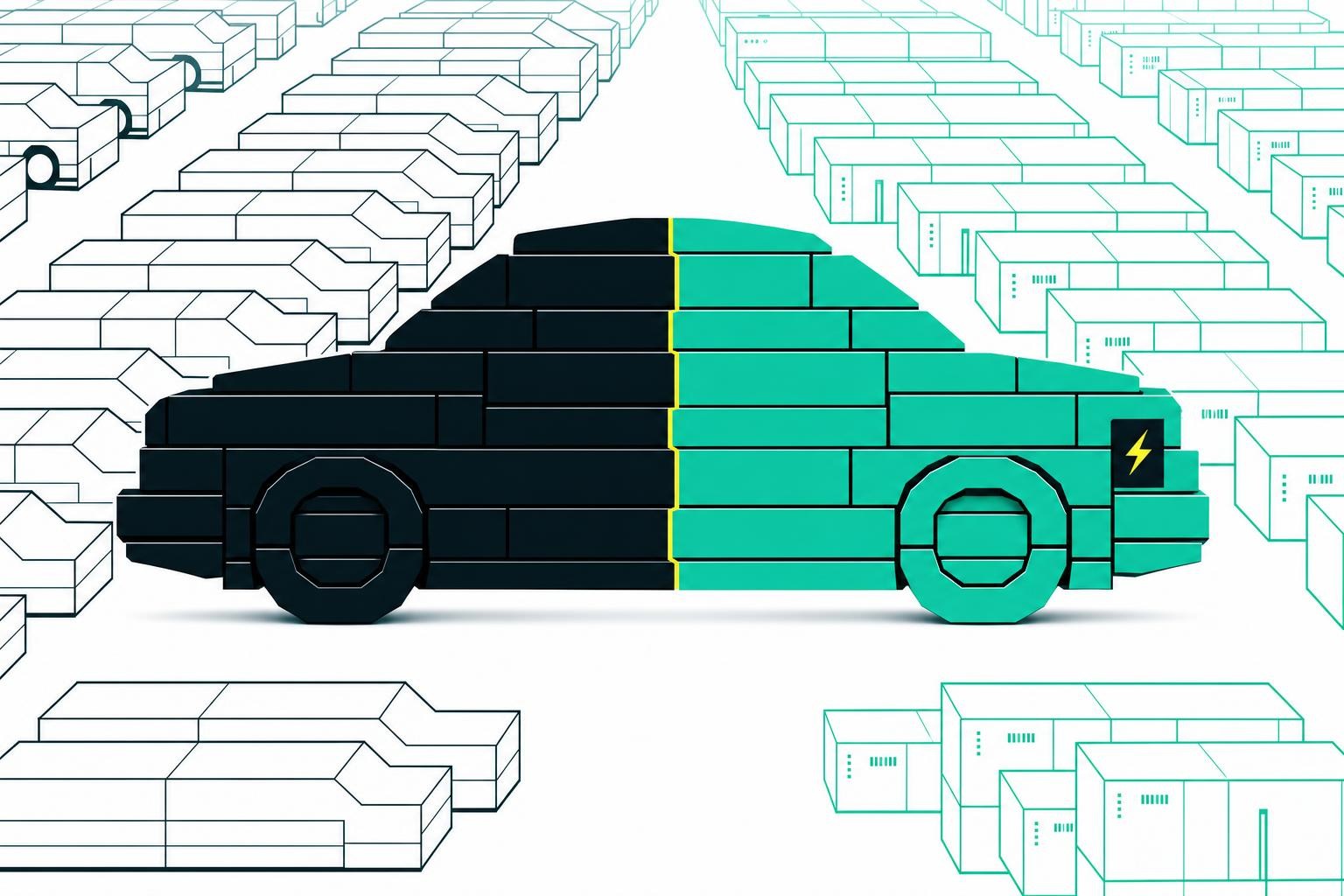
A study published in the journal Science and led by UC Santa Cruz environmental scientist Elliott Campbell and UC Santa Barbara industrial ecologist Roland Geyer finds that retiring a working gasoline vehicle in favor of a battery electric vehicle as early as possible - even in its first year - cuts lifecycle carbon emissions by up to 58% over a 16-year period compared with driving the gas car to the end of its useful life[1].
The finding directly addresses the most persistent objection to early EV adoption: that the carbon embedded in manufacturing a new battery electric vehicle offsets the emissions saved by not burning gasoline.
What the study modelled
Campbell and Geyer examined carbon emissions across more than 400 internal combustion engine and battery electric vehicle models, varying vehicle efficiencies, grid electricity sources, annual mileage, battery sizes, and EV manufacturing emissions[1]. They then calculated the emissions difference that results from retiring a gas vehicle at year one, year four, year eight, or at the end of its roughly 16-year useful life.
Their results showed that:
- Climate benefits were greatest when the gas vehicle was retired at year one, yielding the 58% reduction figure.
- Even retiring a gas car mid-life produced meaningful net savings.
- The EV remained the lower-emissions option across all scenarios tested, regardless of grid mix.
"Replacing an internal-combustion vehicle with a battery electric vehicle almost always reduces greenhouse gas emissions," co-author Roland Geyer said, as quoted in the UCSB press release accompanying the paper.
Why the timing question matters
Prior lifecycle studies established that manufacturing and driving battery electric vehicles produces substantially fewer carbon emissions than internal combustion engine vehicles. The harder question - whether it makes climate sense to scrap a still-functional gas car rather than wait for it to wear out - had not been resolved at scale across a wide model range.
Campbell developed the study after interviewing people about their EV perceptions and finding that the manufacturing carbon question was a recurring barrier to switching[1]. The new analysis is designed to answer it quantitatively rather than anecdotally.
The grid dimension
The study's findings carry a direct implication for power sector planning. Transportation is the largest source of direct greenhouse gas emissions in the United States, accounting for 28% of total U.S. GHG emissions in 2022, with light-duty vehicles responsible for 57% of that sector total. Accelerating EV adoption at the pace the study recommends would pull forward a substantial increase in residential and commercial charging demand.
A separate analysis published in the Proceedings of the National Academy of Sciences in 2025 found that the net effect of increased EV adoption on power system emissions drops below the level of tailpipe emissions from displaced gasoline vehicles across all scenarios after 2026, and reaches an order of magnitude below those of displaced gasoline vehicles by 2032 - provided grid decarbonization continues on its current trajectory.
What to watch
The study arrives as the One Big Beautiful Bill has curtailed EV tax credits, narrowing the financial window for early vehicle retirement that Campbell's own framing depends on. Whether the emissions case is strong enough to sustain consumer switching without the subsidy backstop is the next empirical question the power sector will need to answer - because the load growth projections embedded in utility IRPs across the country assume it is.
The images and texts on this page were created with the help of AI.
Related
 Markets & Policy
Section 232 tariffs trigger two US aluminum smelter restarts, but the power arithmetic still does not add up
Two US aluminum smelter restarts announced in 2026 will add more than 20% to primary output, but electricity costs and Missouri's large-load tariff remain structural ceilings on any broader revival.
15 Aug 2026 Storage
ESS Tech begins Bridge sodium-ion rollout backed by 8.5 GWh Alsym supply LOI and 500 MWh Juniper deployment agreement
ESS Tech has started market rollout of its Bridge sodium-ion BESS, underpinned by an 8.5 GWh Alsym Energy supply LOI and a 500 MWh+ Juniper Energy deployment agreement, as Q2 revenue fell to $73,000.
15 Aug 2026 Renewables
Vikram Solar inaugurates 6 GW module plant in Tamil Nadu, lifting total capacity to 15.5 GW
Vikram Solar has inaugurated a 6 GW solar PV module plant at Gangaikondan, Tamil Nadu, raising its total manufacturing capacity to 15.5 GW and setting the stage for full vertical integration.
15 Aug 2026