ESS Tech begins Bridge sodium-ion rollout backed by 8.5 GWh Alsym supply LOI and 500 MWh Juniper deployment agreement
ESS Tech has started market rollout of its Bridge sodium-ion BESS, underpinned by an 8.5 GWh Alsym Energy supply LOI and a 500 MWh+ Juniper Energy deployment agreement, as Q2 revenue fell to $73,000.
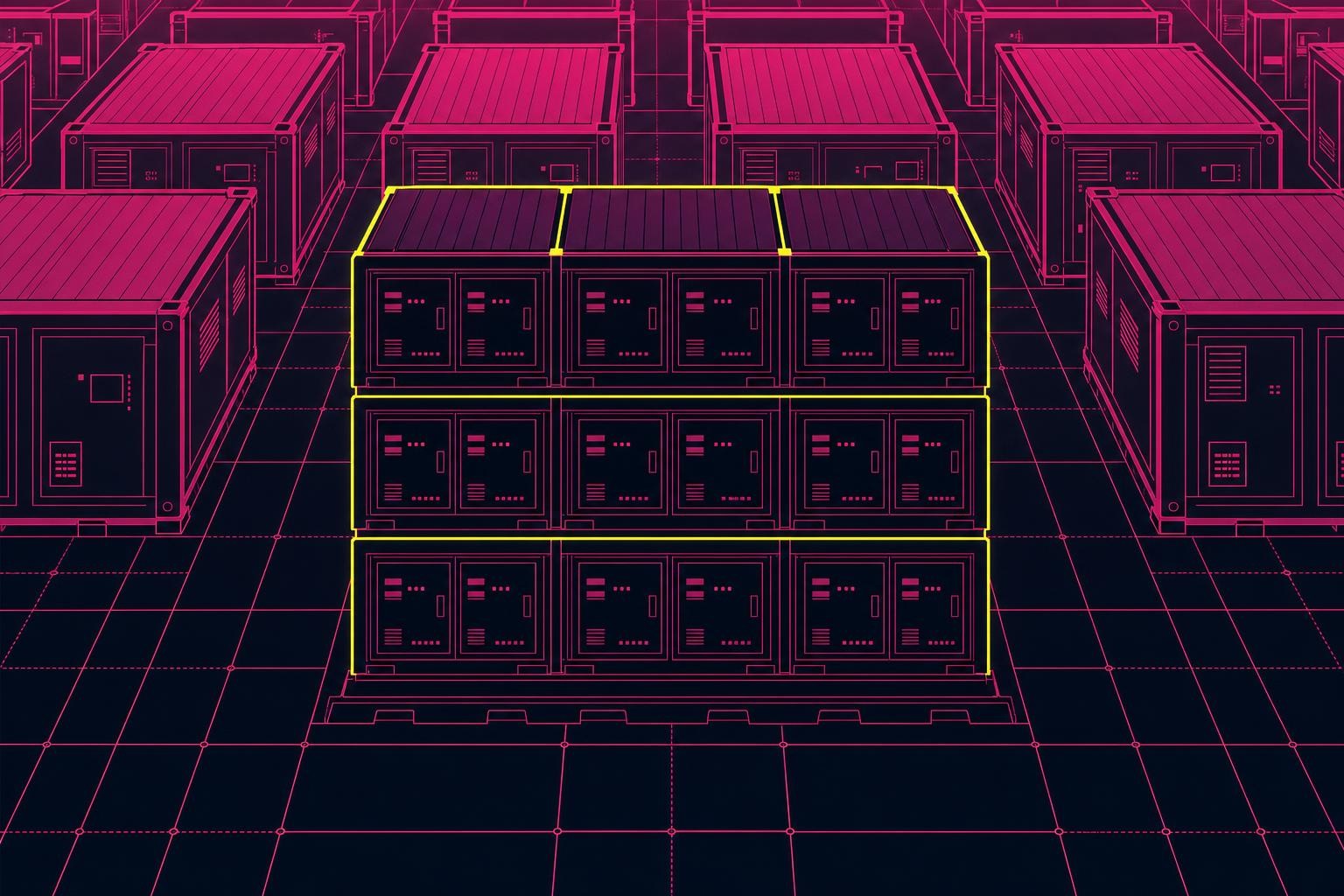
ESS Tech (NYSE: GWH) began the market rollout of its Bridge modular sodium-ion battery energy storage system after the close of Q2 2026, with module-level hardware built and initial charge-discharge testing under way[1]. The company disclosed the milestone alongside its 11 August financial results, which showed a net loss of US$15.6 million for the quarter ended 30 June 2026, up 41% from US$11.1 million in the prior-year period[1].
The supply agreement: 8.5 GWh of U.S.-made cells
The technology underpinning Bridge comes from Alsym Energy, a U.S. sodium-ion startup. ESS signed a letter of intent with Alsym to add 8.5 GWh of U.S.-made sodium-ion cells and modules to its portfolio, extending its non-lithium platform into short- and medium-duration applications historically served by lithium-ion systems.
Alsym's chemistry is the differentiating claim. Alsym employs a proprietary sodium iron phosphate pyrophosphate (NFPP) cathode material called NFPP+, which the company claims offers best-in-class energy density with no risk of thermal runaway. The chemistry uses earth-abundant materials - sodium, iron, and hard carbon - with no cobalt, nickel, or manganese required, and operates from -40°C to 60°C with passive cooling only.
That operating range is central to ESS's market pitch. Management positioned sodium-ion as a critical solution for AI data centers due to its wide operating temperature range, which it says handles GPU-driven power spikes better than lithium-ion chemistries.
The FEOC angle matters for U.S. procurement. The Alsym LOI gives ESS the opportunity to supply a fully U.S.-manufactured system free of Foreign Entity of Concern concerns and able to take advantage of U.S. tax credits for itself and its customers.
The deployment LOI: 10 MW/80 MWh in California as the anchor
On 22 July 2026, ESS signed a separate letter of intent with Juniper Energy, a California-based renewables developer. The agreement covers the deployment of 500 MWh or more of sodium-ion battery energy storage systems. The arrangement has two layers:
- An initial 10 MW / 80 MWh project in California, targeted for commercial operation in 2027, which would deploy the Bridge system alongside an ESS energy management system[1]
- A longer-term procurement framework under which Juniper has expressed intent to procure 500 MWh or more of ESS BESS across multiple projects
ESS identified early-stage commercial opportunities approaching $1 billion within roughly seven weeks of signing the Alsym LOI. The Juniper agreement is the first of those opportunities converting into a signed commercial framework with defined projects and deployment timelines.
Revenue collapse and the financial gap to bridge
The strategic pivot is happening against a stark financial backdrop. Revenue fell to just US$73,000 in Q2 2026, down from US$2.4 million in the prior-year period - a 97% decline, reflecting the wind-down of legacy iron flow battery contracts. First-half 2026 operating expenses fell 12% year-over-year and operating cash burn dropped 27%. ESS also repaid $37 million of a $40 million promissory note with Yorkville during the quarter, reducing near-term debt pressure.
The Bridge system has not yet been deployed commercially or validated by customers in real-world conditions, and the letters of intent with Juniper and Alsym are non-binding and may not result in definitive agreements or revenue. Management acknowledged the opportunities are early-stage and unconverted.
What to watch
The first operational Bridge system is targeted for the end of 2026[1]. Whether ESS can convert the Juniper 10 MW/80 MWh California project into a signed contract - and begin cell deliveries from Alsym - will be the clearest near-term test of whether the sodium-ion pivot translates into revenue. The company also disclosed a non-binding letter of intent for a business combination with an undisclosed private energy company, with a definitive agreement targeted for September 2026 and close by year-end, at an implied combined enterprise value of approximately $515 million.
The images and texts on this page were created with the help of AI.
Related
 Markets & Policy
Section 232 tariffs trigger two US aluminum smelter restarts, but the power arithmetic still does not add up
Two US aluminum smelter restarts announced in 2026 will add more than 20% to primary output, but electricity costs and Missouri's large-load tariff remain structural ceilings on any broader revival.
15 Aug 2026 Markets & Policy
Campbell and Geyer study in Science finds scrapping a working gas car for an EV cuts 16-year emissions by up to 58%
A study published in Science by UC Santa Cruz and UCSB researchers finds that replacing a gas vehicle with an EV as early as year one cuts lifecycle carbon emissions by up to 58% over 16 years.
15 Aug 2026 Renewables
Vikram Solar inaugurates 6 GW module plant in Tamil Nadu, lifting total capacity to 15.5 GW
Vikram Solar has inaugurated a 6 GW solar PV module plant at Gangaikondan, Tamil Nadu, raising its total manufacturing capacity to 15.5 GW and setting the stage for full vertical integration.
15 Aug 2026