Tariffs are reviving US aluminum smelting, but the power problem has not gone away
Section 232 tariffs have triggered the first US smelter restarts in years, but electricity costs and competition from data centers remain the industry's structural ceiling.
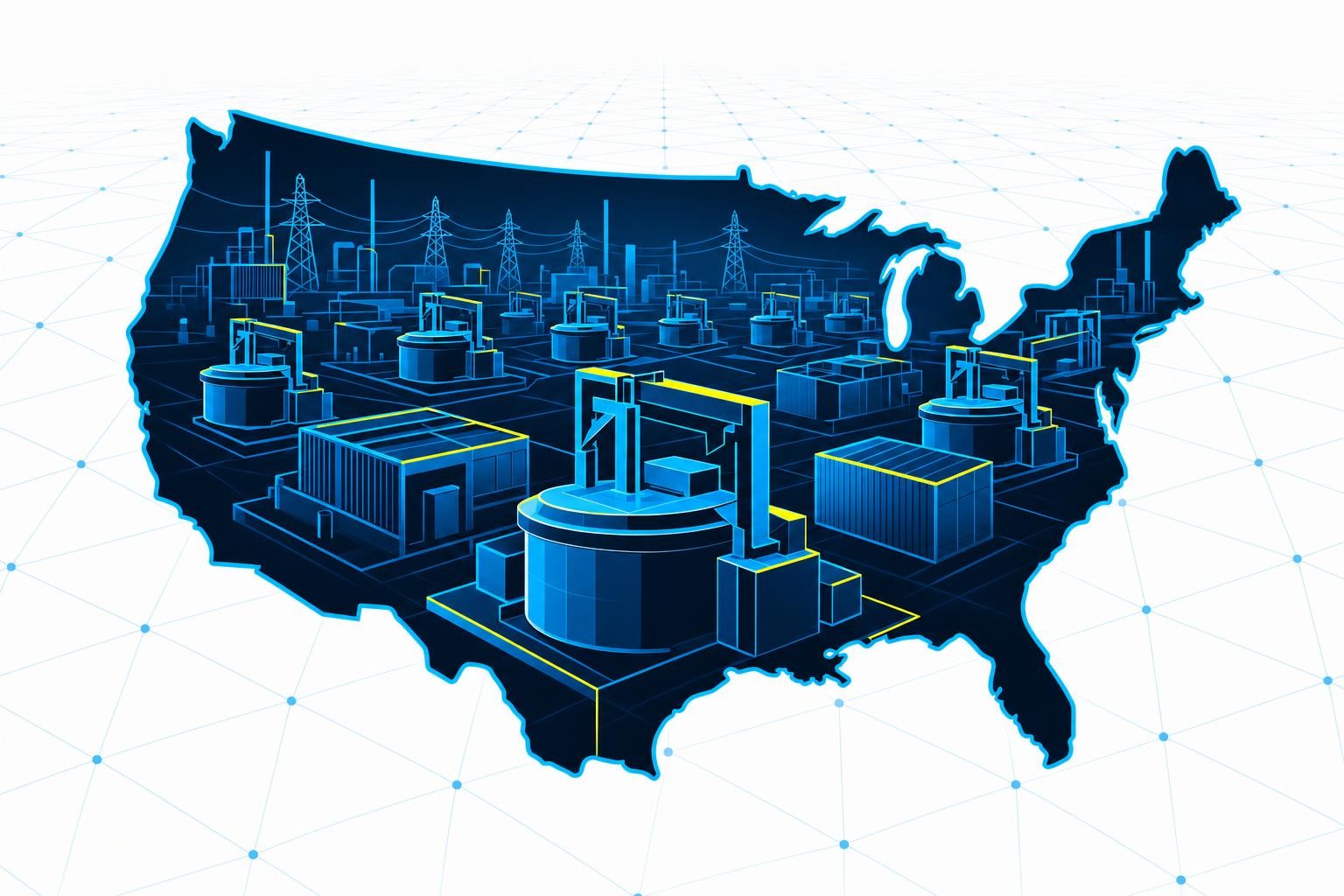
Three developments in quick succession have given the US primary aluminum industry its most credible revival story in decades. Century Aluminum restarted idled capacity at its Mount Holly smelter in South Carolina, targeting full production of roughly 220,000 metric tons by mid-2026[1]. Magnitude 7 Metals announced on 1 July 2026 that it would restart potline one at its Marston, Missouri facility, adding 75,000 metric tons of annual output before year-end. And Emirates Global Aluminium and Century Aluminum are advancing a joint-venture smelter in Inola, Oklahoma - the first new primary aluminum plant in the United States since 1980 - targeting 750,000 metric tons per year.
The American Primary Aluminum Association says the combined effect of the Mount Holly and Marston restarts will grow domestic primary output by more than 20%. The catalyst in each case is the same: Trump's Section 232 tariff on imported aluminum, raised to 50% in June 2025, which has shifted the economics enough to make idled capacity worth reactivating.
The demand side is also moving. A global aluminum supply deficit is expected to worsen in 2026 following damage to major Middle Eastern smelters and disruptions in the Strait of Hormuz[1]. At the same time, soaring US power consumption is driving demand for aluminum used in transformers, cables, and other grid equipment[1].
The electricity ceiling
The restarts are real, but the structural constraint that hollowed out the industry over the past four decades has not changed. The Aluminum Association estimates that a new smelter requires a 10-to-20-year power contract at or below $40/MWh to be globally competitive. A single facility consumes roughly 11 TWh per year - comparable to the annual electricity use of a city the size of Boston or Nashville.
The problem is that the US power market is now being shaped by a buyer with no price ceiling. Technology companies are committing upward of $115/MWh for electricity at AI data centers, according to the Aluminum Association - nearly three times the rate at which aluminum smelting is viable. Renewable PPAs in the US currently clear at $50-$60/MWh, already above the threshold.
The contrast with Canada is stark. Canadian smelters typically purchase electricity at $26.50-$41.00/MWh under long-term contracts, while US industrial rates in states with idled smelting capacity ran from $65.50/MWh in Kentucky to $82.40/MWh in Indiana in 2023. The Aluminum Association has called electricity deregulation "the single most important factor leading to the near total demise of the primary aluminum industry."
The Oklahoma test case
The Inola project is where the tension is sharpest. EGA has stated that construction - expected to begin by end of 2026 - is contingent on securing "a competitive long-term" power supply agreement. EGA's senior vice president for corporate affairs has cited Oklahoma's energy abundance as a key factor in site selection: more than 40% of the state's annual generation comes from wind, with roughly half from gas. The Public Service Company of Oklahoma acquired an existing 795 MW gas plant south of Tulsa partly to serve the smelter's needs, and EGA and the utility are in advanced negotiations.
A $500 million DOE grant has been secured, and the joint venture - EGA holding 60%, Century 40% - has a final investment decision targeted for later this year. But the power deal remains unsigned, and the project's scale is formidable: the Oklahoma plant alone would more than double current US primary aluminum capacity.
The large-load tariff problem
Even for restarts already underway, new policy friction is emerging. Missouri adopted "large load" electricity tariffs in 2025, requiring major power users to cover grid infrastructure costs tied to their demand. The rule was designed with data centers in mind, but it applies equally to industrial smelters. Annie Sartor of Industrious Labs has noted that the Magnitude 7 Metals restart would face the same electricity cost structure as a data center - even though the Marston smelter has already curtailed twice, in 2016 and in 2024, because of high power costs[1].
The policy challenge is structural: frameworks built to manage data center growth may inadvertently price out the energy-intensive manufacturers that tariff policy is trying to revive.
What to watch
The Oklahoma power deal is the clearest near-term signal. If EGA and PSO reach a final agreement before the Q4 investment decision, it would confirm that at least one US state can structure electricity contracts competitive enough to anchor a greenfield smelter. If negotiations stall, the gap between tariff-driven demand for domestic aluminum and the power market's ability to supply it at viable rates will remain the industry's binding constraint - regardless of what happens at the border.
The images and texts on this page were created with the help of AI.
Related
 Storage
RelyEZ refiles HKEX application as Chinese storage firms treat Hong Kong as gateway to global capital
RelyEZ Energy Storage Technology refiled its HKEX Main Board application on 9 August 2026, joining a wave of Chinese storage firms using Hong Kong as a bridge to institutional investors worldwide.
14 Aug 2026 Storage
ESS Tech posts $15.6 million Q2 loss as it pivots to sodium-ion and pursues a $515 million business combination
ESS Tech reported a $15.6M Q2 net loss and near-zero revenue on 11 August, even as it signed Na-ion supply and deployment LOIs and disclosed a non-binding merger deal valued at ~$515M.
14 Aug 2026 Renewables
Greece's fire service launches nationwide wind farm probe after Boeotia megafire kills two
Greek prosecutors have ordered a nationwide inspection of all ~450 wind farms after a faulty private power line was blamed for a megafire that burned more than 11,200 hectares west of Athens.
14 Aug 2026