U Mobile and HLGY Energy sign MoU to deploy private 5G across Malaysian solar farms
Malaysian telco U Mobile and renewable developer HLGY Energy signed a non-binding MoU on 12 October 2026 to deploy private 5G connectivity at utility-scale solar farms, with the Kedah Rubber City plant named as the primary candidate site.
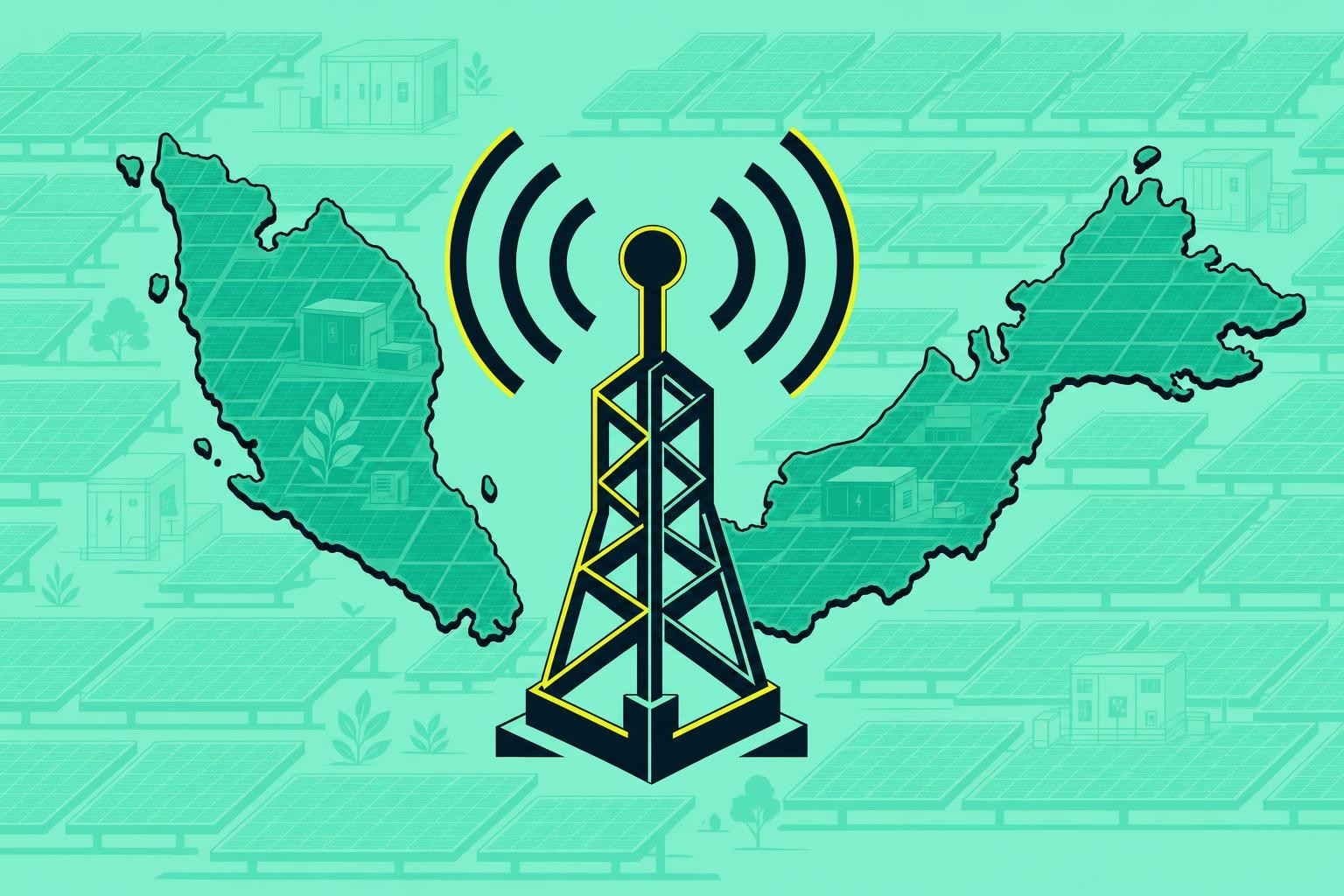
Malaysian telco U Mobile signed a non-binding Memorandum of Understanding with renewable energy developer HLGY Energy on 12 October 2026 to explore deploying private 5G connectivity across a portfolio of utility-scale solar farms in Malaysia[1]. No investment figure, network coverage area, or commercial launch timeline has been disclosed.
What the MoU covers
Under the agreement, U Mobile will act as HLGY Energy's innovation, automation, and communications infrastructure provider, with its ULTRA5G private network forming the digital backbone of the farms[1]. The stated scope covers:
- Digital monitoring of solar inverters, photovoltaic arrays, and other electrical equipment[1]
- Autonomous drone inspections for remote site surveillance
- AI-powered analytics for performance and fault detection
- Smart CCTV surveillance to support security and operational response
The partners have not disclosed what network architecture they will use, nor how the system will integrate with existing physical monitoring equipment[1].
The Kedah Rubber City site
HLGY Energy's Kedah Rubber City Solar Power Plant is identified as the primary candidate site for the initial 5G monitoring deployment. HLGY develops and operates utility-scale solar and integrated energy solutions under Malaysia's Corporate Renewable Energy Supply Scheme (CRESS), a government framework that allows corporate buyers to procure renewable power directly from generators via the national grid. The company has not publicly disclosed its total installed capacity across its portfolio.
HLGY's longer-term plans include integrating AI with both solar generation and battery energy storage system (BESS) operations - with the goal of optimising when energy is stored and dispatched, reducing electricity costs, and extending equipment lifespan.
CRESS as the commercial backdrop
The MoU lands as Malaysia's CRESS framework accelerates. As of the start of 2026, publicly announced CRESS project plans totalled approximately 4 GW, with developers including TNB Renewables, Gentari, and Solarvest among those participating. In September 2026, the government introduced a CRESS acceleration package that cut the system access charge for firm supply by 30%, to 0.14 ringgit per kilowatt-hour, and set a commercial operation deadline of 31 December 2028 for projects benefiting from the reduced rate. Analysts at Hong Leong Investment Bank Research expect stronger deal flow through Q4 2026 and Q1 2027, supported by continued data-centre expansion in the country.
The scheme is explicitly designed to serve high-energy-demand sectors. Data centres and semiconductor manufacturers are among the priority offtakers, and the pricing structure reflects that targeting.
What to watch
The MoU is exploratory. The critical next steps are whether the parties move to a binding agreement, which network architecture they select for a site as large and geographically dispersed as a utility-scale solar farm, and whether the Kedah Rubber City plant becomes a live reference case before the CRESS 2028 deadline. U Mobile's ability to demonstrate measurable operational gains - reduced inspection costs, faster fault response - will determine whether the model scales to HLGY's broader portfolio.
The images and texts on this page were created with the help of AI.
Related
 Renewables
RenewableUK hands out 14 awards at fifth annual Global Offshore Wind ceremony in London
RenewableUK presented 14 awards at the Royal Lancaster London on 13 October 2026, with Ocean Winds, ScottishPower Renewables and RWE among the winners across projects, people and industry priorities.
15 Oct 2026 Renewables
Panasonic's Aquarea N Series brings R454C refrigerant to residential heat pumps ahead of April 2027 European launch
Panasonic has unveiled the Aquarea High-Performance N Series, four air-to-water heat pump models using R454C refrigerant with a GWP of 148, targeting European residential markets from April 2027.
15 Oct 2026 Renewables
UK Energy Secretary Fahnbulleh calls for systemic overhaul, citing grid failures and consumer cost crisis
Speaking at Energy UK's annual conference on 14 October, DESNZ Secretary Miatta Fahnbulleh declared the UK energy system is failing consumers and demanded structural reform beyond piecemeal adjustment.
15 Oct 2026