Panasonic's Aquarea N Series brings R454C refrigerant to residential heat pumps ahead of April 2027 European launch
Panasonic has unveiled the Aquarea High-Performance N Series, four air-to-water heat pump models using R454C refrigerant with a GWP of 148, targeting European residential markets from April 2027.
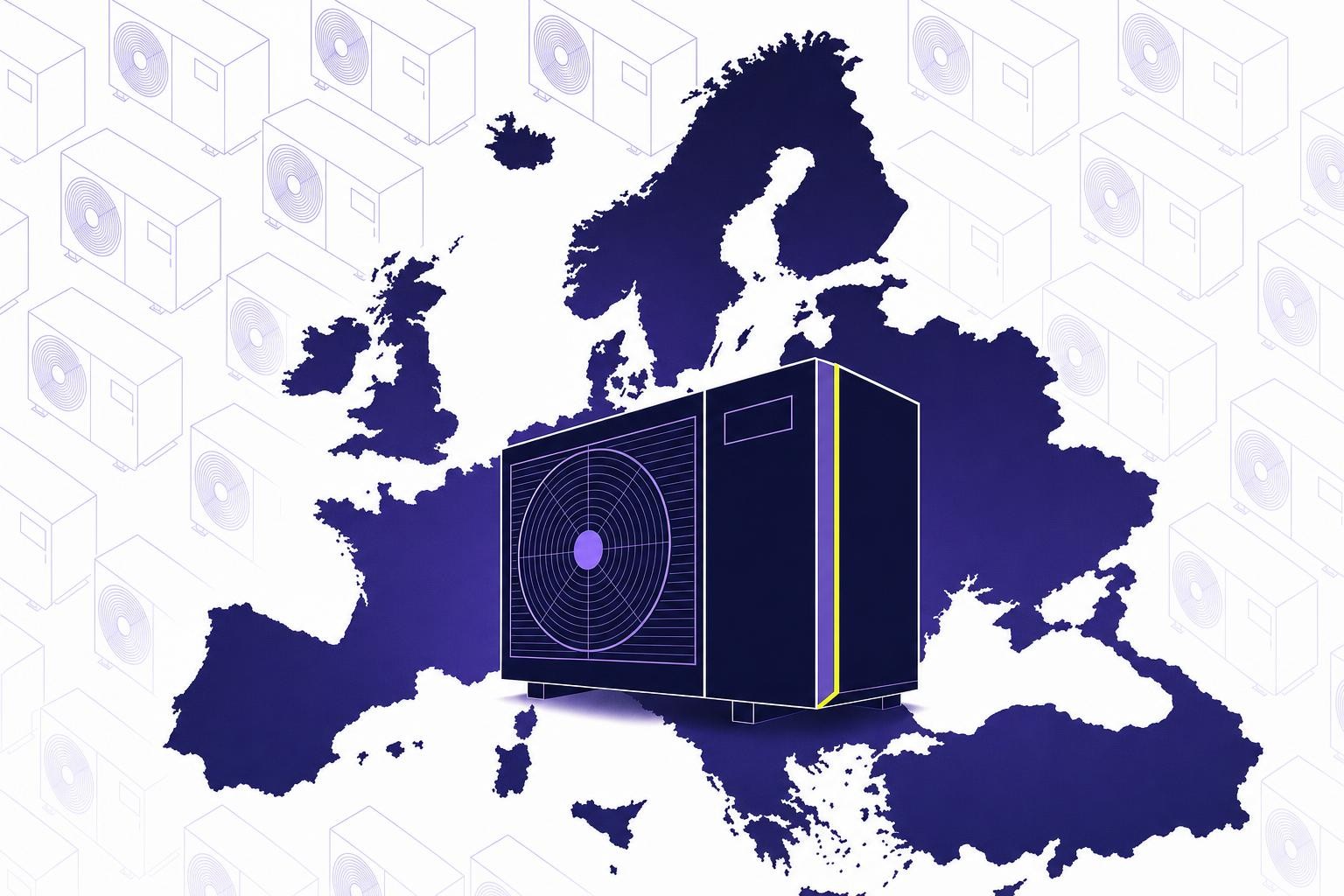
Panasonic has unveiled the Aquarea High-Performance N Series, a range of residential air-to-water heat pumps built around the R454C refrigerant, which carries a global warming potential (GWP) of 148. The units are scheduled to enter the European market in April 2027 and will be manufactured entirely in Europe[1].
What the N Series offers
The range comprises four models with heating capacities of 3 kW, 5 kW, 7 kW, and 9 kW[1]. All use a refrigerant-split configuration - indoor and outdoor units connected by refrigerant piping - rather than a monoblock arrangement[1]. Panasonic says the systems support:
- Piping runs of up to 50 m
- Elevation differences of up to 30 m
- Operation at outdoor temperatures as low as -25 C
- A sound power level of 58 dB(A) for the 5 kW model[1]
The all-in-one indoor unit stands 1,575 mm tall with a footprint of 599 mm × 602 mm, a compact form factor Panasonic says is aimed at properties with limited indoor space[1]. Connectivity for remote operation and maintenance runs through Panasonic's cloud-based control platforms[1].
On efficiency, the manufacturer rates the range at up to A+++ at a 35 C water flow temperature and A++ at 55 C, with domestic hot water efficiency up to A+[1]. Panasonic has not yet published model-specific COP or SCOP values, refrigerant charge quantities, or pricing[1].
Why R454C, and why now
Panasonic's adoption of R-454C is driven by the accelerated EU F-Gas regulation, which requires a shift away from high-GWP refrigerants. The company's existing Aquarea portfolio already includes R290 (propane) and R32 variants; the N Series adds a third refrigerant path suited to buildings where A3-class flammability rules out R290 but where the 2027 GWP ceiling still applies.
Market backdrop
The product lands into a recovering European residential heat pump market. Residential heat pump sales across 12 European countries rose 11% in the first half of 2026 to approximately 1,163,000 units, according to the European Heat Pump Association (EHPA), reversing a sharp contraction in 2024. EHPA said the rise followed Iran's closure of the Strait of Hormuz in February 2026, which sent oil and gas prices sharply higher. Sales had fallen by 47% in the first half of 2024 compared with 2023, after a rush to install heat pumps during the 2022 energy crisis slowed.
Germany is a particular bright spot: around 195,000 heat pumps were sold in Germany between January and June 2026, a 40% increase year on year.
What to watch
The April 2027 launch date puts the N Series directly against the F-Gas compliance deadline for small split systems. The key unknowns remain model-level SCOP figures - which determine real-world running costs and eligibility for national subsidy schemes - and pricing, neither of which Panasonic has disclosed. Installer uptake will also depend on how the A2L safety classification of R454C is handled in national building codes across Panasonic's target markets.
The images and texts on this page were created with the help of AI.
Related
 Renewables
RenewableUK hands out 14 awards at fifth annual Global Offshore Wind ceremony in London
RenewableUK presented 14 awards at the Royal Lancaster London on 13 October 2026, with Ocean Winds, ScottishPower Renewables and RWE among the winners across projects, people and industry priorities.
15 Oct 2026 Renewables
UK Energy Secretary Fahnbulleh calls for systemic overhaul, citing grid failures and consumer cost crisis
Speaking at Energy UK's annual conference on 14 October, DESNZ Secretary Miatta Fahnbulleh declared the UK energy system is failing consumers and demanded structural reform beyond piecemeal adjustment.
15 Oct 2026 Grid
GridAI is both the grid's biggest new problem and one of its most promising tools
AI data centres drove a 50% surge in electricity consumption in 2025 and are triggering a gas-plant buildout that could lift US power sector emissions by up to a third. The same technology is also cutting curtailment and improving dispatch. Grid professionals need both sides of the ledger.
15 Oct 2026