Stulz releases fourth-generation TelAir and WallAir cooling units for edge and 5G sites
Stulz has launched the TelAir 4 and WallAir 4, fourth-generation air cooling systems for edge data centers and 5G infrastructure, available to order from 1 September 2026.
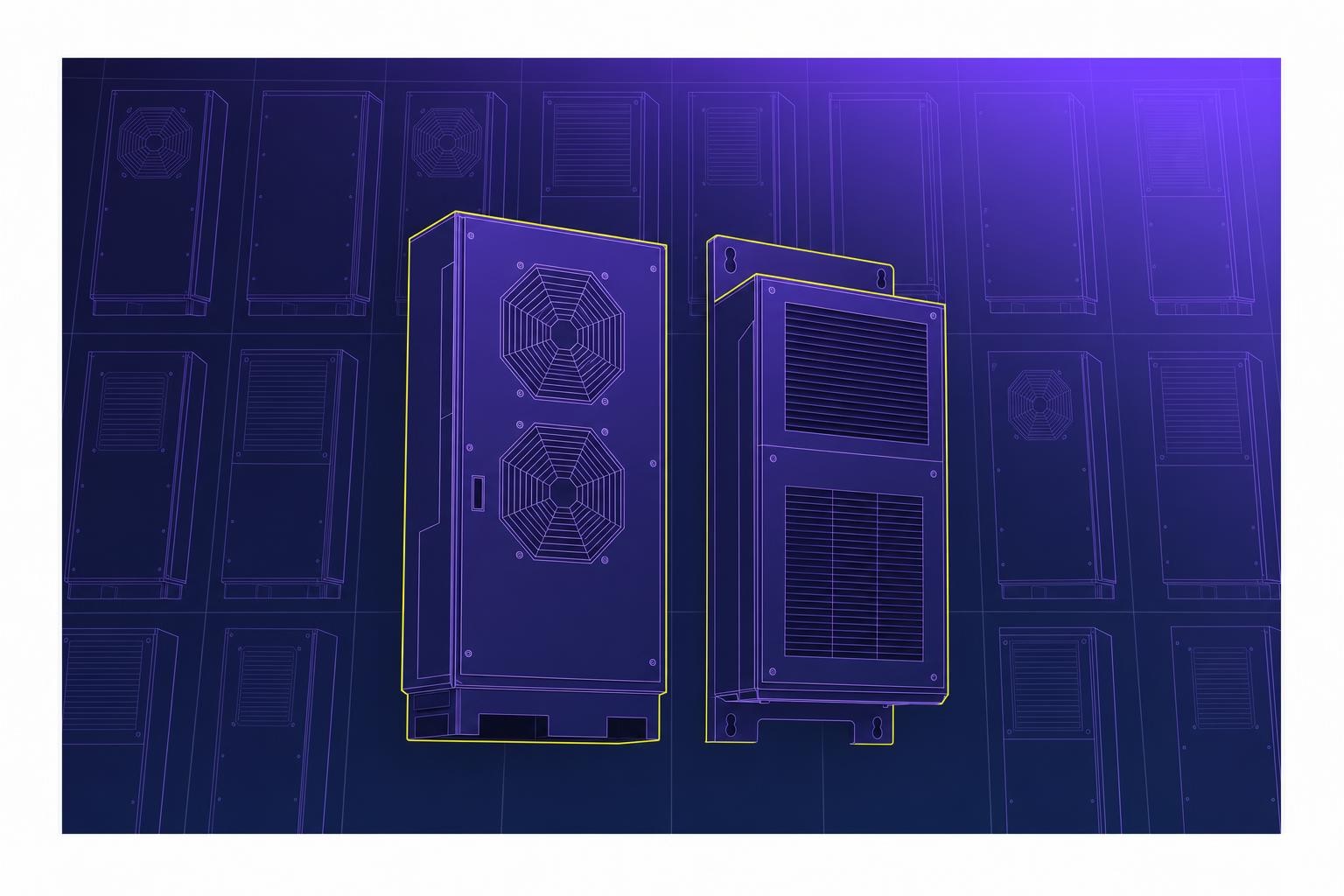
Hamburg-based cooling specialist Stulz has introduced the fourth generation of its TelAir and WallAir shelter-cooling series, targeting edge data centers, 5G infrastructure, telecommunications containers, and radio stations. Both product lines are available in two enclosure sizes and four cooling capacity classes, ranging from 6 kW to 17 kW, and are available to order as of 1 September 2026[1].
What changed in the fourth generation
The redesign is driven by two converging pressures: rising thermal densities at distributed sites and the tightened refrigerant rules under the amended European F-Gas Regulation (EU) 2024/573. The TelAir 4 and WallAir 4 use low-GWP R454C refrigerant, integrated free cooling, and a certified EN 378 safety architecture[1].
R454C carries a global warming potential of 148, well below the high-GWP HFCs it replaces. The units' electronically commutated (EC) fans already comply with the requirements of the upcoming ErP 2027 Ecodesign Directive, and both series operate across a temperature range of -20 °C to +54 °C, with an optional winter kit extending operation to -40 °C.
A two-stage refrigerant sensor system governs safety: fan speed increases and selected electrical loads shut down at 10 percent of the lower flammability limit, with full power disconnection at 20 percent. Stulz's E² BASIC controller provides Ethernet connectivity, Modbus support, and interfaces for building management and DCIM systems, as well as inputs for fire, smoke, and intrusion alarms.
Two installation concepts
The product line splits into two distinct form factors:
- TelAir 4 - indoor installation, suited to shelters and enclosed equipment rooms
- WallAir 4 - externally mounted monoblock, fixed to a container wall, leaving the full interior footprint available for IT racks and network hardware
Customers can also choose between classic on/off compressor systems with a thermostatic expansion valve, or continuously modulating EC inverter compressors paired with an electronic expansion valve, depending on load profile requirements.
Efficiency claim
In combined free-cooling and mixed-mode operation, Stulz says the units can reduce operating costs by up to 80 percent. The free-cooling mode uses ambient air when outdoor temperatures are low enough, cutting compressor run-time - a meaningful lever for distributed sites where energy costs are often unmanaged and remote.
Context
The launch extends a product line that Stulz updated last year with an air-cooled side pod for edge deployments[1]. The German firm also sells liquid cooling systems for higher-density applications, but the TelAir and WallAir series address the lower end of the thermal spectrum - the thousands of small, unmanned sites that underpin 5G rollout and distributed compute.
What to watch: whether the 80 percent operating-cost reduction claim holds across the range of ambient conditions typical of far-edge deployments, and how quickly European operators move to R454C-compliant units ahead of the F-Gas phase-down schedule.
The images and texts on this page were created with the help of AI.
Related
 Renewables
RenewableUK hands out 14 awards at fifth annual Global Offshore Wind ceremony in London
RenewableUK presented 14 awards at the Royal Lancaster London on 13 October 2026, with Ocean Winds, ScottishPower Renewables and RWE among the winners across projects, people and industry priorities.
15 Oct 2026 Renewables
Panasonic's Aquarea N Series brings R454C refrigerant to residential heat pumps ahead of April 2027 European launch
Panasonic has unveiled the Aquarea High-Performance N Series, four air-to-water heat pump models using R454C refrigerant with a GWP of 148, targeting European residential markets from April 2027.
15 Oct 2026 Renewables
UK Energy Secretary Fahnbulleh calls for systemic overhaul, citing grid failures and consumer cost crisis
Speaking at Energy UK's annual conference on 14 October, DESNZ Secretary Miatta Fahnbulleh declared the UK energy system is failing consumers and demanded structural reform beyond piecemeal adjustment.
15 Oct 2026