Samsung and Oak Ridge National Laboratory begin testing vapor-compression heat pump designed to hold output below minus 30 C
Samsung Electronics and Oak Ridge National Laboratory have launched a joint project to test vapor-compression heat pump technology rated for stable operation below minus 30 C, with field trials planned for Fairbanks, Alaska.
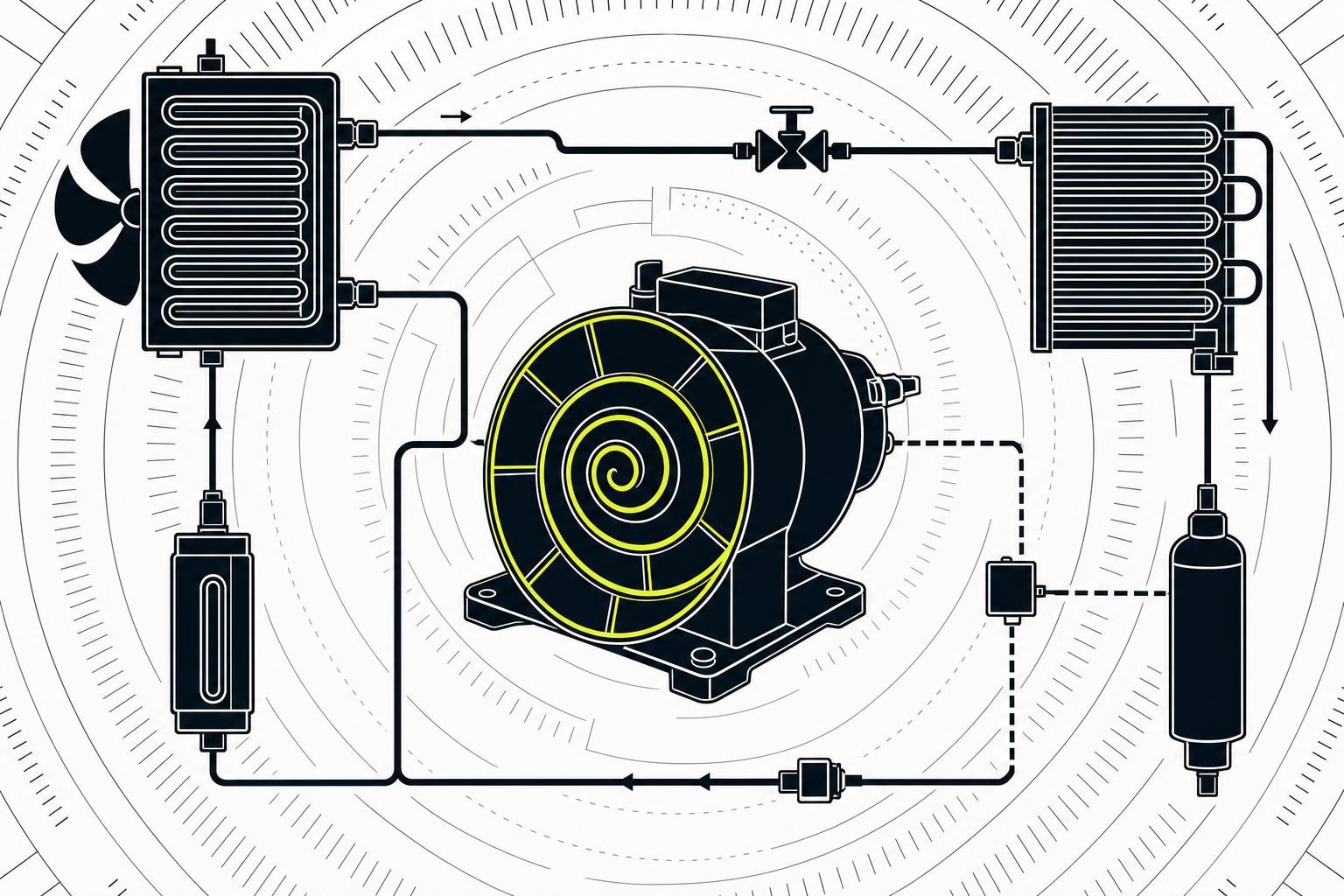
Samsung Electronics and the US Department of Energy's Oak Ridge National Laboratory (ORNL) announced on 9 August 2026 that they have begun a joint research project to develop and test vapor-compression heat pump technology capable of maintaining stable heating performance at temperatures below minus 30 C[1].
What the technology does
The project - formally titled the Cold Climate Vapor Compression Space Heating and Multi-functional Equipment research project - targets a single-compressor system that can deliver heating, cooling and hot-water production in one unit[1]. In a standard vapor-compression cycle, refrigerant absorbs heat from outdoor air, is compressed into a high-temperature, high-pressure gas, transfers that heat indoors through a heat exchanger, then condenses back into a liquid and repeats[1].
The core performance problem Samsung is trying to solve is well-established: efficiency in conventional heat pumps degrades as outdoor temperatures fall, and most residential systems lose meaningful capacity well before reaching minus 30 C[1]. Samsung is addressing this with two specific design choices:
- Rotary scroll compressor - a mechanism that compresses refrigerant through the continuous orbital motion of a scroll component, which Samsung says reduces energy losses and improves operational stability compared with conventional compressor designs[1].
- Flash injection - a refrigerant-control technique that monitors thermal efficiency during prolonged operation and injects additional refrigerant into the compressor when needed to prevent overheating and maintain output under sustained low-temperature load[1].
Samsung did not disclose further technical specifications, including refrigerant type or rated coefficient of performance at target temperatures[1].
Why Fairbanks
Field testing will take place at the Field Test Lab operated by the National Laboratory of the Rockies (NLR) in Fairbanks, Alaska[1]. NLR's Alaska Campus integrates geothermal, biomass, solar, thermal storage, and advanced energy efficiency technologies to create energy stability in an extreme subarctic climate. Researchers there advance cold-climate air-source heat pump technology through applied R&D, with a -40 °F climate chamber used to validate performance in Arctic conditions.
Fairbanks records an average monthly minimum temperature of around minus 40 C and an all-time low of minus 50 C[1], making it the most demanding publicly accessible test environment available for heating equipment. Samsung is not the first manufacturer to use the site: the NLR Fairbanks campus has previously tested LG's cold-climate air-source heat pump prototype, rated to operate down to minus 30 degrees Fahrenheit.
The research is scheduled to run until the first half of next year, after which Samsung plans to verify performance and reliability in Alaska before applying the technology to various heat pump HVAC products.
What Samsung intends to do with the results
The research team plans to verify heating performance and energy efficiency during deep-winter conditions, as well as stability for long-duration operation and hot-water supply performance, to confirm whether the technology can be applied in real residential environments. Samsung plans to apply the technology to a broader range of HVAC products, including system air conditioners and heat pump boilers that provide both heating and cooling functions.
"This collaboration will be an important opportunity to prove Samsung's unique high-efficiency technology and device reliability in a cryogenic environment," said Sung-taek Lim, vice president of Samsung Electronics' DA division[1]. Samsung framed the project explicitly around reducing carbon emissions, though it gave no quantified targets[1].
What to watch
The research timeline runs to mid-2027, with Fairbanks field trials to follow. The key question is whether the rotary scroll and flash injection combination can sustain a commercially viable coefficient of performance at minus 30 C and below - the threshold at which most existing products either shut down or require backup resistance heating. ORNL has prior published work on vapor-compression systems tested in Alaska at temperatures as low as minus 34 C, which sets a rough benchmark for what Samsung's system will need to match or exceed to differentiate itself in the cold-climate HVAC market.
The images and texts on this page were created with the help of AI.
Related
Ready-to-build BESS projects lose their premium as Australia's NEM arbitrage spreads collapse 85%
Panellists at the Battery Asset Management Summit Australia 2026 said the venture-capital-style returns that once rewarded ready-to-build BESS projects have disappeared as NEM price spreads fell 85% in a year.
10 Sept 2026UK government opens three-month consultation on AI for clean energy, backed by 34-recommendation network review
DESNZ published its Vision for an AI-enabled clean energy system on 8 September, opening a call for evidence that closes 6 November and will feed into the UK's first AI for Clean Energy Strategy.
10 Sept 2026Heatwaves expose a three-layer risk for wind operators: resource, hardware, and people
Extreme heat cuts wind output, stresses nacelle components, and grounds maintenance crews - all at once. A look at how bad the summer of 2026 has been, and what the trend means for grid reliability.
10 Sept 2026