Roanoke City Public Schools to install Virginia's first school-district solar-battery microgrids, backed by $2.55 million in state and private funding
Roanoke City Public Schools will add 2 MW of solar and 8 MWh of battery storage across its two high schools - Virginia's first solar-battery microgrids at a K-12 district.
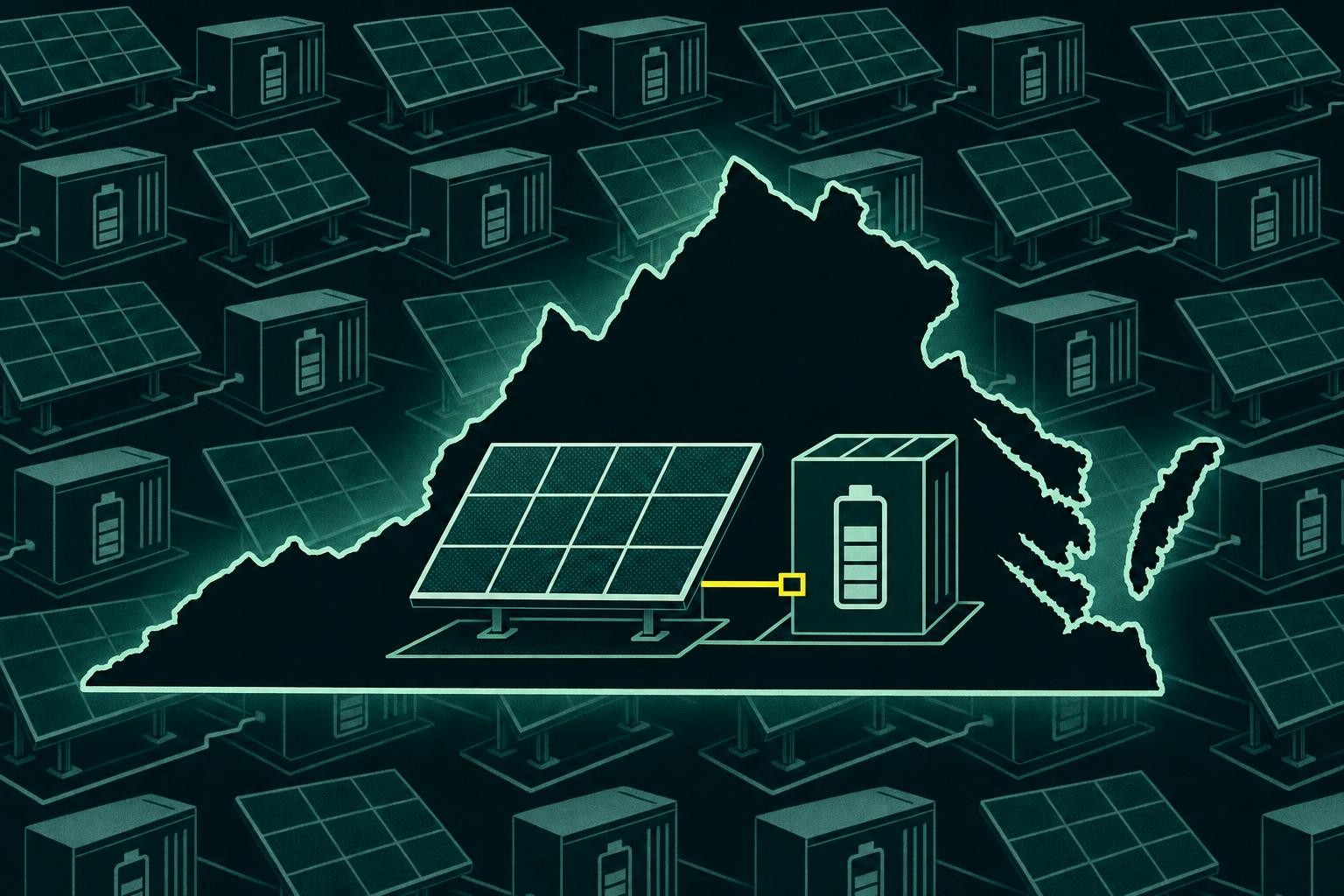
Roanoke City Public Schools (RCPS) will become the first K-12 school district in Virginia to operate solar-and-battery microgrids, after securing $2.55 million in combined state and private financing for installations at its two high schools. The Virginia Department of Emergency Management's 2026 Shelter Upgrade Assistance Fund is contributing $450,000, matched by a $2.1 million investment from developer Secure Solar Futures[1]. Target completion is July 2027.
The installations
Patrick Henry High School and William Fleming High School will each host 1 MW of solar generating capacity and 4 MWh of battery energy storage, for a combined 2 MW / 8 MWh across the district[1]. Both schools are officially designated by VDEM as public emergency shelters, and their gymnasiums were originally built for that purpose.
The microgrid project layers onto a larger solar buildout already under way. RCPS currently has 10.1 MW of solar capacity being installed across 32 locations under a 25-year power purchase agreement with Secure Solar Futures. Once complete, that broader programme is projected to:
- Cover 46.1% of annual electricity consumption at those sites
- Generate $60.2 million in avoided energy and roof-maintenance costs over 35 years
- Include roof restorations at multiple buildings at no capital cost to the district
The microgrid project itself will be completed at no cost to RCPS and will require no district funds to operate[1].
How the economics work
Operating costs will be covered by two revenue streams: energy savings from on-site generation and revenues from providing storage services to the PJM Mid-Atlantic grid[1]. Additional financing has been committed by City National Bank and the Virginia Clean Energy Innovation Bank.
During normal grid-connected operation, the systems will offset daytime load and reduce peak demand exposure. During an outage, microgrid controllers will manage the transition to islanded mode, sustaining critical shelter loads - gyms, kitchens, and freezers - from local generation and stored energy, before diesel generators cut in if the battery is depleted.
Virginia's school-solar context
Virginia's K-12 schools rank 8th in the nation for solar capacity, with 83 MW across 236 campuses, according to Generation180[1]. Nearly half of those installations came online after 2020, when the Virginia Clean Economy Act cemented solar-friendly school policies[1]. Within that state total, RCPS already leads all Virginia school districts in installed solar.
Battery storage at schools remains rare nationally. About one-third of U.S. public K-12 schools are FEMA-designated emergency shelters, making backup power a material resilience question, yet California accounts for roughly 70% of identified school battery systems nationwide.
The Roanoke project is one of the first in the country to explicitly fund school-sited storage through a state emergency-management grant rather than an energy or education programme - a funding pathway that other VDEM-eligible localities could replicate if the model proves out. Whether Virginia's SCC and Dominion Energy's evolving rate structures, which are already under scrutiny in separate data-centre proceedings, affect the economics of school-level PJM participation will be worth tracking as the project moves toward its 2027 commissioning date.
The images and texts on this page were created with the help of AI.
Related
 Renewables
RenewableUK hands out 14 awards at fifth annual Global Offshore Wind ceremony in London
RenewableUK presented 14 awards at the Royal Lancaster London on 13 October 2026, with Ocean Winds, ScottishPower Renewables and RWE among the winners across projects, people and industry priorities.
15 Oct 2026 Renewables
Panasonic's Aquarea N Series brings R454C refrigerant to residential heat pumps ahead of April 2027 European launch
Panasonic has unveiled the Aquarea High-Performance N Series, four air-to-water heat pump models using R454C refrigerant with a GWP of 148, targeting European residential markets from April 2027.
15 Oct 2026 Renewables
UK Energy Secretary Fahnbulleh calls for systemic overhaul, citing grid failures and consumer cost crisis
Speaking at Energy UK's annual conference on 14 October, DESNZ Secretary Miatta Fahnbulleh declared the UK energy system is failing consumers and demanded structural reform beyond piecemeal adjustment.
15 Oct 2026