FERC approves Duke Energy Carolinas' large-load transmission rules on a 4-1 vote, with three commissioners calling for further reform
FERC approved Duke Energy Carolinas' large-load tariff rules on 9 October 2026, requiring a 75% committed revenue contribution over 15 years - but commissioners say the floor may be too low.
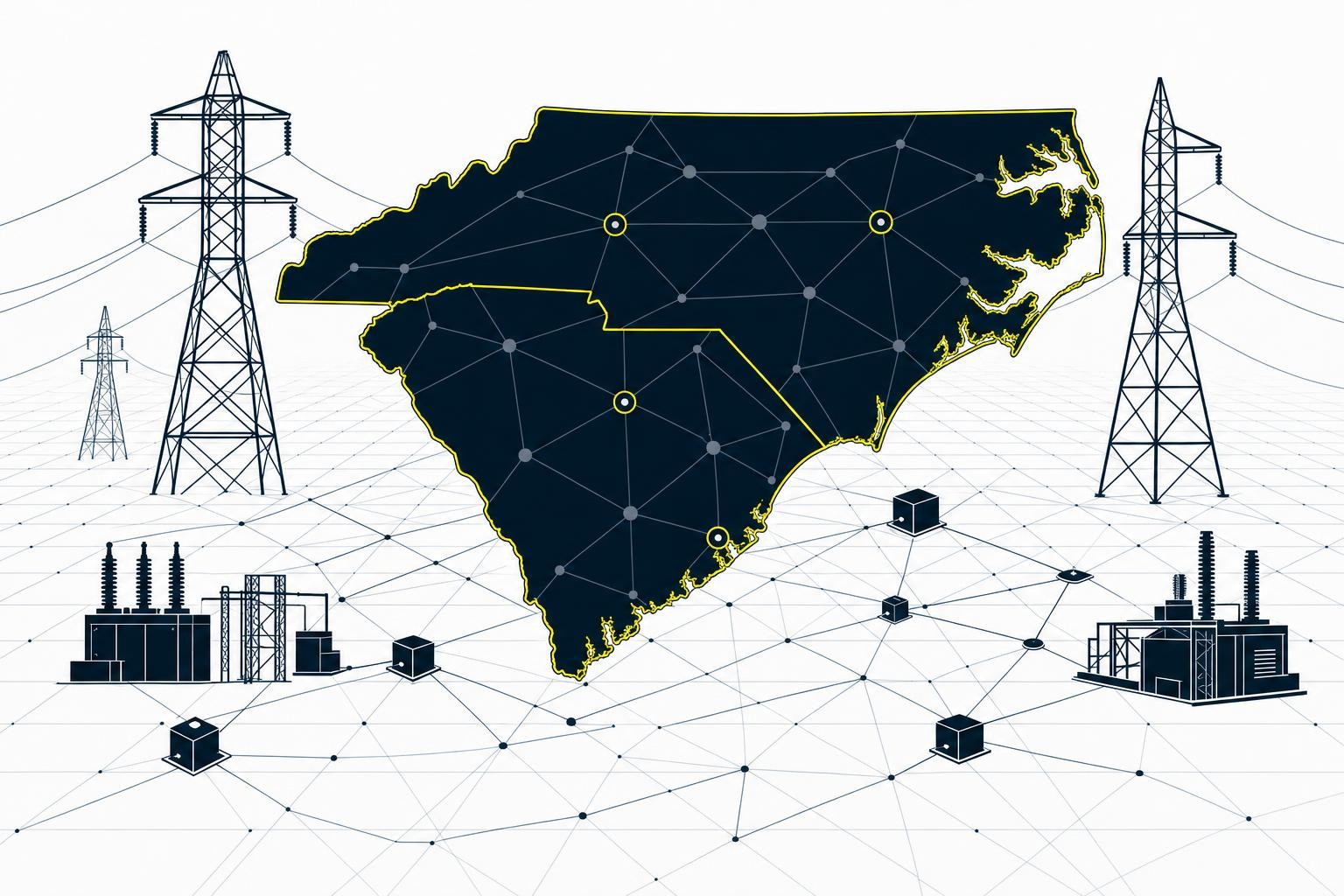
FERC approved Duke Energy Carolinas' large-load transmission tariff measures on 9 October 2026 on a 4-1 vote, accepting rules designed to stop data centers and other heavy power users from shifting network upgrade costs onto residential and small-business customers.[1] The decision, filed under docket ER26-2691, comes roughly ten months after FERC rejected a Duke-Lockhart Power agreement that regulators said would have done exactly that.
What the new rules require
The centrepiece of the approved framework is a Committed Revenue Contribution. A transmission customer serving a large load must pay for at least 75% of its planned load amount for 15 years following the in-service date of any network upgrades required to accommodate that load, even if actual consumption falls short.[1] The rules also:
- Codify rolled-in rate treatment as the default for large-load-driven network upgrades, meaning upgrade costs enter the rate paid by all network customers
- Require financial security from transmission customers serving large loads
- Apply shortfall payments to loads of 100 MW or larger[1]
- Require large loads to front the construction costs of needed grid upgrades, with Duke reimbursing them once work is complete
The rules apply to data centers and other large loads in North and South Carolina.
The Lockhart backstory
The new tariff language is a direct response to a deal FERC blocked on 23 December 2025. Lockhart Power, an existing Duke transmission customer, sought service for an additional 200 MW of load to supply a data center in Moore, South Carolina - a request that triggered approximately $40 million in transmission upgrades. The proposed agreement charged Lockhart an incremental rate for five years but then granted rollover rights that would have let it continue taking service without paying for ongoing system costs. Commissioner Judy Chang wrote at the time that the arrangement "would unacceptably shift costs to other transmission customers."
Duke subsequently filed the pro forma Network Integration Transmission Service Agreement that FERC has now accepted.
Commissioners: an improvement, not a solution
Three of the five commissioners filed concurrences signalling that the approved rules are a floor, not a ceiling.
Commissioner Lindsay See, whose concurrence is dated 9 October 2026, described the order as addressing "one of the most pressing cost allocation issues we face: how to ensure large load pays its way and that residential and small business customers aren't saddled with stranded costs if those loads don't materialize, don't take service at the expected level, or exit prematurely." She called the 75% Committed Revenue Contribution "an incremental improvement, not a slam dunk," and suggested the floor may be "near the low end of what's just and reasonable."[1] She also urged Duke to use FERC's existing "higher of" policy - which allows a transmission provider to charge the higher of the rolled-in or incremental rate - when doing so would better protect native load customers.
Commissioner David Rosner noted that Duke's previous rules "lacked any cost-shift protections for residential or small business customers" and warned that "consumer protections are inadequate across the country," adding that FERC may need to take further action if state regulators do not fill the gap.[1]
The October 9 order does not prejudge outcomes in FERC's June 2026 Large Load Show Cause Order proceedings, which are examining cost-allocation rules across the broader industry.
Broader context
The Duke order lands in the middle of a wave of FERC activity on large-load interconnection. On the same day, FERC issued a separate order in docket ER26-3515 accepting PJM Interconnection's proposed Large Load Registry - defining a large load as a cumulative peak of 50 MW or more at a single site - while rejecting PJM's proposed curtailment and "bring your own capacity" mechanisms. FERC is also awaiting proposals from regional transmission organizations and independent system operators on how to handle large-load cost allocation more broadly.
North Carolina regulators are working the same problem at the retail level. Duke is separately negotiating a large-load settlement with state regulators, with the North Carolina Utilities Commission expected to rule by mid-November 2026.
The question to watch is whether FERC uses the pending Show Cause proceedings to set a binding national floor above the 75% threshold that commissioners have already called the low end - and whether state commissions move fast enough to make that federal intervention unnecessary.
The images and texts on this page were created with the help of AI.
Related
 Markets & Policy
Ofgem opens consultation on how network owners must evidence wider procurement value, closing 5 January 2027
Ofgem published draft guidance on 13 October 2026 setting out how electricity network owners, interconnector developers and offshore hybrid asset developers must justify procurement decisions that trade cost or schedule for wider long-term benefits.
14 Oct 2026 Markets & Policy
Solar Energy Industries Association backs two Georgia PSC Democrats with $250,000 in ad spending ahead of 3 November vote
A SEIA-tied super PAC is spending $250,000 on ads for two Georgia PSC Democrats who, if elected, would hand the commission its first non-Republican majority in roughly three decades.
14 Oct 2026 Storage
Mexico's CFE closes first mixed-investment tender at 7,411 MW, with 1,850 MW of mandated battery storage
Mexico's first CFE mixed-investment tender closed on 5 June 2026, awarding 37 projects totalling 7,411 MW - 114% of target - with 1,850 MW of co-located BESS required under the scheme.
14 Oct 2026