Solar Energy Industries Association backs two Georgia PSC Democrats with $250,000 in ad spending ahead of 3 November vote
A SEIA-tied super PAC is spending $250,000 on ads for two Georgia PSC Democrats who, if elected, would hand the commission its first non-Republican majority in roughly three decades.
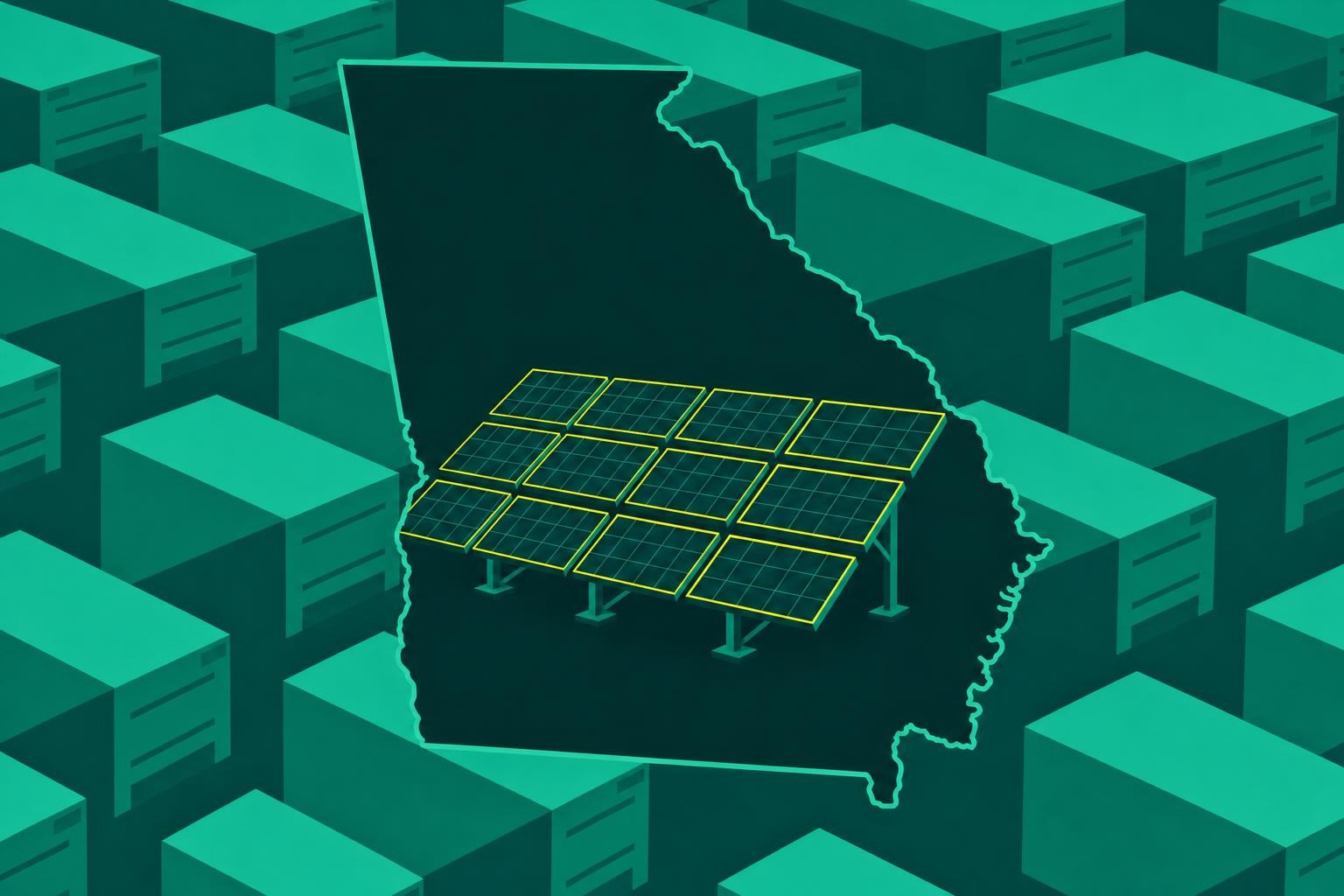
A super PAC tied to the Solar Energy Industries Association is spending $250,000 on digital and connected-TV advertising in support of two Democratic candidates running for the Georgia Public Service Commission ahead of the 3 November 2026 general election[1]. The sum is modest against the broader Georgia ballot - the state's U.S. Senate race has attracted $77.6 million in spending - but it marks SEIA's largest electoral investment since the industry absorbed a significant defeat in last year's congressional budget law, which cut renewable-energy tax credits despite sustained lobbying[1].
What is at stake
The Georgia PSC is a five-member elected body that sets the rates Georgia Power can charge its roughly 2.8 million customers and decides how the utility generates electricity[1]. Republicans have held a majority on the commission since the late 1990s[1]. Last November, voters angry about a series of rate increases elected two Democrats - Peter Hubbard and Alicia Johnson - to the previously all-Republican body, but the pair remain in the minority[1].
The two seats on the ballot this cycle are:
- District 3: incumbent Democrat Peter Hubbard, a former renewable-energy developer, faces Republican Fitz Johnson in a rematch. Hubbard won the 2025 special election with nearly 63% of the vote but must run again because he filled only the remainder of an unexpired term[1].
- District 5: Democrat Shelia Edwards, a veteran of Atlanta city government, faces Republican Josh Tolbert for an open seat vacated by Republican Tricia Pridemore, who did not seek re-election[1].
Democrats need to hold District 3 and win District 5 to flip the commission[1].
The rate backdrop
The PSC's recent record on rates gives the election its political charge. Between 2022 and 2024, the then all-Republican commission approved multiple Georgia Power increases: a $1.8 billion base-rate hike in December 2022, a $2.1 billion fuel-cost recovery in May 2023, and a further increase tied to Plant Vogtle Unit 4 coming online in spring 2024[1]. One analysis put the cumulative rise at roughly $43 more per month for the average Georgia Power household since the start of 2020. The PSC voted to freeze rates in 2025 and lower them in 2026, but the political damage from the earlier increases proved durable.
Why the solar industry is spending
SEIA's interest is partly defensive. The 2025 IRP approved by the PSC calls for up to 4,000 MW of new renewable resources by 2035, but critics note the plan also keeps coal plants online and authorises significant new gas capacity to serve data-center load[1]. Georgia Power is projecting load growth of 8,200 MW by 2030, with roughly 80% tied to expected data-center expansion. A pro-solar majority on the PSC would have direct influence over how that capacity is filled in the next IRP cycle.
The $250,000 buy is also a proof-of-concept. SEIA's senior vice president of communications said the organisation took a "hard look" at building durable political power after the federal tax-credit losses, and that the goal is to raise substantially more in future election cycles[1].
What to watch
The District 5 race is the decisive one: Hubbard's District 3 seat is considered more secure given his 2025 margin. If Edwards wins, the PSC's composition shifts for the first time in roughly three decades, with direct consequences for Georgia Power's next integrated resource plan - expected to be filed in 2028 - and for any near-term procurement decisions the commission takes on gas versus renewables in the interim.
The images and texts on this page were created with the help of AI.
Related
 Markets & Policy
Ofgem opens consultation on how network owners must evidence wider procurement value, closing 5 January 2027
Ofgem published draft guidance on 13 October 2026 setting out how electricity network owners, interconnector developers and offshore hybrid asset developers must justify procurement decisions that trade cost or schedule for wider long-term benefits.
14 Oct 2026 Storage
Mexico's CFE closes first mixed-investment tender at 7,411 MW, with 1,850 MW of mandated battery storage
Mexico's first CFE mixed-investment tender closed on 5 June 2026, awarding 37 projects totalling 7,411 MW - 114% of target - with 1,850 MW of co-located BESS required under the scheme.
14 Oct 2026 Storage
Foss & Company closes $58 million tax equity deal for GridStor's 150 MW Gunnar BESS in Texas
Foss & Company closed a $58 million partnership flip on 7 October 2026 to finance GridStor's 150 MW / 300 MWh Gunnar Reliability Project in Hidalgo County, Texas, due in service this month.
14 Oct 2026