EnBW bars work on affected turbine and same-batch blades at He Dreiht as Vestas root-cause probe continues
EnBW has halted work on the impacted V236-15.0 MW turbine and blades from the same production batch at He Dreiht after a blade failure on 22 July. Vestas is investigating the root cause.
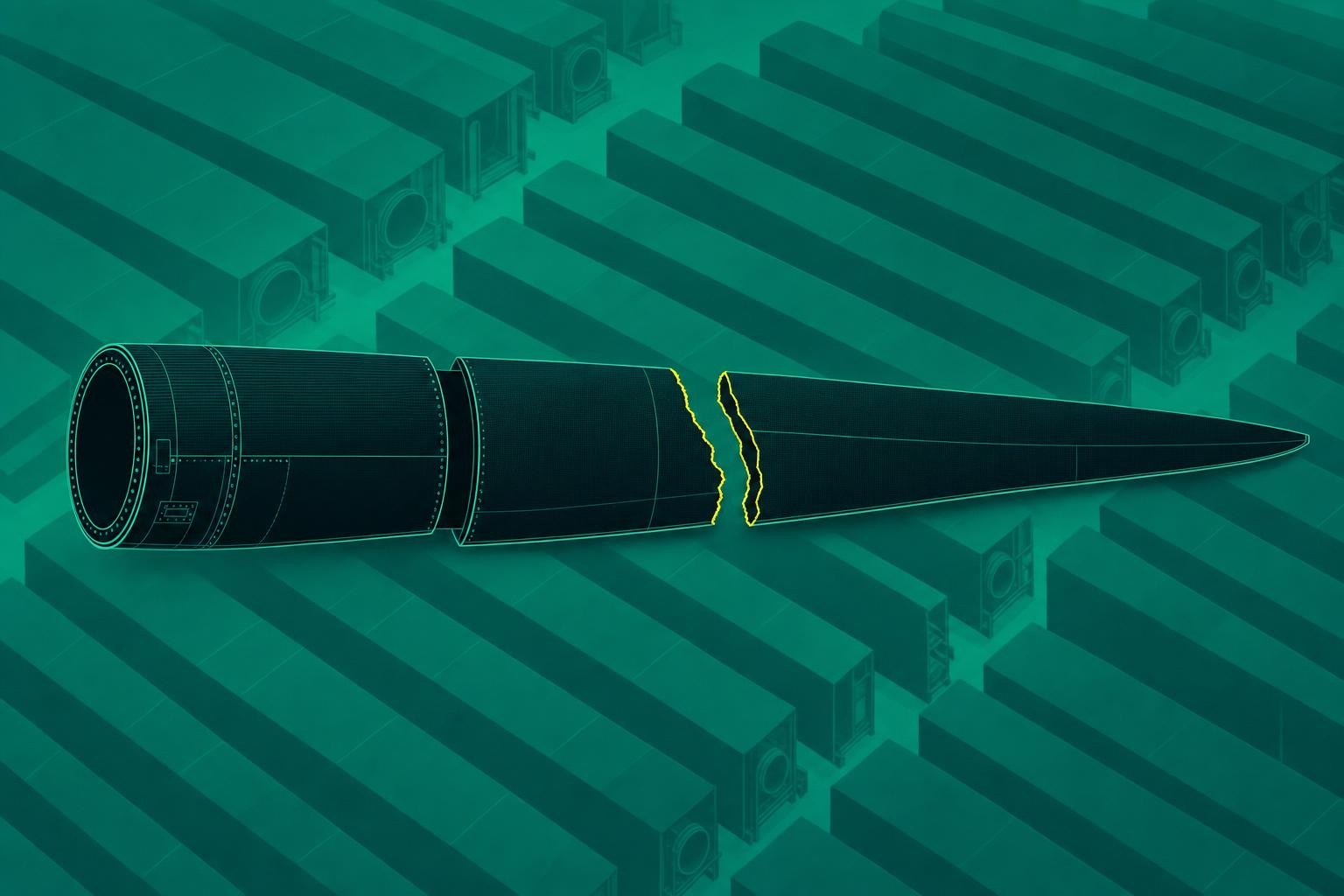
EnBW has suspended work on the turbine affected by a blade failure at its 960 MW He Dreiht offshore wind farm and on blades sourced from the same production batch, the company's deputy CEO and CFO Thomas Kusterer confirmed during an H1 2026 earnings call[1]. The failure was detected on 22 July on one of the site's Vestas V236-15.0 MW machines[1]. Vestas has initiated a root cause investigation.
What happened on 22 July
An EnBW spokesperson told reNEWS: "On 22 July, a blade failure was detected on one of the wind turbines at the He Dreiht offshore wind farm." The spokesperson added that there were no injuries and the relevant authorities were notified "immediately".
Authorities were notified on 24 July about a broken rotor blade floating between EnBW's Hohe See and He Dreiht offshore wind farms after recovery attempts by on-site work vessels proved unsuccessful. A patrol vessel was dispatched to secure the 20-metre-long blade section, which posed a significant hazard to navigation as it was drifting just below the water surface, making it difficult to detect. Because of its length, the crew used a saw to cut the blade into sections before pulling it aboard. The sections were unloaded in Cuxhaven on 26 July.
A Vestas spokesperson said: "Together with the customer, we have initiated a root cause investigation of the incident and activities to contain environmental impact. All plant personnel are safe, the site has been secured, and there were no injuries."
Scope of the pause
Kusterer's earnings-call remarks clarify what "certain activities" means in practice:
- Work on the turbine directly affected by the failure is suspended.
- Installation or commissioning of blades from the same production batch is also on hold pending the investigation.
- Basic commissioning of the wind park is progressing and ongoing.
Management said the turbine installation is virtually complete and that the rotor blade issue appears to be isolated, not a broader technical problem. The company expects to assess the impact over the next one to two weeks.
Project status and what is at stake
He Dreiht is located approximately 85 kilometres northwest of Borkum and will comprise 64 Vestas V236-15.0 MW wind turbines. It is Germany's largest offshore project not receiving subsidies and is expected to supply 1.1 million households starting in the fall of 2026.
Turbine installation commenced in April 2025, and first power was produced and exported to the grid in November 2025. EnBW intended to complete construction and bring all wind turbines into operation by the summer of 2026. In its results for the first quarter of 2026, published in May, the developer said 45 wind turbines were installed by that time.
The V236-15.0 MW is Vestas' flagship offshore platform and He Dreiht is its commercial debut site. The installation of the first turbine in April 2025 marked the debut of Vestas' 15 MW machines. A confirmed manufacturing or design defect in the blade batch would carry implications beyond this single project, given the platform's role in Vestas' offshore order book.
The €2.4 billion project is 50.1% owned by EnBW, with the remaining 49.9% held by a consortium of Allianz Capital Partners, AIP Management, and Norges Bank Investment Management.
What to watch
The critical question is whether Vestas' root cause investigation points to an isolated manufacturing anomaly or a systemic issue with the V236 blade design. Management indicated the issue appears isolated rather than a broader technical problem. If the investigation widens the scope of suspended blades, the summer commissioning target - already tight - comes under pressure. Vestas has not disclosed a timeline for completing the root cause analysis.
The images and texts on this page were created with the help of AI.
Related
Ready-to-build BESS projects lose their premium as Australia's NEM arbitrage spreads collapse 85%
Panellists at the Battery Asset Management Summit Australia 2026 said the venture-capital-style returns that once rewarded ready-to-build BESS projects have disappeared as NEM price spreads fell 85% in a year.
10 Sept 2026UK government opens three-month consultation on AI for clean energy, backed by 34-recommendation network review
DESNZ published its Vision for an AI-enabled clean energy system on 8 September, opening a call for evidence that closes 6 November and will feed into the UK's first AI for Clean Energy Strategy.
10 Sept 2026Heatwaves expose a three-layer risk for wind operators: resource, hardware, and people
Extreme heat cuts wind output, stresses nacelle components, and grounds maintenance crews - all at once. A look at how bad the summer of 2026 has been, and what the trend means for grid reliability.
10 Sept 2026