DOE narrows nuclear lifecycle campus competition to five states
The DOE signed non-binding MOUs with Utah, Tennessee, Oklahoma, Louisiana, and Idaho on 24 July 2026, advancing them as finalists to host Nuclear Lifecycle Innovation Campuses.
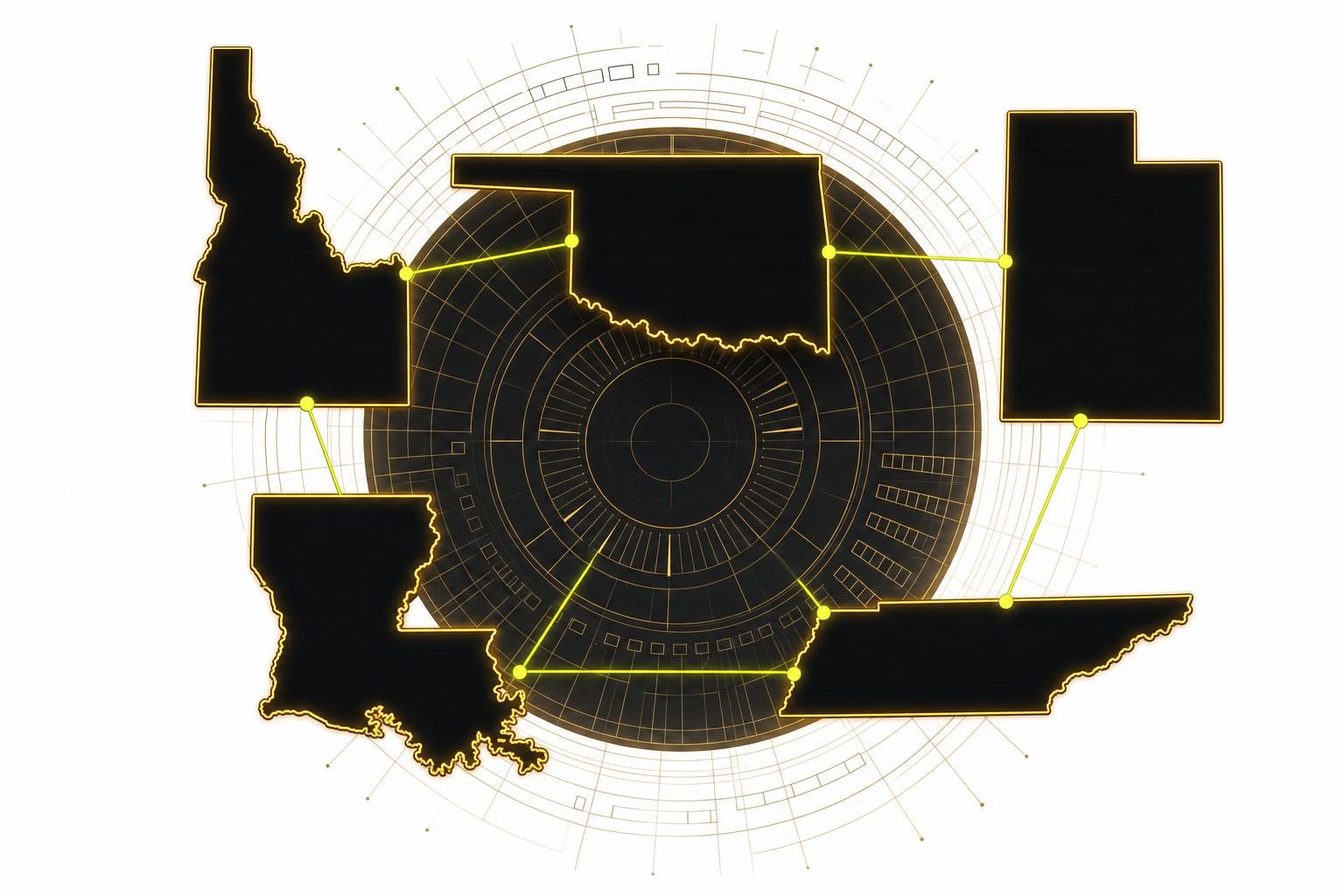
The U.S. Department of Energy has narrowed its Nuclear Lifecycle Innovation Campus competition to five states, with Energy Secretary Chris Wright signing non-binding memorandums of understanding with Utah, Tennessee, Oklahoma, Louisiana, and Idaho on 24 July 2026. The selections came after DOE reviewed 28 applications from 26 states[1], making it one of the more competitive federal site-selection processes in recent nuclear history.
What the campuses are meant to do
Introduced in January 2026 as part of a federal push tied to the Trump administration's nuclear executive orders issued in May 2025, the campus concept envisions each site as an "integrated, full-cycle nuclear ecosystem" that can co-locate fuel fabrication, uranium conversion and enrichment, deconversion, reprocessing or recycling of used nuclear fuel, and management of waste streams.[1]
Depending on state priorities and regional capabilities, the campuses may also host advanced reactor deployment, power generation, advanced manufacturing, and co-located data centers.[1] Energy Under Secretary Kyle Haustveit framed the sites explicitly around load growth: "We know that we are going to win the AI race and that's going to require a lot of electricity - electricity that's always available."
Separately, the Trump White House this week released a policy draft for legislation to remove Yucca Mountain as the sole designated repository in the United States, which would open up the possibility of innovation campuses hosting underground waste disposal facilities.
How each state positioned its bid
Each finalist anchored its application to existing assets rather than greenfield ambitions:
- Utah - tied its proposal to Operation Gigawatt and a prospective Tooele County campus spanning fuel production through reactor deployment.
- Tennessee - centered its bid on Oak Ridge and its Manhattan Project legacy.
- Oklahoma - presented the campus as an extension of its "energy abundance agenda" and a possible hub for nuclear research, biotechnology, and aerospace applications. Oklahoma entered the process on the strength of a legislatively mandated feasibility study required by Senate Bill 130, enacted in 2025, which directed the Oklahoma Corporation Commission to assess the technical and legal feasibility of nuclear generation in the state.
- Louisiana - pointed to its Nuclear Strategic Framework, which prioritizes component manufacturing, power generation, and uranium conversion and enrichment.
- Idaho - emphasized Idaho National Laboratory's seven decades of nuclear research and development.
What the MOUs actually commit to
Secretary Wright signed non-binding memorandums of understanding with the five states on 24 July to continue evaluating potential sites, development structures, and state and federal commitments before any hosting agreements are negotiated. The distinction matters: the MOUs are exploratory, not contractual. States that choose to continue will sign binding "hosting agreements" with DOE later in 2026, and only three states will ultimately host an innovation campus.
DOE plans to select three of the five finalist states and announce the host sites by the end of 2026, according to the Oklahoma Department of Commerce.[1]
The MOUs signed on 24 July 2026 are non-binding. Formal hosting agreements — and the final cut from five states to three — are expected before the end of 2026.
What to watch
The Yucca Mountain legislative draft is the variable most likely to reshape the competition. If Congress moves to open waste disposal siting beyond Nevada, states with geologically suitable land - and the political will to host it - gain a significant advantage. Idaho's INL pedigree and Tennessee's Oak Ridge infrastructure give both states a head start on the fuel-cycle functions DOE has listed as primary; the question for Oklahoma and Louisiana is whether their newer nuclear frameworks can close that gap before hosting agreements are signed.
The images and texts on this page were created with the help of AI.
Related
Ready-to-build BESS projects lose their premium as Australia's NEM arbitrage spreads collapse 85%
Panellists at the Battery Asset Management Summit Australia 2026 said the venture-capital-style returns that once rewarded ready-to-build BESS projects have disappeared as NEM price spreads fell 85% in a year.
10 Sept 2026UK government opens three-month consultation on AI for clean energy, backed by 34-recommendation network review
DESNZ published its Vision for an AI-enabled clean energy system on 8 September, opening a call for evidence that closes 6 November and will feed into the UK's first AI for Clean Energy Strategy.
10 Sept 2026Heatwaves expose a three-layer risk for wind operators: resource, hardware, and people
Extreme heat cuts wind output, stresses nacelle components, and grounds maintenance crews - all at once. A look at how bad the summer of 2026 has been, and what the trend means for grid reliability.
10 Sept 2026