CNOOC's Haiyou Anlan begins displacing oilfield fuel oil with 16 MW floating wind output
Ming Yang's 16 MW TLP floating turbine at CNOOC's Lufeng oilfield is now in operation, targeting 54 million kWh a year and 35,000 tonnes of CO2 displacement.
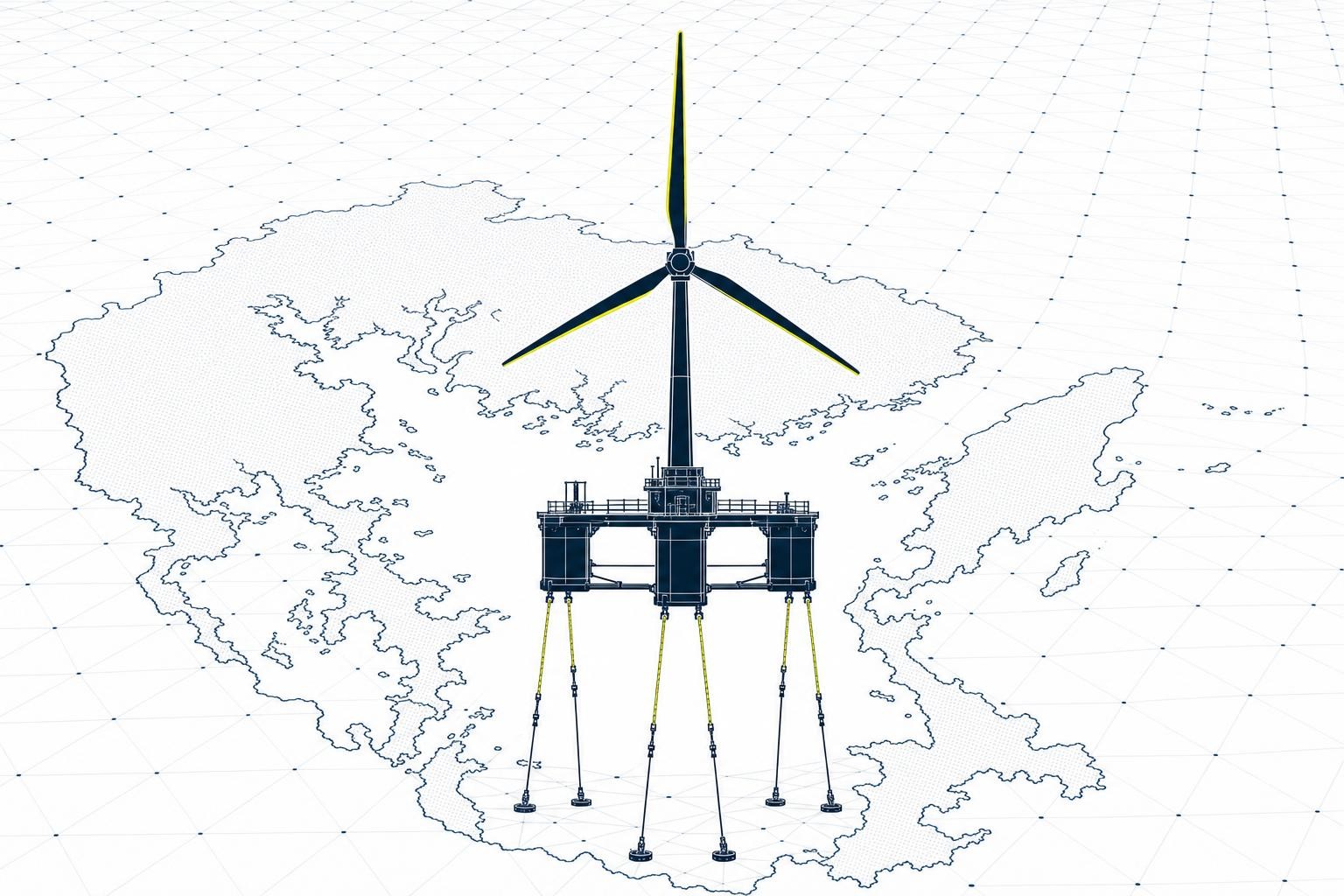
Ming Yang Smart Energy's Haiyou Anlan, the world's first 16 MW tension-leg platform (TLP) floating wind turbine, entered commercial operation on 6 August 2026, with CNOOC confirming grid connection to its Lufeng oilfield in the Pearl River Mouth Basin of the South China Sea[1]. The platform is now supplying green electricity directly to offshore oil production - the first time a TLP floating wind unit of this scale has done so anywhere in the world.
What the platform delivers
CNOOC expects Haiyou Anlan to generate 54 million kilowatt-hours of electricity annually, transmitted to the Lufeng oilfield power grid via a 4.3-kilometre subsea cable. The operational targets set by CNOOC are specific:
- 15,000 cubic metres of fuel oil saved per year
- 35,000 tonnes of CO2 emissions avoided annually
- A 25-year design service life
The platform uses a hybrid power system combining wind generation, conventional fuel generation, and energy storage to manage output variability - a practical concession to the intermittency constraints of a single-turbine installation supplying a live oilfield.
The TLP choice and its engineering logic
Haiyou Anlan is installed 136 kilometres from the coast in water 136 metres deep, making it the deepest and most distant-from-shore TLP floating wind facility in operation. The platform weighs 7,800 tonnes and has a rotor sweep equivalent to 7.5 standard football fields.
CNOOC chose a tension-leg design over the semi-submersible platforms more common in European floating wind pilots. TLP structures use buoyant hulls held in place by vertical tendons anchored to the seabed, which reduces lateral movement and cuts steel consumption per megawatt compared with semi-submersible alternatives. The trade-off is engineering complexity: TLP floating wind has no mature global precedent, and this project is China's first commercial application of the technology.
The platform is rated to withstand Level-17 typhoon conditions - sustained wind speeds of approximately 220 kilometres per hour - a design requirement that reflects the South China Sea's weather exposure and distinguishes the project from floating wind deployments in the North Sea or Celtic Sea.
Why an oilfield, not a grid
The Lufeng application is deliberate. Offshore oilfields carry their own captive electricity demand and typically run diesel or gas generators to meet it. Floating wind paired with storage can displace that fuel consumption without requiring a long-distance export cable to shore. The model is commercially simpler than a utility-scale floating wind farm and provides a controlled environment to validate TLP performance data before any replication at scale.
China's deep-water wind resource is large, but the country has no commercial floating wind capacity beyond this single unit. The Haiyou Anlan project gives CNOOC and Ming Yang a live operational dataset on TLP mooring behaviour, power system integration, and maintenance logistics in South China Sea conditions - information that no simulation or tank test can fully replicate.
The next question is whether CNOOC or other Chinese operators move to multi-turbine TLP arrays, and at what water depth and distance from shore the economics of a shore-connected floating wind farm become viable in Chinese waters.
The images and texts on this page were created with the help of AI.
Related
Ready-to-build BESS projects lose their premium as Australia's NEM arbitrage spreads collapse 85%
Panellists at the Battery Asset Management Summit Australia 2026 said the venture-capital-style returns that once rewarded ready-to-build BESS projects have disappeared as NEM price spreads fell 85% in a year.
10 Sept 2026UK government opens three-month consultation on AI for clean energy, backed by 34-recommendation network review
DESNZ published its Vision for an AI-enabled clean energy system on 8 September, opening a call for evidence that closes 6 November and will feed into the UK's first AI for Clean Energy Strategy.
10 Sept 2026Heatwaves expose a three-layer risk for wind operators: resource, hardware, and people
Extreme heat cuts wind output, stresses nacelle components, and grounds maintenance crews - all at once. A look at how bad the summer of 2026 has been, and what the trend means for grid reliability.
10 Sept 2026