BW ESS asset manager flags spare parts containers as overlooked theft risk at Australian BESS sites
A BW ESS asset manager and an Energy Safe Victoria regulator told the Battery Asset Management Summit Australia 2026 that copper theft and unsecured spare parts are a growing risk at grid-scale BESS sites.
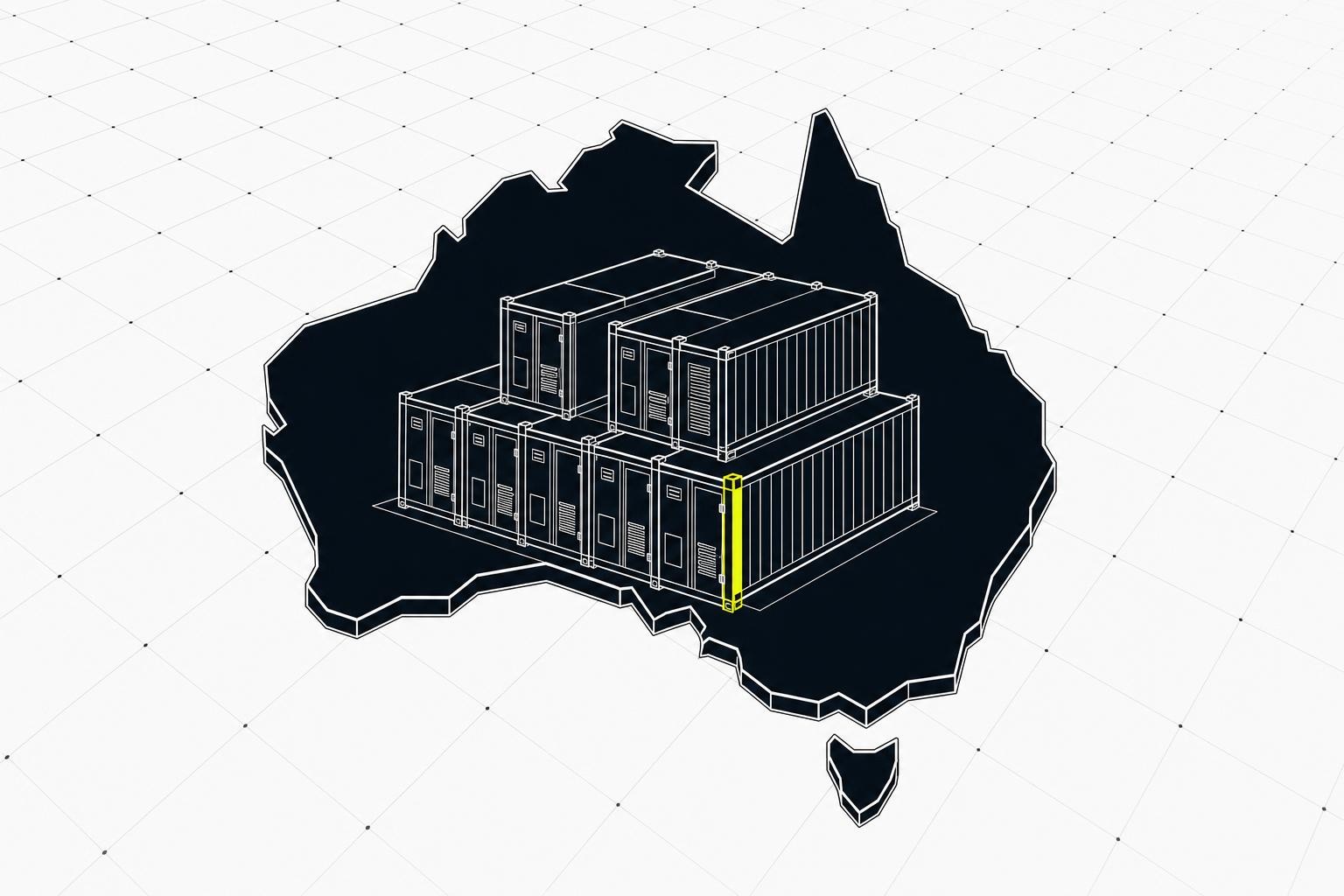
Panellists at the Battery Asset Management Summit Australia 2026 in Sydney identified physical security - specifically copper theft and unsecured spare parts stores - as a recurring operational risk at grid-scale battery storage sites, with one regulator saying he had personally observed the problem four or five times during site visits in the past six months alone.[1]
The copper theft pattern
Steven O'Donnell, generation and storage manager for renewable energy safety at Energy Safe Victoria, told the summit's "Mitigating the Worst-Case Scenario" panel that copper theft had become a notable pattern during routine and proactive site inspections.[1] "We've seen probably a growing trend of copper theft-initiated security issues," O'Donnell said, adding that he had personally observed it "four or five times in the last six months" while on site.
O'Donnell noted that physical security risks extended beyond battery storage assets themselves to the high-voltage substations and installations that accompany them, including historical fatalities involving children entering substations on utility networks. He observed that with hundreds of discrete assets now spread across the country, consistent site-level awareness could not be assumed, and that cameras provided at least an early warning of unauthorised activity.
The trend sits within a broader surge in copper theft across Victoria. Copper theft in Victoria has increased by 175% since 2018, according to Crime Statistics Agency data reported by The Age in May 2026, with more than 50 sites now targeted every week and nearly 6,000 thefts recorded in the three years from 2023 to 2025 - almost matching the total from the preceding seven years combined.
Spare parts: a separate, underappreciated exposure
Charlie Zha, an asset manager at BW ESS, told the panel that spare parts security was often overlooked compared with broader site security measures, recalling an early visit to a site where he was shown extensive intrusion detection and camera systems before discovering a separate vulnerability.
On inspecting the spare parts container, Zha found the door wide open. "They think, oh, they're just computers," he said. "I say they're not computers. A lot of engineering hours have gone into the coding programme for all this. I cannot afford to lose them."[1]
Peter Hulkenberg, director and principal consultant at Pelagion, added a second dimension to the spare parts problem: degradation. Hulkenberg said storing spare battery modules on site introduced a separate risk tied to degradation rather than theft. Modules held in ambient conditions lose capacity over time and may face transport restrictions if their state of charge falls outside regulatory limits - meaning a spare part that is physically present may not be usable when needed.
Hulkenberg noted that copper theft was not a new phenomenon, drawing on experience commissioning cables and substations in the UK around 18 years ago when earthing theft was already common.
Context: a maturing market with growing operational complexity
The summit itself reflects how quickly Australia's storage sector has scaled. Operational battery capacity in Australia is approaching 4 GW, with 75 projects representing 13 GW / 34.7 GWh now financially committed. The industry's stated focus has shifted from deployment to operational excellence - which is precisely where physical security gaps tend to surface.
BW ESS is one of the larger owner-operators navigating that transition. The company's Australian wholly or jointly-owned portfolio spans 1.3 GWh in the commissioning phase, 1 GWh entering construction, and a greenfield pipeline of around 2 GW across the National Electricity Market. Globally, BW ESS holds more than 540 MWh of operating BESS capacity, with roughly 11 GWh under construction across markets including the UK, Italy, Germany, Spain and Sweden.
The risks flagged at the summit point to a gap that is easy to miss during the construction and commissioning phases, when perimeter security and fire suppression tend to dominate safety planning:
- Spare parts containers may sit outside the main security perimeter or camera coverage.
- Coded control hardware is not obviously valuable to a casual intruder but is difficult and slow to replace.
- Copper earthing and cabling is a high-value, liquid commodity that thieves can strip quickly.
- Degradation of on-site spare modules can silently erode the operational buffer an asset manager depends on.
The watch point is whether the industry formalises spare parts security into standard O&M protocols - or whether it remains a lesson passed informally between asset managers at events like this one.
The images and texts on this page were created with the help of AI.
Related
 Renewables
RenewableUK hands out 14 awards at fifth annual Global Offshore Wind ceremony in London
RenewableUK presented 14 awards at the Royal Lancaster London on 13 October 2026, with Ocean Winds, ScottishPower Renewables and RWE among the winners across projects, people and industry priorities.
15 Oct 2026 Renewables
Panasonic's Aquarea N Series brings R454C refrigerant to residential heat pumps ahead of April 2027 European launch
Panasonic has unveiled the Aquarea High-Performance N Series, four air-to-water heat pump models using R454C refrigerant with a GWP of 148, targeting European residential markets from April 2027.
15 Oct 2026 Renewables
UK Energy Secretary Fahnbulleh calls for systemic overhaul, citing grid failures and consumer cost crisis
Speaking at Energy UK's annual conference on 14 October, DESNZ Secretary Miatta Fahnbulleh declared the UK energy system is failing consumers and demanded structural reform beyond piecemeal adjustment.
15 Oct 2026