Apollo Power plans integrated solar-roofing launch at RE+ as Panda Plus secures Class A fire rating
Apollo Power will unveil an integrated solar-roofing product at RE+ in Las Vegas in November 2026, with certifications already secured, as its Panda Plus module claims a Class A fire rating first.
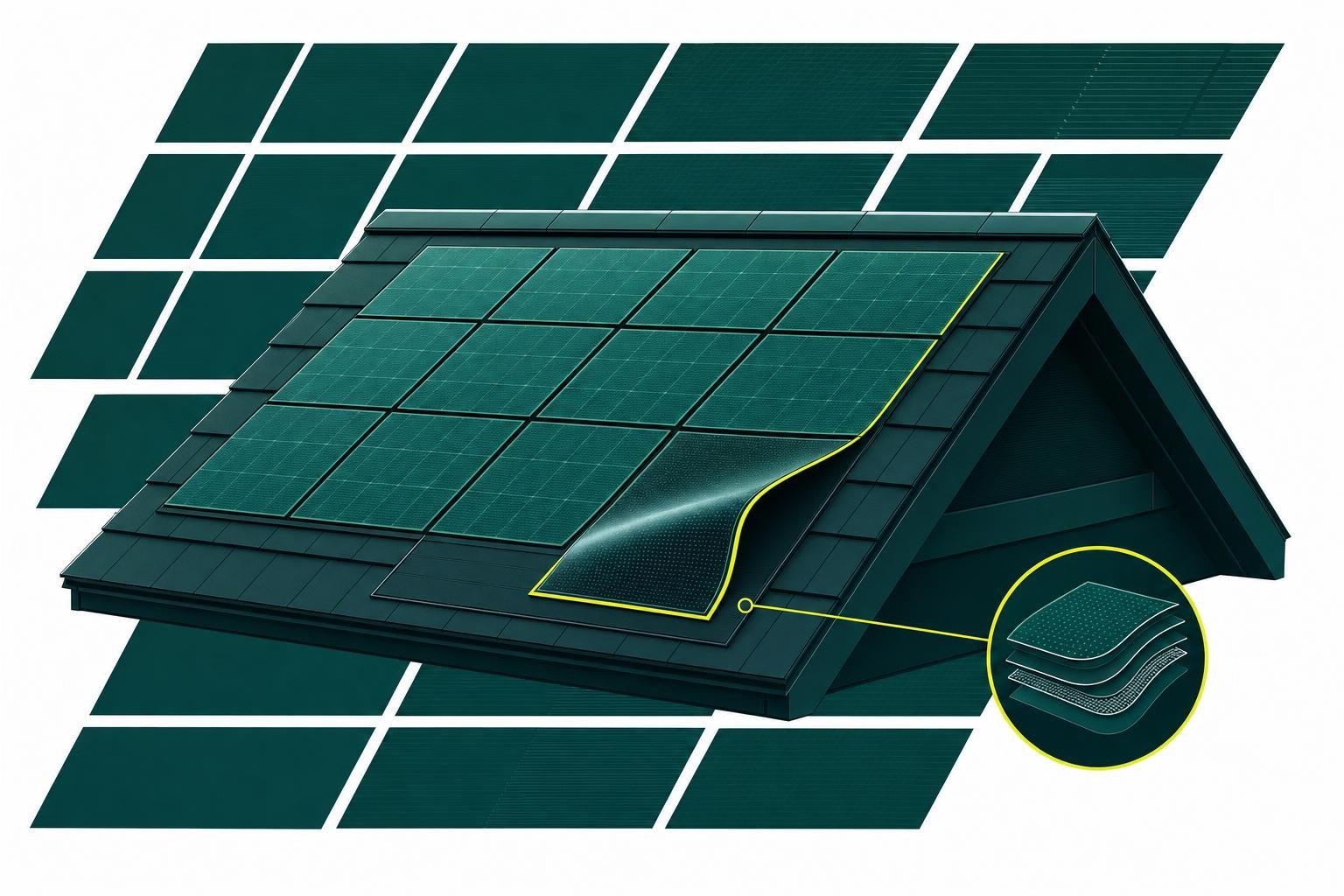
Israeli flexible-module manufacturer Apollo Power has disclosed plans to launch an integrated solar-roofing product at the RE+ trade show in Las Vegas in November 2026, developed in partnership with an unnamed US roofing company[1]. The announcement came alongside the company's claim that its Panda Plus module is the first flexible solar panel to achieve a Class A fire resistance rating - a certification previously held only by rigid glass panels[1].
The RE+ roofing product
Apollo CEO Oded Rozenberg told pv magazine that certifications for the roofing product have already been secured, though he declined to name the partner company or disclose full product details ahead of the show[1]. RE+ 2026 runs 16-19 November at the Las Vegas Convention Center, making it North America's largest clean-energy trade event of the year.
Rozenberg described the US integrated solar-roofing market as having "great potential," positioning the product as a natural extension of Apollo's core commercial-rooftop business[1]. The company has previously executed a roofing-membrane distribution agreement in France, Monaco, and Andorra, and in August 2025 signed an agreement with the Tel Aviv-Yafo Economic Development Authority for flexible solar roofing.
Panda Plus: specs and the fire rating
The Panda Plus, launched in June 2026, is built on a fully flexible 72-cell (6×12) platform and comes in three formats[1]:
- Frameless white (AG1206FL): 320 W ±5%, 6.8 kg ±3%, 2,020 × 1,005 × 2.3 mm, junction box on the front
- Frameless black: same electrical and physical specification
- Framed (AG1206F): 310 W ±5%, 9.5 kg ±5%, 23 mm black-anodized aluminum frame, junction box on the back
The frameless Panda Plus weighs 6.8 kg across a 2 m² footprint - roughly 3.4 kg/m², compared with 10-12 kg/m² for a conventional glass-framed module. The framed variant was added in response to customer demand for a rack-compatible option that can be replaced without disturbing adhesive, though it gives up some of the weight advantage[1].
The Class A fire rating was achieved through improved materials and a new manufacturing patent that Apollo has not disclosed, after subjecting the polymer-based module to the same test regime applied to glass panels - including 1,000 hours of damp-heat cycling, accelerated weathering, and hail testing[1].
Both frameless and framed variants use MC4-EVO2 connectors and a 1,000 VDC maximum system voltage[1].
Market and distribution context
Residential and commercial rooftops with weight or structural constraints represent the majority of Apollo's sales[1]. Beyond rooftops, the company serves automotive and portable-power segments:
- An exclusive European distribution agreement with automotive supplier ZF covers solar systems for buses and trucks[1]
- Rollable solar fabric is supplied to Lippert for integration into its RV awning portfolio[1]
- A lightweight rooftop solar module and charger kit for trucks and buses has been launched for the US transport-electrification market[1]
Apollo Power's previous Panda generation carried a UL 790 Class C fire rating. The Panda Plus Class A claim has not been independently verified by Baseload News beyond the company's own statement to pv magazine.
What to watch
The identity of the US roofing partner and the full product specification will be the key disclosures at RE+ in November. The fire rating claim, if it holds under independent scrutiny, removes one of the main regulatory barriers that has kept polymer-based flexible modules off building envelopes in fire-code-sensitive US markets. Whether the integrated roofing product can compete on installed cost against established BIPV players - and whether the Class A rating applies under both UL 790 and the European EN 13501-1 framework - will determine how much of that market opportunity Apollo can actually address.
The images and texts on this page were created with the help of AI.
Related
Ready-to-build BESS projects lose their premium as Australia's NEM arbitrage spreads collapse 85%
Panellists at the Battery Asset Management Summit Australia 2026 said the venture-capital-style returns that once rewarded ready-to-build BESS projects have disappeared as NEM price spreads fell 85% in a year.
10 Sept 2026UK government opens three-month consultation on AI for clean energy, backed by 34-recommendation network review
DESNZ published its Vision for an AI-enabled clean energy system on 8 September, opening a call for evidence that closes 6 November and will feed into the UK's first AI for Clean Energy Strategy.
10 Sept 2026Heatwaves expose a three-layer risk for wind operators: resource, hardware, and people
Extreme heat cuts wind output, stresses nacelle components, and grounds maintenance crews - all at once. A look at how bad the summer of 2026 has been, and what the trend means for grid reliability.
10 Sept 2026