Apollo Power claims Class A fire certification for flexible solar module, a first for polymer-based panels
Israeli manufacturer Apollo Power says its Panda Plus module is the first flexible solar panel to achieve a Class A fire rating, previously the exclusive domain of rigid glass panels.
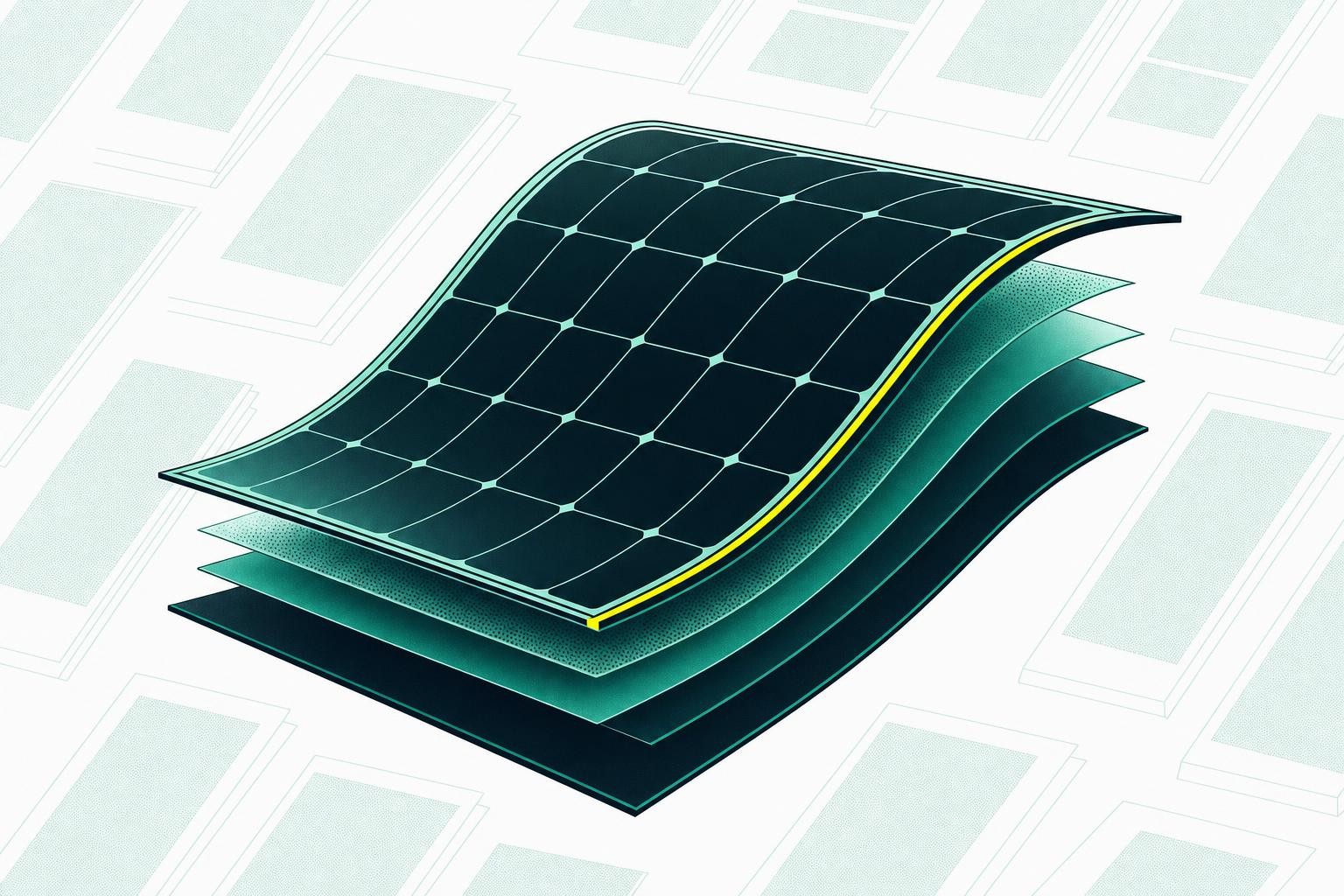
Israeli manufacturer Apollo Power says its new Panda Plus module has secured Class A fire certification from a certified laboratory - a rating the company's CEO claims has never before been achieved by a flexible solar panel[1].
"To the best of our knowledge, nobody has ever made a flexible solar panel that can achieve a Class A fire resistance rating," CEO Oded Rozenberg told pv magazine[1]. The Panda Plus was launched in June 2026.
Why Class A matters for flexible modules
Class A is the highest fire resistance classification for roofing products, requiring panels to pass a Spread of Flame test, a Burning Brand test, and an Intermittent Flame test. To achieve a Class A fire rating, a panel must undergo three tests: the Spread of Flame Test, the Burning Brand Test, and the Intermittent Flame Test.
The barrier for polymer-based panels has historically been their materials. The primary challenge with flexible solar is the use of polymers like ETFE, EVA, or backsheets, which are naturally organic and potentially flammable. The prior generation of Apollo's Panda module carried a Class C fire rating under UL 61730 and UL 790, according to product documentation published before the Panda Plus launch.
Apollo says the Class A result was achieved through improved materials and a new manufacturing patent it has not disclosed[1]. The company noted that subjecting polymer-based modules to the same test regime used for glass panels - including 1,000 hours of damp-heat cycling, accelerated weathering, and hail testing - was "very demanding"[1].
Module specifications
The Panda Plus ships in three formats on the same fully flexible 72-cell (6×12) platform[1]:
- Frameless white (AG1206FL): 320 W ±5%, 6.8 kg ±3%, 2,020 × 1,005 × 2.3 mm, junction box on the front, adhesive installation
- Frameless black: same platform and ratings as the white variant
- Framed (AG1206F): 310 W ±5%, 9.5 kg ±5%, 23 mm black-anodized aluminum frame, 2,026 × 1,010 × 23 mm, junction box on the back, standard racking
Both frameless and framed variants use MC4-EVO2 connectors and a 1,000 VDC maximum system voltage, with near-identical temperature coefficients (Pmax: -0.363%/°C)[1].
Rozenberg acknowledged the trade-off in the framed option: rack-mounting gives up some of the weight advantage that is central to the product's positioning, though he said it remains lighter than a comparable glass panel with mounting hardware[1]. The framed version was added in response to customer demand for a more easily replaceable module that does not require disturbing adhesive[1].
Markets and what comes next
Residential and commercial rooftops with weight or design constraints represent most of Apollo's sales[1]. The company also serves automotive and portable applications, including solar charging systems for trucks and buses under an exclusive European distribution agreement with automotive supplier ZF, and rollable solar fabric integrated into Lippert's recreational-vehicle awning portfolio[1].
Apollo is working with an unnamed US roofing company on an integrated solar-roofing product planned for launch around RE+ 2026, which runs 16-19 November in Las Vegas[1]. Rozenberg said certifications have already been secured for the module involved but declined to give further details ahead of the show[1].
The fire certification claim is unverified by an independent third party in the public domain. Rozenberg's framing - "to the best of our knowledge" - leaves open the possibility that comparable results exist elsewhere. Whether the rating holds across the full range of installation substrates, as distinct from the module in isolation, is the question that building-code authorities and specifiers will want answered before the US roofing product reaches permitting.
The images and texts on this page were created with the help of AI.
Related
Ready-to-build BESS projects lose their premium as Australia's NEM arbitrage spreads collapse 85%
Panellists at the Battery Asset Management Summit Australia 2026 said the venture-capital-style returns that once rewarded ready-to-build BESS projects have disappeared as NEM price spreads fell 85% in a year.
10 Sept 2026UK government opens three-month consultation on AI for clean energy, backed by 34-recommendation network review
DESNZ published its Vision for an AI-enabled clean energy system on 8 September, opening a call for evidence that closes 6 November and will feed into the UK's first AI for Clean Energy Strategy.
10 Sept 2026Heatwaves expose a three-layer risk for wind operators: resource, hardware, and people
Extreme heat cuts wind output, stresses nacelle components, and grounds maintenance crews - all at once. A look at how bad the summer of 2026 has been, and what the trend means for grid reliability.
10 Sept 2026