WSP's hard backlog from top US power clients rises 20% as grid engineering work displaces transport as its core US business
WSP Global's Q2 2026 earnings detail a structural shift: power now accounts for 35-40% of US revenue, up from near zero five years ago, with hard backlog from top power clients rising 20% year over year.
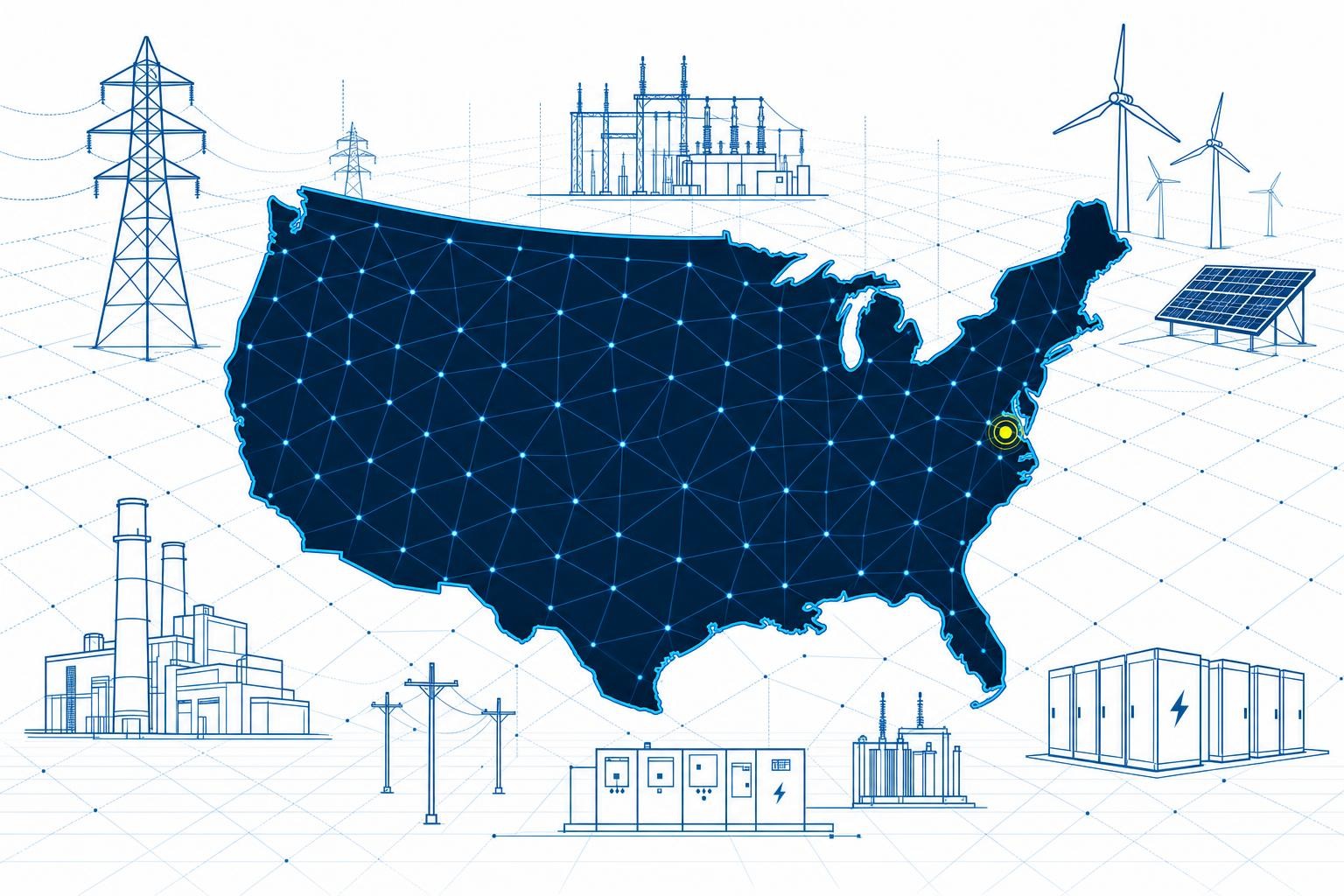
Five years ago, transportation and infrastructure generated roughly 80% of WSP Global's US revenue[1]. On the company's Q2 2026 earnings call on 6 August, CEO Alexandre L'Heureux said power now accounts for approximately 35% to 40%[1] - a near-complete inversion of the firm's US revenue mix.
The shift is not just organic. WSP closed its $3.3 billion all-cash acquisition of Connecticut-based TRC Companies in February 2026, adding roughly 8,000 employees and making WSP the largest engineering firm in the US by revenue. TRC employs approximately 8,000 professionals and is known for its work across the power and energy sector; with the transaction closed, WSP significantly expanded its US footprint, particularly in power and energy. The firm had previously acquired POWER Engineers, and the two deals together now give WSP coverage of the full utility value chain.
Grid client metrics
The earnings call produced several concrete grid-side numbers:
- Net revenue from WSP's 40 largest global power clients increased 30% year over year, while hard backlog from those clients in the US rose 20%.
- WSP now serves the top 60 US investor-owned utilities - a client roster that spans nearly every major transmission owner in the country.
- Management has identified more than 100 collaboration opportunities between WSP and TRC teams, with one joint pursuit leading to a significant award from a large investor-owned utility.
TRC's Power & Energy market sector achieved double-digit net revenue growth compared to its results in the corresponding period prior to the acquisition.
Nuclear siting adds a long-cycle pipeline
Beyond transmission and distribution work, WSP is positioning for the next wave of generation infrastructure. WSP is supporting 22 prospective US nuclear sites, with responsibilities spanning site selection, licensing, design, and construction support[1]. That pipeline is structurally different from grid-upgrade work: nuclear siting engagements run for years before a shovel enters the ground, providing backlog visibility that short-cycle transmission projects do not.
WSP is also supporting 22 prospective US nuclear sites, where its responsibilities include site selection, licensing, design and construction support.
Data centers as a grid load driver
Data centers are not a separate business line for WSP - they are a demand driver for the grid work. Data center revenue grew more than 20% year over year during the first half of 2026, while its sales pipeline expanded approximately 30% year over year. L'Heureux described the underlying demand as tied to "long-term-duration investment themes" rather than a cyclical spike[1].
Company-level results
WSP Q2 2026 revenues reached $5.4 billion, up 19.9% year over year, with adjusted EBITDA rising 28.8% to CAD 815 million and margin expanding 90 basis points to 19.1% - the firm's best second-quarter margin since its IPO. Backlog reached a record CAD 20.1 billion, up 23.2% year over year. Five years ago the US business had 9,000 employees; today it employs 28,000 US-based people.
WSP raised its 2026 financial outlook, now expecting CAD 16.2 billion to CAD 17 billion in net revenue and CAD 3.1 billion to CAD 3.18 billion in adjusted EBITDA.
The number to watch in subsequent quarters is whether organic backlog growth - currently running at 5.7% over the trailing twelve months - accelerates as TRC integration matures and joint utility pursuits convert. TRC hard and soft backlog grew 30% and 35% respectively, with more than 100 joint pursuit opportunities identified. If those convert at the rate implied by the Q2 IOUs award, the power share of US revenue could push above 40% before the end of WSP's current strategic plan cycle.
The images and texts on this page were created with the help of AI.
Related
 Markets & Policy
Global aluminum deficit widens as Middle East smelter damage opens a window for US production - if Oklahoma's power contract closes
Middle East smelter strikes and Hormuz disruptions have pushed the 2026 global aluminum deficit toward 4 Mt, creating a demand window for US producers - but the Oklahoma greenfield project still needs a power deal.
16 Aug 2026 Markets & Policy
UC Santa Cruz and UCSB study in Science finds EV manufacturing debt repaid within three years across most U.S. grid regions
A study in Science by Campbell and Geyer finds that replacing a working gas car with an EV cuts 16-year lifecycle emissions by up to 58%, with the manufacturing carbon debt offset in roughly three years.
16 Aug 2026 Storage
ESS Tech's Q2 net loss widens 41% to $15.6 million as cash falls to $5.6 million and going concern doubt emerges
ESS Tech reported a $15.6M Q2 2026 net loss and near-zero revenue on 11 August, disclosed going concern doubt, and signed a non-binding $515M business combination LOI alongside its sodium-ion pivot.
16 Aug 2026