Industry coalition urges Denmark to publish a long-term offshore wind roadmap to 2050
The Offshore Wind 2050 Partnership says Denmark needs a durable planning framework and three new development tracks to unlock up to 80 GW of offshore capacity by 2050.
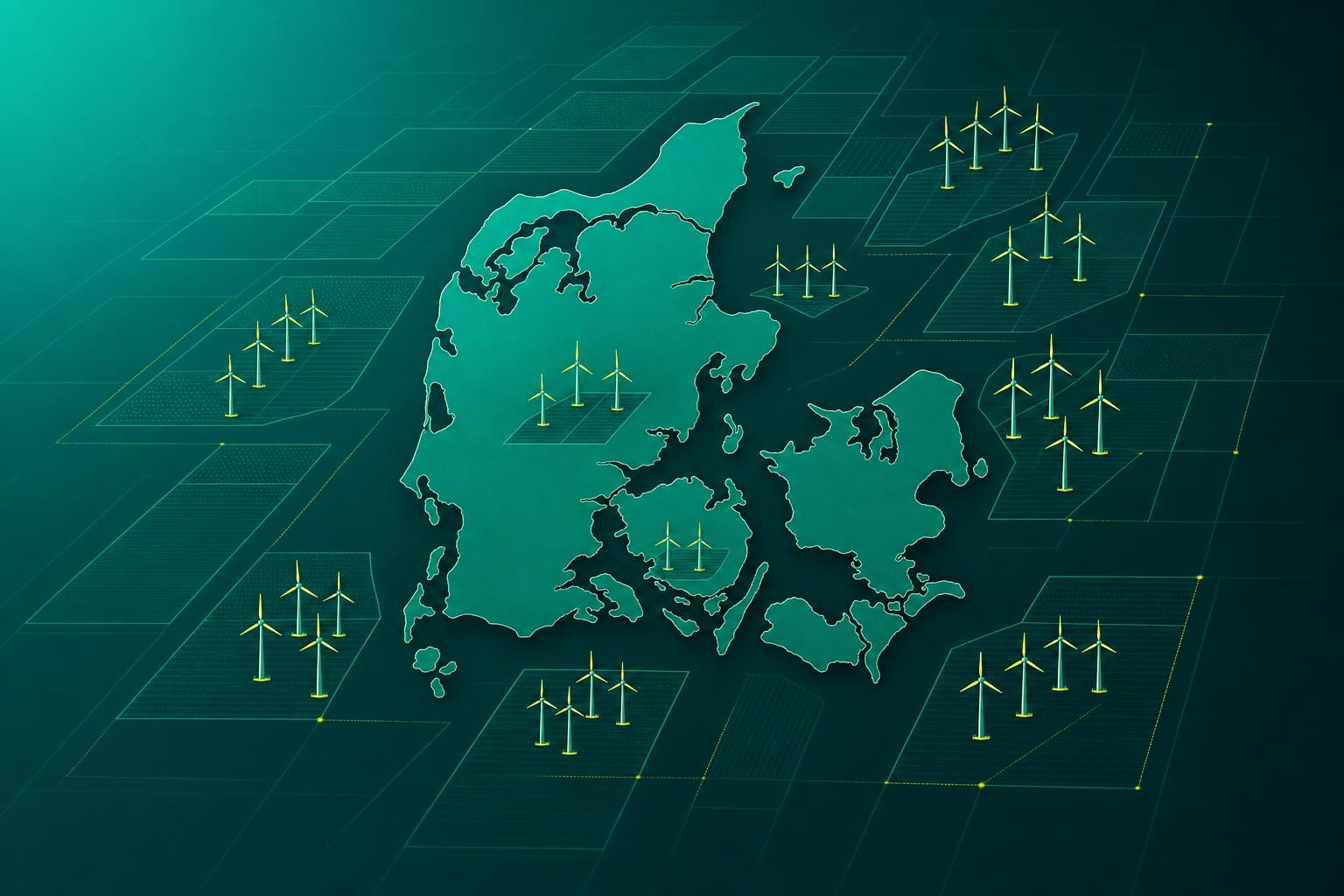
A broad Danish industry coalition is pressing the government to publish a comprehensive long-term offshore wind plan, warning that the current project-by-project procurement approach leaves investors without the visibility they need to commit capital at scale.
The call comes from the Offshore Wind 2050 Partnership, whose report Offshore wind in Denmark towards 2050 was published this week[1]. The partnership identifies three new development tracks that could make Danish offshore wind more flexible and less dependent on a single procurement model[1].
Who is asking and what they want
The Offshore Wind 2050 Partnership comprises Green Power Denmark, the Confederation of Danish Industry, the Danish Chamber of Commerce, Insurance & Pension, the Danish Metal Workers' Association, the Think Tank Hav, and Hydrogen Denmark[1]. The breadth of the coalition - spanning finance, manufacturing, labour, and trade - signals that the planning gap is seen as a cross-sector constraint, not just a developer grievance.
The report's central argument is that Denmark's maritime areas could support up to 80 GW of offshore wind by 2050[1], well above the government's current official target of at least 35 GW by that date. Realising that potential, the partnership argues, requires a durable framework rather than a sequence of individual tenders.
The three development tracks proposed in the report address different market segments:
- State-tendered projects connecting to the Danish grid, as today
- Offshore wind projects on the Danish continental shelf connecting directly to neighbouring countries, with bilateral frameworks established with the receiving states[1]
- Developer-initiated projects with the flexibility to connect to Denmark, abroad, or both[1]
Near-term asks
Beyond the long-term framework, Green Power Denmark makes two immediate requests for the North Sea South tender - the 1 GW zone whose bid deadline currently sits in autumn 2028. The organisation proposes raising the payment ceiling for North Sea South to bring it closer to the support ceiling for Hesselø, which attracted five bids[1]. It also proposes bringing the North Sea South tender deadline forward from 2028 to 2027[1].
The Hesselø comparison is pointed. When Vattenfall won the Hesselø and North Sea I Mid tenders on 4 August 2026, the agency confirmed that Hesselø had drawn five competing bids while North Sea I Mid attracted only two. Vattenfall's winning strike prices were €67.42/MWh for North Sea I Mid and €72.50/MWh for Hesselø. The disparity in bid depth suggests that ceiling levels and project terms matter significantly for market participation.
The planning gap in context
Denmark's government launched tenders for three offshore wind areas - North Sea Mid, Hesselø, and North Sea South - in November 2025, under a two-sided capability-based contract for difference that guarantees developers a fixed electricity price. The EU approved the associated €5 billion state aid scheme in March 2026. With Vattenfall now awarded the first two sites and North Sea South still open, the immediate pipeline is set. The partnership's concern is what comes after.
Denmark's official offshore wind targets stand at 14 GW by 2030 and at least 35 GW by 2050, against a current installed base that the Hesselø and North Sea I Mid awards will expand by at least 1.8 GW once both farms are operational by 2032. Bridging from that near-term pipeline to an 80 GW ceiling by mid-century requires a cadence of tenders, grid reservations, and cross-border agreements that do not yet exist on paper.
What to watch
The government has not yet responded publicly to the partnership's report. The most immediate test will be whether Copenhagen moves on the two near-term asks - the North Sea South payment ceiling and the 2027 tender date - before the current political window closes. A decision to accelerate North Sea South would signal that the broader long-term planning exercise is also in motion; continued silence would confirm the coalition's concern that Denmark is managing its offshore programme one tender at a time.
The images and texts on this page were created with the help of AI.
Related
 Renewables
RenewableUK hands out 14 awards at fifth annual Global Offshore Wind ceremony in London
RenewableUK presented 14 awards at the Royal Lancaster London on 13 October 2026, with Ocean Winds, ScottishPower Renewables and RWE among the winners across projects, people and industry priorities.
15 Oct 2026 Renewables
Panasonic's Aquarea N Series brings R454C refrigerant to residential heat pumps ahead of April 2027 European launch
Panasonic has unveiled the Aquarea High-Performance N Series, four air-to-water heat pump models using R454C refrigerant with a GWP of 148, targeting European residential markets from April 2027.
15 Oct 2026 Renewables
UK Energy Secretary Fahnbulleh calls for systemic overhaul, citing grid failures and consumer cost crisis
Speaking at Energy UK's annual conference on 14 October, DESNZ Secretary Miatta Fahnbulleh declared the UK energy system is failing consumers and demanded structural reform beyond piecemeal adjustment.
15 Oct 2026