Virginia SCC orders Dominion Energy to develop direct-assignment tariff for data center transmission costs
Virginia's SCC has ordered Dominion Energy to create a tariff directly assigning transmission infrastructure costs to data centers, ending the practice of spreading those costs across all ratepayers.
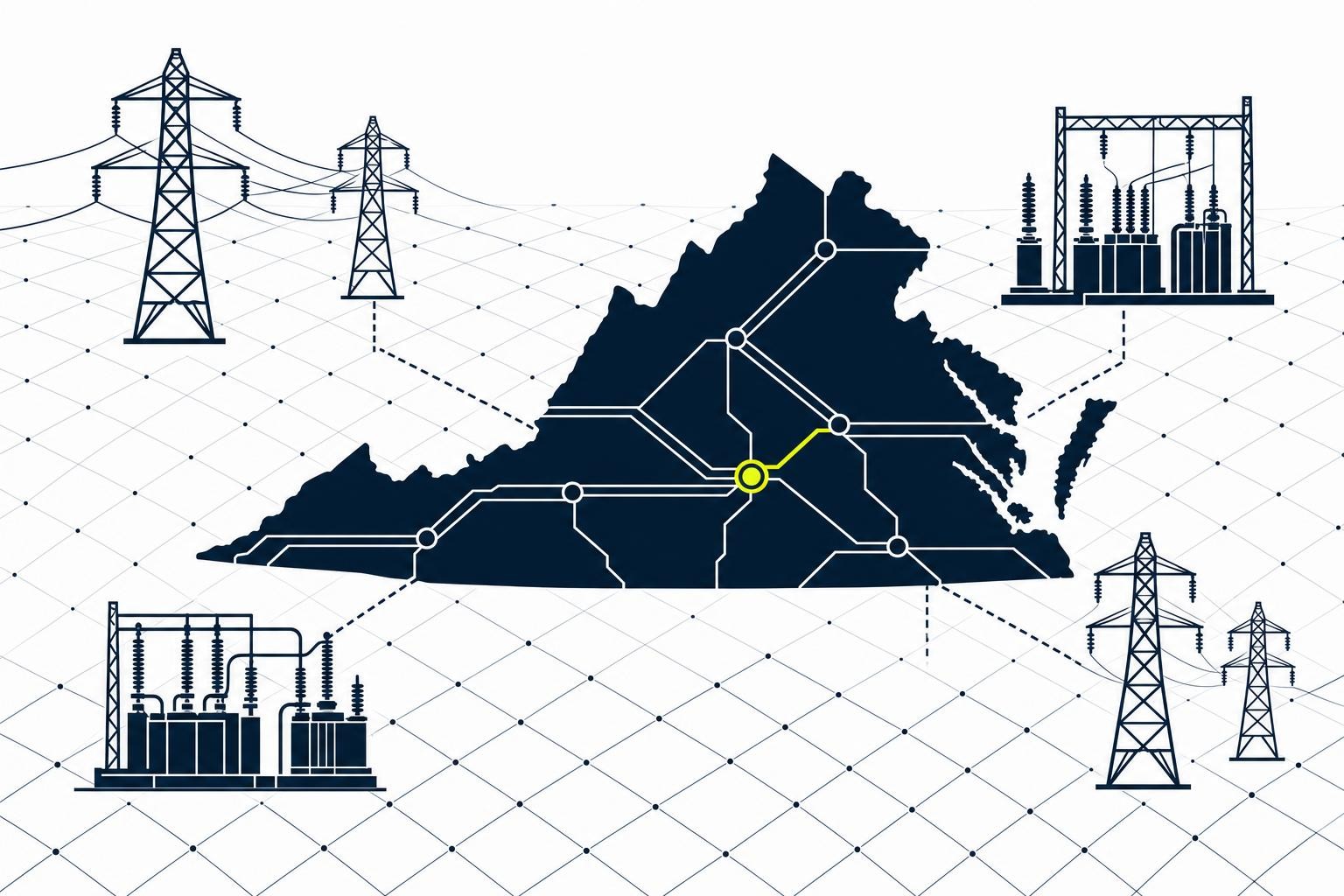
Virginia's State Corporation Commission issued an order in early August 2026 directing Dominion Energy to develop a new tariff that directly assigns the cost of transmission infrastructure - substations, high-voltage lines, and related grid upgrades - to the data centers and other large-load customers that trigger it[1]. The ruling came out of Dominion's latest Rider T-1 rate adjustment case, in which the utility sought to recover approximately $1.5 billion in transmission costs[1].
What the SCC ordered
The commission's direction is specific: Dominion must design a policy "with the goal of finding an acceptable and symmetrical approach towards assigning costs in these circumstances." The mechanism targets infrastructure that would not have been built absent a particular large-load customer - a standard sometimes called "but for" cost causation.
The new tariff, if approved, would operate under Dominion's GS-5 large-load rate class. GS-5 customers are already expected to pay transmission charges based on at least 85% of their highest recorded demand, even if their usage later falls. The SCC cited the proposed Valley Link project as a concrete example of infrastructure that could be directly assigned to that class: a planned 115-mile (185 km), 765 kV transmission line running from Lynchburg to Culpeper to push additional power into Northern Virginia[1].
The order also left the door open for data centers to bear costs further upstream - regional transmission projects that are harder to tie to a single customer but are nonetheless driven by aggregate large-load growth.
The $1.5 billion backstory
Dominion's 2024 integrated resource plan identified data centers as "the single highest driver of the company's load forecast and the single highest driver of transmission projects and their associated costs," according to SCC staff testimony. The utility reported 203 transmission projects in its grid connection pipeline.
The residential stakes were visible in Dominion's own filings. The company originally sought a $2.90 monthly increase for the average customer under Rider T-1. After revising its allocation formula to reflect the new GS-5 rate class, that figure fell to roughly $0.94 per month - a reduction that illustrates how much of the transmission bill had been sitting with residential ratepayers.
Governor Spanberger's intervention
In a step described as unusual for a sitting governor, Abigail Spanberger's administration filed comments directly with the SCC, arguing that data centers should pay their "fair share" and that residential customers should not subsidize infrastructure built solely for commercial hyperscale operations. Deputy Chief Energy Officer Louise White testified that "any network or substation upgrades that would not have been triggered but for a large load customer should be assigned directly to that customer."
The commission sided with that position. Environmental groups also welcomed the ruling. "The decision establishes an important precedent: Virginia families and small businesses should not subsidize transmission infrastructure built solely to connect new large-load data centers," said Chris Miller, president of the Piedmont Environmental Council.
What comes next
The SCC's order is a direction to develop a tariff, not a final approved rate. Dominion must now design the mechanics of direct assignment and bring them back to the commission for review. The order acknowledged that even a well-designed tariff "may not address all instances" where transmission costs are driven by large-load additions - leaving open the question of how to handle shared or regional projects where causation is diffuse.
Virginia hosts more data center capacity than any other jurisdiction in the world, and the SCC's cost-allocation framework will be watched closely by regulators in other PJM states facing the same question. The next test will be whether Dominion's proposed tariff design satisfies the commission's symmetry standard - and how hyperscalers respond to a cost structure that could materially change the economics of new Virginia campuses.
The images and texts on this page were created with the help of AI.
Related
Ready-to-build BESS projects lose their premium as Australia's NEM arbitrage spreads collapse 85%
Panellists at the Battery Asset Management Summit Australia 2026 said the venture-capital-style returns that once rewarded ready-to-build BESS projects have disappeared as NEM price spreads fell 85% in a year.
10 Sept 2026UK government opens three-month consultation on AI for clean energy, backed by 34-recommendation network review
DESNZ published its Vision for an AI-enabled clean energy system on 8 September, opening a call for evidence that closes 6 November and will feed into the UK's first AI for Clean Energy Strategy.
10 Sept 2026Heatwaves expose a three-layer risk for wind operators: resource, hardware, and people
Extreme heat cuts wind output, stresses nacelle components, and grounds maintenance crews - all at once. A look at how bad the summer of 2026 has been, and what the trend means for grid reliability.
10 Sept 2026