Turboden America locks in 1,750 MW ORC framework with Fervo as geothermal turbine supply shifts from bespoke to standard
Turboden America signed a three-year, 1,750 MW ORC turbine framework with Fervo Energy in April 2026, marking a structural shift in how foreign suppliers are positioning for a US geothermal boom.
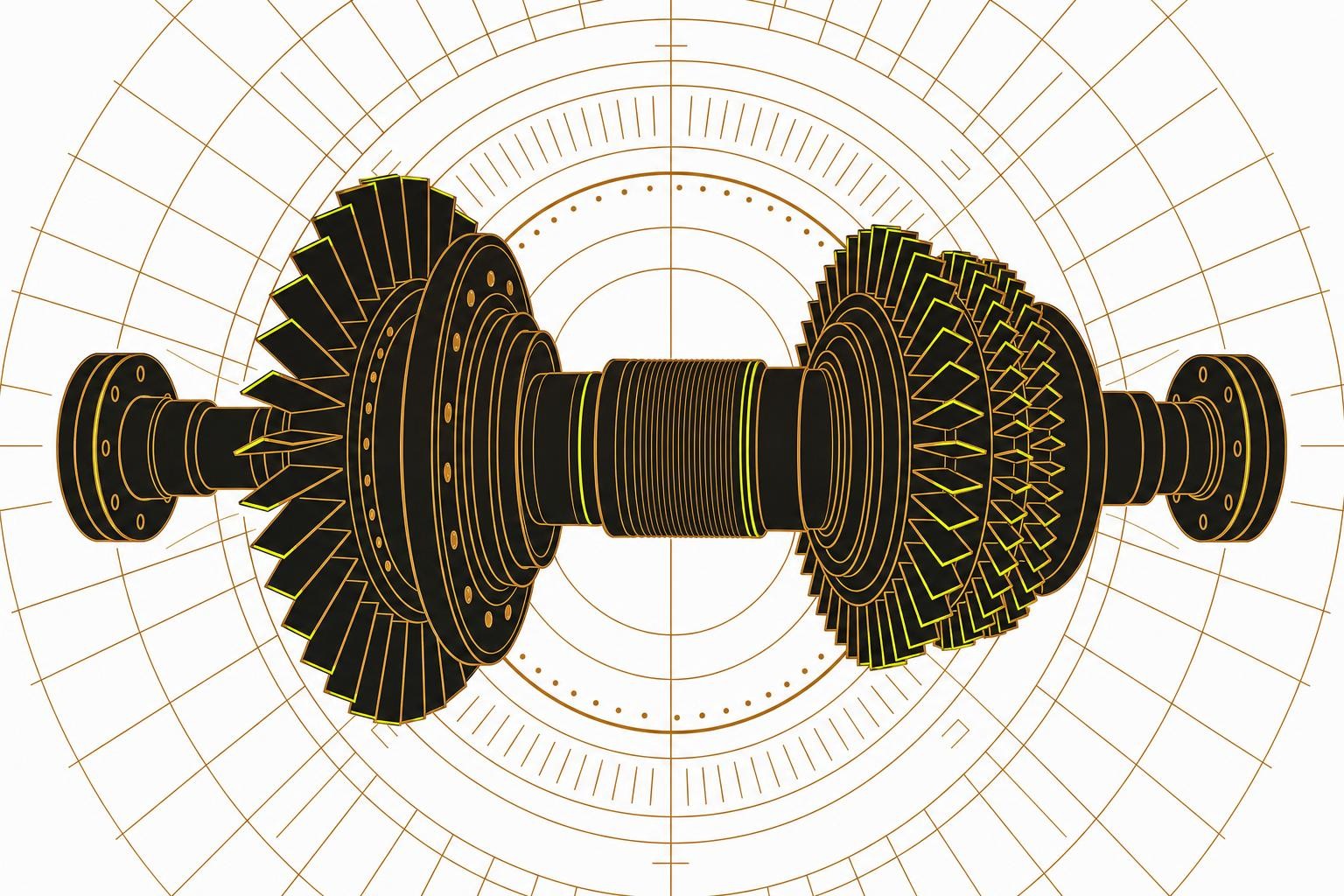
Turboden America LLC, a subsidiary of Italy's Turboden S.p.A. and part of the Mitsubishi Heavy Industries Group, signed a three-year framework agreement with Fervo Energy on 7 April 2026 to supply organic Rankine cycle (ORC) turbine units for up to 35 GeoBlocks totalling 1,750 MW of dispatchable, carbon-free capacity[1]. The deal is the largest single ORC supply commitment yet made for US next-generation geothermal and signals a structural shift in how foreign equipment makers are approaching the market.
From reservoir-specific to repeatable
Historically, geothermal surface-plant equipment was engineered around the specific characteristics of each reservoir. A developer would locate a resource, determine its output, and commission turbines built to that exact specification - a bespoke process that could take well over a year from order to delivery[1].
Next-generation developers are changing that logic. Fervo has built its entire project strategy around a standardized 50 MW "GeoBlock" unit using ORC equipment[1]. By engineering the reservoir itself through horizontal drilling and hydraulic stimulation, rather than adapting equipment to whatever the ground provides, Fervo can order turbines to a fixed spec and repeat the process at scale. The April 2026 framework builds on an earlier Turboden contract covering three 50 MW GeoBlocks at Cape Station, Fervo's enhanced geothermal development in Beaver County, Utah[1].
Cape Station Phase I is on track to begin delivering power to the grid by late 2026, reaching approximately 100 MW of operating capacity by early 2027, with Phase II targeting an additional 400 MW by 2028.
A concentrated supplier base, all outside the US
Almost none of the ORC turbine production capacity needed for large-scale US geothermal plants is manufactured in the United States[1]. The handful of companies capable of supplying at this scale - Turboden (Italy), Exergy (Italy), Ormat (Israel/US), and Baker Hughes - have manufacturing spread across Europe, the Middle East, and Asia[1].
The RMI's May 2026 report on the geothermal supply chain noted that ORC turbines for enhanced geothermal systems are made mostly abroad, and that the uncertain deployment trajectory for next-generation geothermal has historically deterred dedicated domestic manufacturing investment[1]. Framework agreements of the Turboden-Fervo type are designed to break that cycle by giving suppliers the volume visibility needed to justify capacity expansion and US-based operations.
Key features of the Turboden-Fervo framework:
- Three-year term covering up to 35 GeoBlocks at 50 MW each
- Delivery timelines set in advance to support faster project execution
- Builds on prior Cape Station contract for three GeoBlocks already in advanced commissioning
- Intended to expand Turboden's US-based supply chain for its proprietary ORC design
Exergy, also headquartered near Milan, has separately appointed a dedicated Americas sales manager and attended the Geothermal Transition Summit in Houston in 2026, signalling similar intent to build a US commercial presence[1].
What to watch
The immediate test is whether Cape Station Phase I connects to the grid on its late-2026 schedule. A successful first delivery would validate the standardized GeoBlock model and give other ORC suppliers the commercial signal they need to commit further US capacity. The parallel constraint - transformer and switchgear lead times that the RMI report flags as running up to four years for large power transformers - remains unresolved and could limit how quickly contracted turbine capacity translates into grid-connected megawatts.
The images and texts on this page were created with the help of AI.
Related
Ready-to-build BESS projects lose their premium as Australia's NEM arbitrage spreads collapse 85%
Panellists at the Battery Asset Management Summit Australia 2026 said the venture-capital-style returns that once rewarded ready-to-build BESS projects have disappeared as NEM price spreads fell 85% in a year.
10 Sept 2026UK government opens three-month consultation on AI for clean energy, backed by 34-recommendation network review
DESNZ published its Vision for an AI-enabled clean energy system on 8 September, opening a call for evidence that closes 6 November and will feed into the UK's first AI for Clean Energy Strategy.
10 Sept 2026Heatwaves expose a three-layer risk for wind operators: resource, hardware, and people
Extreme heat cuts wind output, stresses nacelle components, and grounds maintenance crews - all at once. A look at how bad the summer of 2026 has been, and what the trend means for grid reliability.
10 Sept 2026