Trump signs Section 232 proclamation imposing 15% tariff and price floors on polysilicon, effective 4 December 2026
Trump's 6 August proclamation imposes a 15% tariff and minimum import prices on polysilicon and derivatives, taking effect 4 December 2026 - with direct consequences for solar project costs and chip supply chains.
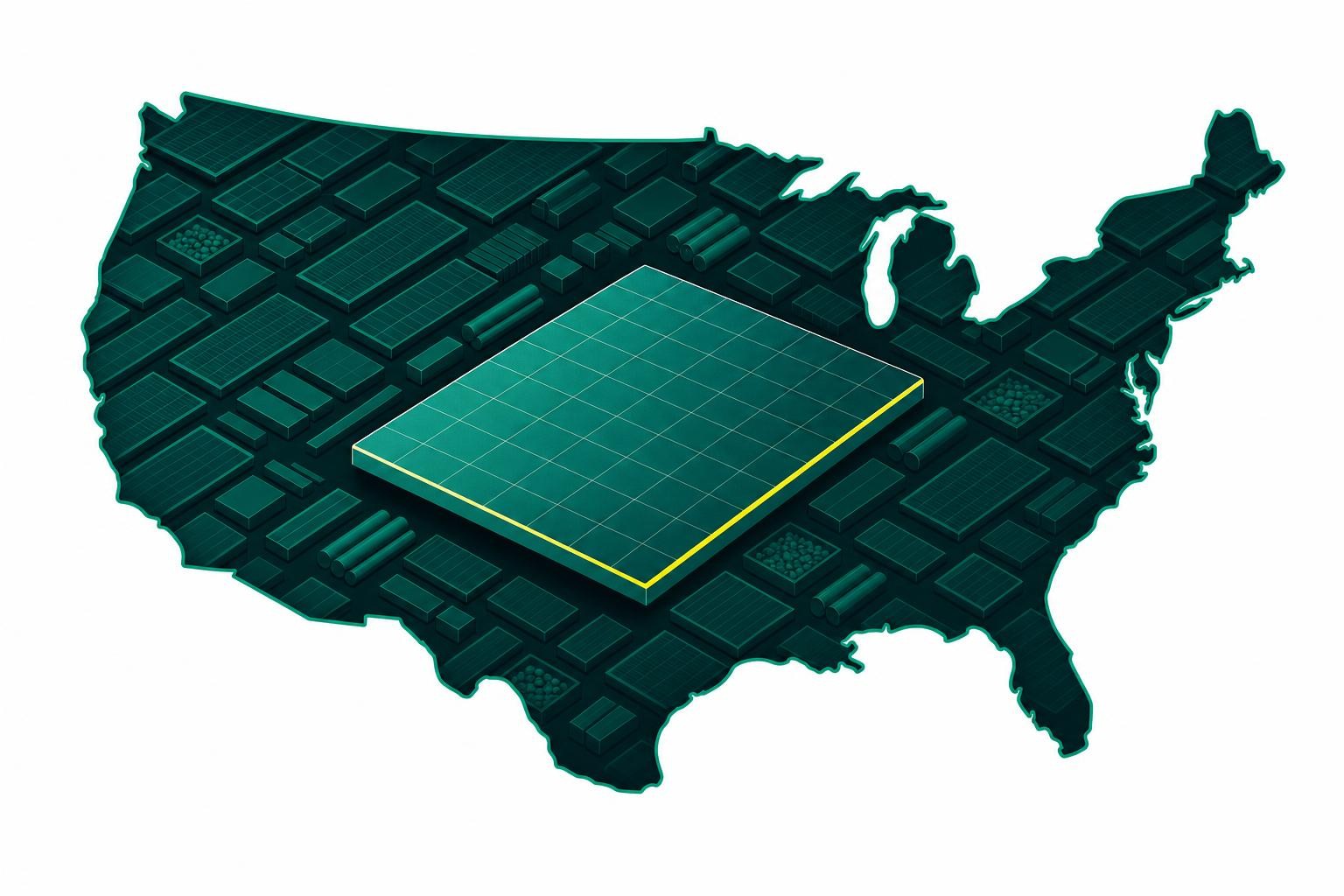
President Donald Trump signed a proclamation on 6 August 2026 imposing a 15% tariff on polysilicon-derivative products and a parallel minimum import price regime covering the full solar supply chain, from raw feedstock through finished modules[1]. Both mechanisms take effect simultaneously at 12:01 Eastern Time on 4 December 2026.
What the proclamation covers
The tariff applies to polysilicon ingots and specified derivatives, including solar cells and certain semiconductor devices. Alongside the 15% duty, importers must certify that their first domestic sale of covered products meets a set of price floors[1]:
- $21 per kilogram for raw polysilicon
- $100 per kilogram for polysilicon ingots and wafers
- $0.22 per watt for solar cells
- $0.38 per watt for solar modules or panels
Importers who fail to certify compliance with those floors face a specific tariff equal to the applicable minimum price, on top of the 15% duty. The tariff is paid by the importer, not the exporter.
The proclamation is issued under Section 232 of the Trade Expansion Act of 1962, which allows the president to restrict imports deemed a threat to national security. The Commerce Department opened its investigation on 1 July 2025; about a year elapsed between that opening and the signing.
The supply-chain arithmetic
The administration's case rests on a stark concentration figure. The Commerce Department found that the US share of global polysilicon production capacity fell from 50% in 2005 to less than 2% in 2024, and that global polysilicon production grew by more than 270% since 2020. Nine of the world's ten largest polysilicon manufacturers are based in China, with Germany's Wacker Chemie holding the sole non-Chinese seat among the top ten. China accounts for nearly 90% of global polysilicon output, with the remainder split among Wacker, US-based Hemlock Semiconductor, South Korea's OCI, and a small number of others.
The measures replace a narrower safeguard tariff on solar cells and modules that Trump imposed during his first term and that expired in February 2026. The new action expands coverage to the full polysilicon supply chain, from raw feedstock through wafers, cells, and modules.
The administration said it will also begin offering incentives to companies that invest in US polysilicon production. Hemlock Semiconductor - the only US-owned manufacturer of hyper-pure polysilicon - received a $325 million CHIPS Act grant to expand its Michigan facility. Combined annual capacity at Hemlock and Wacker's US site stands at roughly 33,000 metric tons, enough to supply approximately 13 GW of solar modules at current consumption rates.
Two industries, two problems
Polysilicon sits upstream of both the solar and semiconductor supply chains, and the proclamation creates distinct complications for each.
For solar developers, the price floors are the sharper instrument. Roth Capital Partners said in an industry note that the Section 232 measures are set to reset US solar average selling prices materially higher. That matters acutely for data-center operators, who have become the dominant buyers of large-scale solar PPAs: 160 GW of committed large-load requests are in the US interconnection pipeline, and hyperscalers have been signing gigawatt-scale solar contracts to bypass congested grid queues. Higher module costs will feed directly into PPA strike prices and behind-the-meter project economics.
For the semiconductor side, the Consumer Technology Association warned before the announcement that tariffs on polysilicon derivatives would be difficult to enforce in practice. By the time polysilicon has been incorporated into wafers and then into chips, there is no practical way to identify where the original material came from. The group called instead for bilateral sourcing deals and a strategic national stockpile.
The front-running window
The four-month gap between the 6 August signing and the 4 December effective date is not incidental. A trade attorney experienced in solar cases cautioned, according to Reuters, that the interval leaves time for importers to rush shipments through before the measures kick in. A similar dynamic played out when earlier solar safeguard tariffs were announced. Developers and module buyers with near-term procurement decisions will be weighing whether to accelerate orders before the price floors lock in.
What to watch: whether the Commerce Department's promised incentive program for domestic producers materialises with enough scale to close the gap between the 13 GW that Hemlock and Wacker can supply and the 43 GW-plus of utility-scale solar the EIA expects to come online in 2026 alone - and how quickly module ASP increases flow through to signed and unsigned data-center PPAs.
The images and texts on this page were created with the help of AI.
Related
Ready-to-build BESS projects lose their premium as Australia's NEM arbitrage spreads collapse 85%
Panellists at the Battery Asset Management Summit Australia 2026 said the venture-capital-style returns that once rewarded ready-to-build BESS projects have disappeared as NEM price spreads fell 85% in a year.
10 Sept 2026UK government opens three-month consultation on AI for clean energy, backed by 34-recommendation network review
DESNZ published its Vision for an AI-enabled clean energy system on 8 September, opening a call for evidence that closes 6 November and will feed into the UK's first AI for Clean Energy Strategy.
10 Sept 2026Heatwaves expose a three-layer risk for wind operators: resource, hardware, and people
Extreme heat cuts wind output, stresses nacelle components, and grounds maintenance crews - all at once. A look at how bad the summer of 2026 has been, and what the trend means for grid reliability.
10 Sept 2026