Trina Solar rates new typhoon-resistant module series up to 8,000 Pa, targeting China's Force 17 super-typhoon standard
Trina Solar has launched a typhoon-resistant PV module series, with the top-tier Vertex N Shield MAX rated at over 8,000 Pa - nearly double the load of its standard typhoon product and more than three times conventional modules.
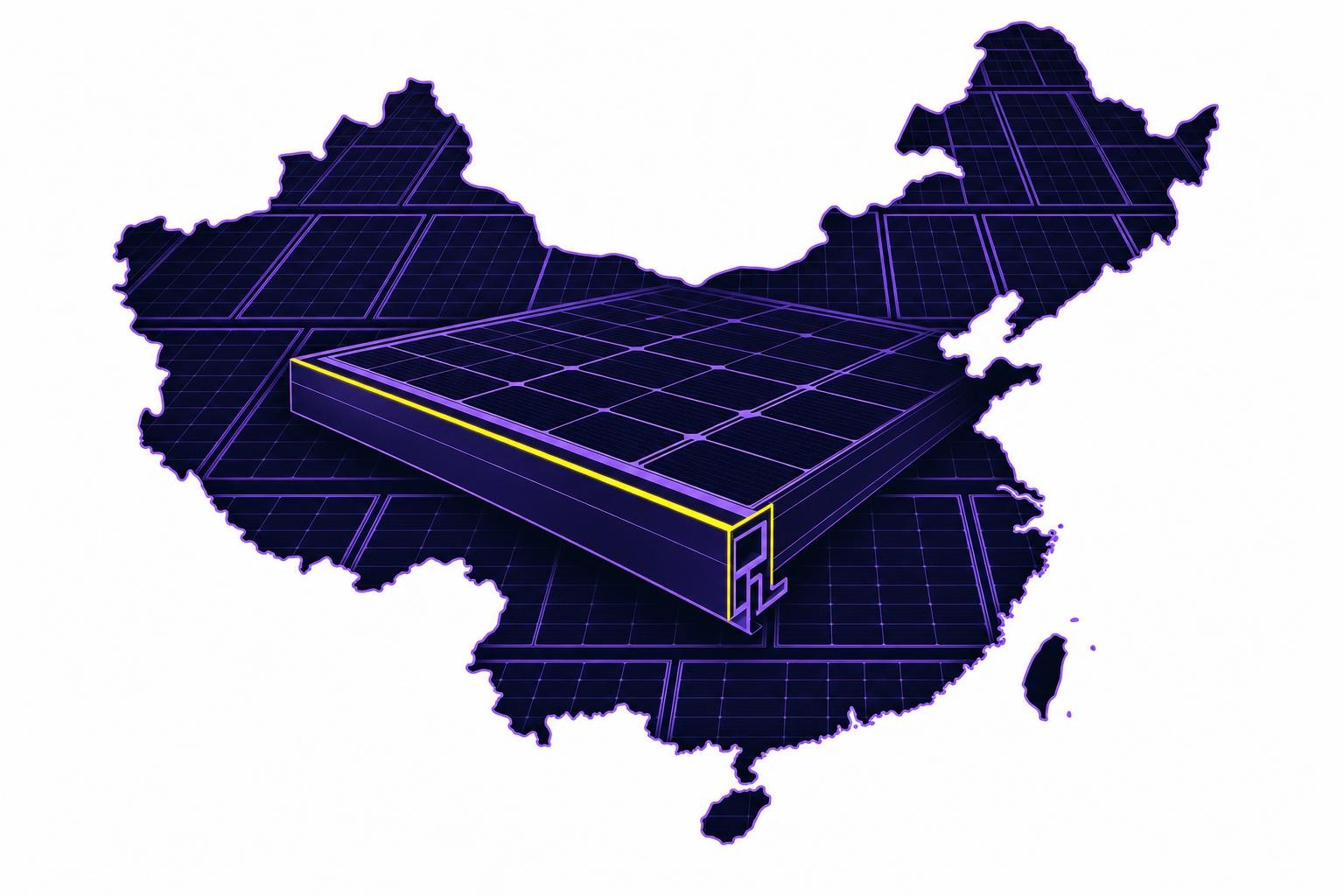
Trina Solar announced on 13 August 2026 a new series of typhoon-resistant PV modules aimed at coastal China and other typhoon-prone Asian markets, with the top-tier configuration rated at a static mechanical load of over 8,000 Pa - more than three times the 2,400 Pa typical of conventional products[1].
Two tiers, one design rationale
The series has two configurations[1]:
- Standard typhoon-resistant: rated for a rear-side mechanical load of 4,500 Pa, with static loading tested at 1.05 times rated level and dynamic loading at 1.5 times rated level.
- MAX (based on the Vertex N Shield module): static mechanical load capability of over 8,000 Pa, with an optimized frame delivering 30% higher downward and 67% higher upward mechanical load capacity compared with the standard typhoon variant.
The MAX configuration is explicitly sized for China's Force 17 super-typhoon classification, the highest intensity level on the country's extended wind scale, reserved for the most powerful tropical cyclones[1]. China's Force 17 designation corresponds to maximum sustained winds near the storm center of at least 51 meters per second, placing it within the super-typhoon tier under China Meteorological Administration standards.
Frame engineering and installation
Trina has widened the module frame by 10% and thickened it by 11% to improve load transfer to the supporting structure[1]. A patented slot-based, self-locking clamp - inspired by traditional mortise-and-tenon joinery - mechanically aligns the module and mounting structure, reducing loosening from repeated vibration. Trina claims the clamp design cuts installation time by about 25%[1].
For impact resistance, the MAX version uses reinforced dual glass and is rated to withstand 75 mm hailstones at a 60-degree tilt[1]. The module carries IEC 61730 A+A and UL 61730-2 Type 30 (A+A) fire certifications, and RETC testing returned "High Achiever" results across thermal cycling, damp heat, static and dynamic mechanical loading, and PID categories[1].
For tracker-based projects, Trina pairs the reinforced modules with its tracking systems and cloud-based wind monitoring. When wind speeds reach preset thresholds, the tracker automatically moves to protective stow angles, with different strategies applied according to conditions[1].
The market context
The timing is not incidental. Typhoon Dolphin made landfall near Yuhuan in Zhejiang province on 9 August 2026, forcing more than one million people to evacuate and bringing hurricane-force winds to eastern China, including Shanghai. The World Meteorological Organization described Dolphin as unusually long-lasting[1].
IEA PVPS research identifies the principal threats to PV plants during tropical cyclones as structural deformation, cascading mounting failures, airborne debris, and flooding, and recommends more robust fastening systems, higher wind-load resistance, and improved tracker stow strategies[1]. Those recommendations map closely onto the design choices Trina is now commercializing.
China's coastal solar build is concentrated in provinces - Fujian, Guangdong, Zhejiang - that sit directly in the path of the western Pacific's most active typhoon corridor. As installed capacity in those regions grows, the actuarial case for higher-rated hardware strengthens alongside the engineering one.
What to watch: whether competing module manufacturers follow with comparable load ratings, and whether Chinese project financiers begin requiring Force 17-rated specifications as a condition of bankability for coastal and near-coastal sites.
The images and texts on this page were created with the help of AI.
Related
Ready-to-build BESS projects lose their premium as Australia's NEM arbitrage spreads collapse 85%
Panellists at the Battery Asset Management Summit Australia 2026 said the venture-capital-style returns that once rewarded ready-to-build BESS projects have disappeared as NEM price spreads fell 85% in a year.
10 Sept 2026UK government opens three-month consultation on AI for clean energy, backed by 34-recommendation network review
DESNZ published its Vision for an AI-enabled clean energy system on 8 September, opening a call for evidence that closes 6 November and will feed into the UK's first AI for Clean Energy Strategy.
10 Sept 2026Heatwaves expose a three-layer risk for wind operators: resource, hardware, and people
Extreme heat cuts wind output, stresses nacelle components, and grounds maintenance crews - all at once. A look at how bad the summer of 2026 has been, and what the trend means for grid reliability.
10 Sept 2026