Switzerland counts approximately 1,860 active local electricity communities six months after their legal introduction
A Swissolar survey of Switzerland's 30 largest DSOs found 1,323 active LECs at end-June 2026, extrapolating to roughly 1,860 nationwide - but regulatory barriers are slowing the rollout.
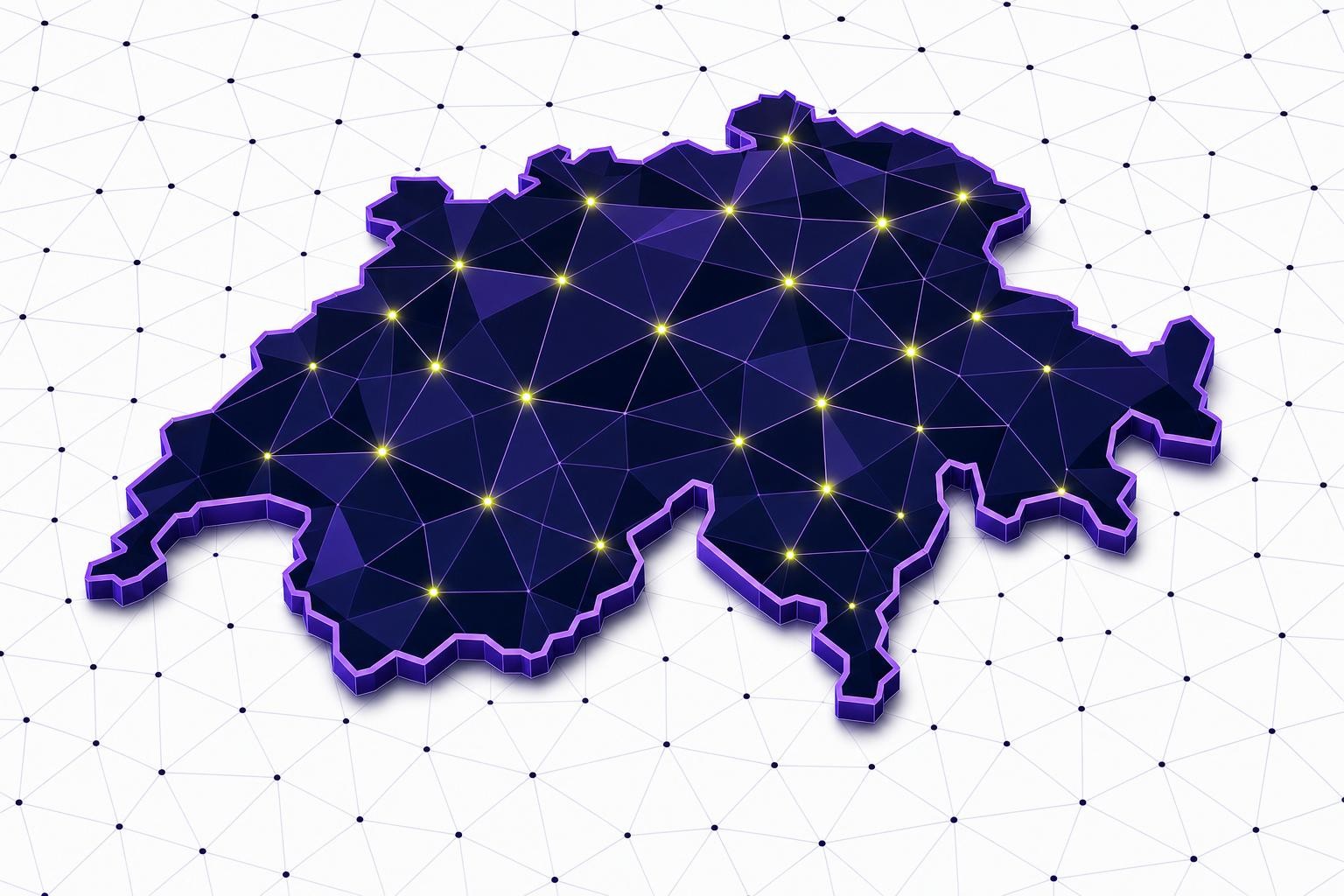
Switzerland had approximately 1,860 active local electricity communities (LECs) as of the end of June 2026, roughly six months after the framework permitting them entered force on 1 January 2026[1].
The figure comes from a Swissolar survey of the country's 30 largest distribution system operators (DSOs), supplemented by data from LEGhub, a Swiss tracking platform. The survey covered 71% of the country and identified 1,323 LECs directly; extrapolated nationwide, that produces the ~1,860 estimate[1].
What an LEC is and how it works
A local electricity community is an association of electricity producers, consumers, and optionally storage operators within a single municipality[1]. Members share self-generated solar power over the public grid, with locally traded electricity subject to reduced distribution tariffs rather than the full retail rate[1].
The minimum generation capacity required to join an LEG was lowered from 20% to 5% of connection capacity when the framework took effect in January 2026, broadening the pool of eligible participants.
The communities vary considerably in size and composition:
- Average of 7.2 participants per community, ranging from three to 29[1]
- 22% of participants generate their own electricity - 9% as pure producers and 13% as prosumers who both produce and consume[1]
- The remaining 78% are pure consumers[1]
Uneven deployment across DSOs
Rollout is not uniform. Swissolar found that deployment varies significantly among DSOs, depending on local demand, administrative processes, and IT systems[1]. Some regions have no active communities at all.
The variation matters because DSOs control the billing and settlement infrastructure that makes LEC membership practical. Where operators have not yet built the necessary IT systems or streamlined their processes, formation of new communities stalls regardless of participant interest.
Regulatory barriers Swissolar wants removed
Despite the early uptake, Swissolar identified several obstacles it says are constraining growth. The association is calling for:
- Greater use of grid-fee reductions for LEC members
- Elimination of unnecessary administrative costs
- Permission for electricity supply to cross municipal boundaries and different grid levels[1]
To support formation of new communities, SwissEnergy, Swissolar, and the Association of Swiss Electricity Companies (AES) have jointly launched electricitelocale.ch, a platform providing information, tools, and implementation models for households, businesses, municipalities, and energy-sector stakeholders[1].
What to watch
Additional LECs are currently being planned, and Swissolar says removing the remaining regulatory barriers could materially accelerate deployment and increase the contribution of distributed solar to grid integration[1]. The pace at which individual DSOs modernise their billing and IT infrastructure will be the practical constraint to watch - the legal framework is in place, but the operational plumbing is not yet uniform across Switzerland's roughly 590 grid operators.
The images and texts on this page were created with the help of AI.
Related
 Renewables
RenewableUK hands out 14 awards at fifth annual Global Offshore Wind ceremony in London
RenewableUK presented 14 awards at the Royal Lancaster London on 13 October 2026, with Ocean Winds, ScottishPower Renewables and RWE among the winners across projects, people and industry priorities.
15 Oct 2026 Renewables
Panasonic's Aquarea N Series brings R454C refrigerant to residential heat pumps ahead of April 2027 European launch
Panasonic has unveiled the Aquarea High-Performance N Series, four air-to-water heat pump models using R454C refrigerant with a GWP of 148, targeting European residential markets from April 2027.
15 Oct 2026 Renewables
UK Energy Secretary Fahnbulleh calls for systemic overhaul, citing grid failures and consumer cost crisis
Speaking at Energy UK's annual conference on 14 October, DESNZ Secretary Miatta Fahnbulleh declared the UK energy system is failing consumers and demanded structural reform beyond piecemeal adjustment.
15 Oct 2026