SpaceX plans natural gas plants and battery arrays to power TeraFab chip campus in Grimes County, Texas
SpaceX's $16.8 billion TeraFab semiconductor campus in Grimes County will run entirely on on-site gas generation and battery storage, bypassing the ERCOT grid entirely.
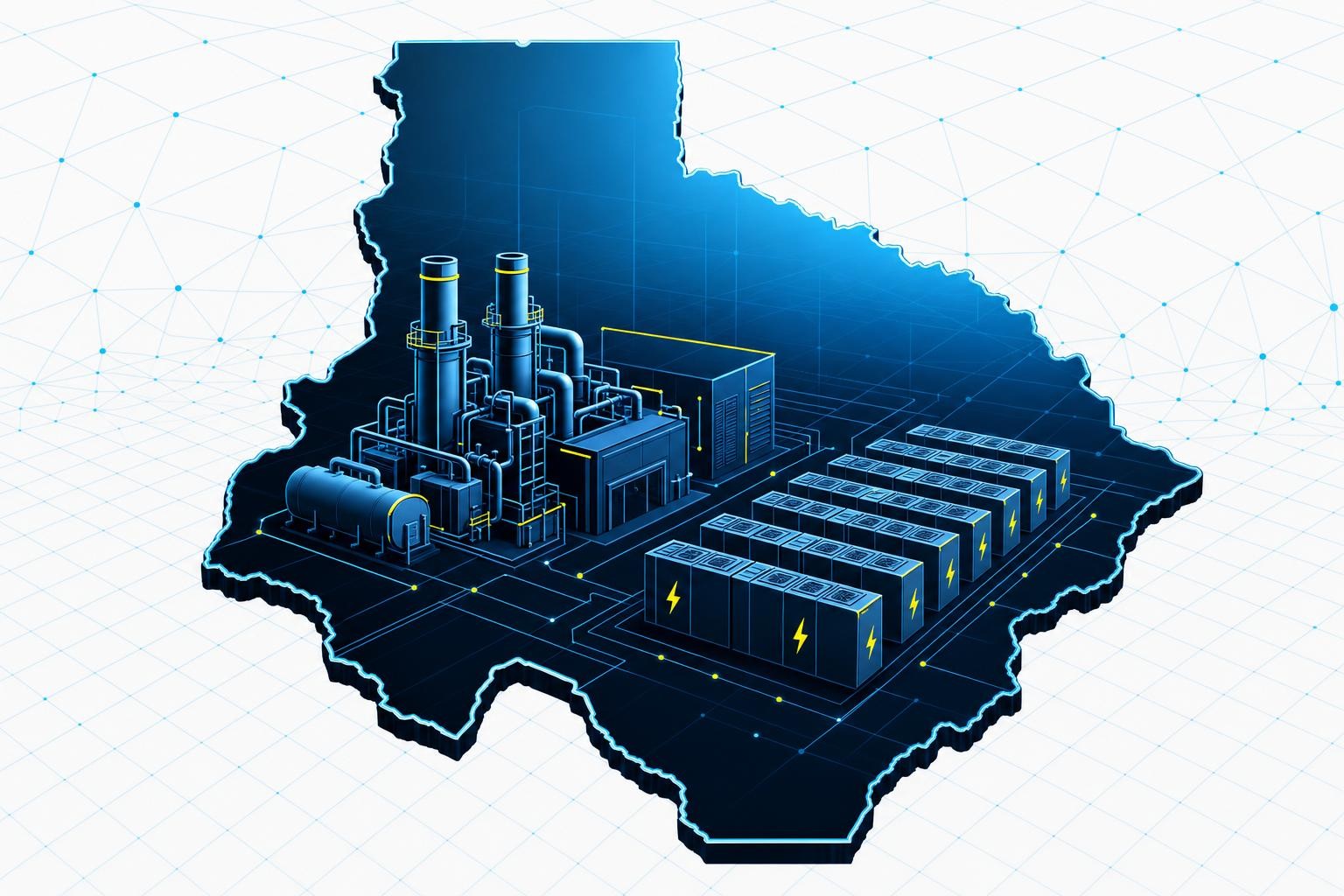
SpaceX plans to power its TeraFab semiconductor campus in Grimes County, Texas, entirely from on-site generation and battery storage, with no grid connection expected[1]. The disclosure comes from a fully executed tax-abatement agreement with Grimes County, which states the facility is "expected to be powered by electricity generated by on-site power plant(s) and [is] not expected to use electricity from the grid."[1]
What the agreement says
The county agreement specifies that the site will include semiconductor manufacturing facilities, natural gas-fired power plants, and AI facilities used in conjunction with the manufacturing process[1]. It also directly references the construction of a battery storage facility to supplement on-site power[1]. Neither the generation capacity of the planned gas plants nor the size of the battery arrays has been disclosed.
SpaceX energy and data center head Riley Trettel confirmed the approach at a public meeting in Grimes County, saying the company would be "bringing our own power" with natural gas-fired generation and "very large battery arrays in order to store energy."
The project
TeraFab is a $16.8 billion semiconductor and advanced-computing campus being developed as a joint venture between SpaceX and Tesla in Grimes County, northwest of Houston. Elon Musk confirmed the project in March 2026, describing it as a facility that will produce chips for space data centers, advanced vehicles, and humanoid robots. Intel joined the project in April 2026 to support chip development at scale. The first phase is expected to create approximately 3,000 jobs and has received a $30 million Texas Enterprise Fund grant.
The battery role at TeraFab follows a pattern already established at SpaceX's Colossus AI data centers in Greater Memphis, where the company spent $329 million on Tesla Megapacks in the first half of 2026. At Colossus, batteries handle peak-shaving and absorb the sharp power swings that GPU-dense AI workloads impose on on-site generators. TeraFab's chip fabrication loads are similarly continuous and intolerant of interruption.
The grid context
The decision to go off-grid is notable given the regulatory pressure now bearing on Texas data center developers. On 3 August 2026, Governor Greg Abbott directed the Public Utility Commission of Texas and ERCOT to conduct a comprehensive audit of all data center projects in the interconnection queue before approving any new grid connections. ERCOT's queue at the time of the directive contained approximately 474 GW of connection requests - more than five times the state's record peak electricity demand - with data centers accounting for roughly 90 percent of those requests.
By building its own generation, SpaceX sidesteps that queue entirely. The trade-off is a direct exposure to the permitting and community-relations risks that have already complicated the Colossus build-out in Memphis, where the NAACP filed a federal lawsuit alleging that gas turbines at the site were operating without required pollution controls or permits.
The key questions for TeraFab are whether SpaceX will seek air-quality permits for its gas plants before construction begins, what capacity those plants will carry, and whether the Grimes County agreement's water provisions - which require commercially reasonable efforts to manage wastewater - will satisfy local regulators as the campus scales toward full production.
The images and texts on this page were created with the help of AI.
Related
Ready-to-build BESS projects lose their premium as Australia's NEM arbitrage spreads collapse 85%
Panellists at the Battery Asset Management Summit Australia 2026 said the venture-capital-style returns that once rewarded ready-to-build BESS projects have disappeared as NEM price spreads fell 85% in a year.
10 Sept 2026UK government opens three-month consultation on AI for clean energy, backed by 34-recommendation network review
DESNZ published its Vision for an AI-enabled clean energy system on 8 September, opening a call for evidence that closes 6 November and will feed into the UK's first AI for Clean Energy Strategy.
10 Sept 2026Heatwaves expose a three-layer risk for wind operators: resource, hardware, and people
Extreme heat cuts wind output, stresses nacelle components, and grounds maintenance crews - all at once. A look at how bad the summer of 2026 has been, and what the trend means for grid reliability.
10 Sept 2026