Seatrium names itself as buyer of 32 MW TwinHub floating wind project in the Celtic Sea
Seatrium confirmed on 31 July 2026 that it acquired the 32 MW TwinHub floating wind demonstrator off Cornwall from Hexicon, planning to deploy its proprietary FWSS semi-submersible foundation.
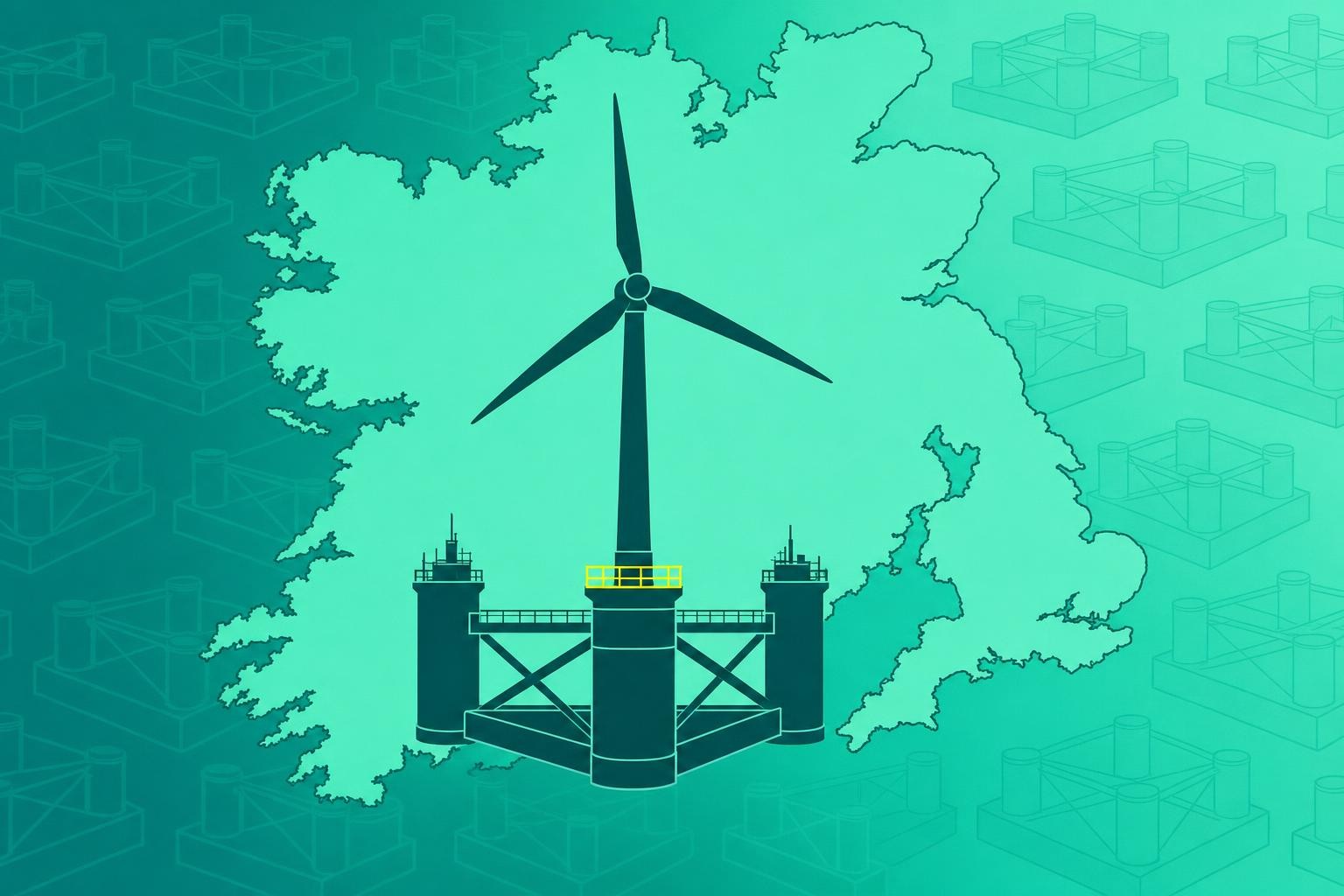
Seatrium confirmed on 31 July 2026 that it is the owner of the 32 MW TwinHub floating wind demonstrator off the coast of Cornwall, ending months of speculation about the identity of the buyer following Hexicon's divestment earlier this year[1]. The Singapore-listed offshore engineering group's chief executive, Chris Ong, disclosed the acquisition during a presentation on the company's half-year results.
How the project changed hands
Hexicon completed the sale of its entire 100% stake in the project company, Wave Hub Ltd, for a total consideration of £1 in April 2026. The Swedish developer had recognised an impairment on TwinHub in December 2025 after a combination of inflationary pressures and rising supply chain costs made the project uneconomic to progress under its ownership. At the time of the sale, Hexicon did not disclose the buyer's identity.
The project carried additional baggage: TwinHub's Allocation Round 4 contract for difference with the Department for Energy Security and Net Zero had been terminated shortly before the divestment completed. That cancellation cleared the way for a new owner to pursue fresh subsidy support.
What Seatrium intends to do with the site
Seatrium's interest in TwinHub is primarily technological. CEO Chris Ong said the Celtic Sea test and demonstration project will provide an opportunity to deploy the company's proprietary floating wind semi-submersible (FWSS) foundation, a design rated for 15 MW turbines[1]. The FWSS concept - a central column supported by pontoons on three sides - has received approval in principle from both ABS and DNV.
Ong framed the acquisition as a market-entry play rather than a pure generation asset:
- Technology validation: TwinHub gives Seatrium a live UK site to test and certify its FWSS design in real operating conditions.
- Supply chain development: the project is intended to stress-test the fabrication and logistics chain ahead of larger commercial deployments.
- Market access: a UK consented site provides a foothold in the Celtic Sea, which the UK government has identified as a priority floating wind zone.
"As the offshore wind market moves into deeper waters, floating wind will become increasingly dominant," Ong said on 31 July 2026[1].
The AR8 angle
TwinHub is understood to be eligible for the current UK CfD Allocation Round 8 auction, having terminated its previous AR4 contract[1]. AR8 applications opened on 20 July 2026 and closed on 7 August - meaning the window was live at the time Seatrium made the disclosure. The round introduced more generous terms for floating offshore wind projects specifically: the longstop period was extended to 24 months and the required installed capacity threshold was lowered to 85%, changes designed to reflect the greater construction complexity of floating foundations.
At 32 MW, TwinHub sits firmly in the test-and-demonstration tier rather than commercial scale. Whether Seatrium bid into AR8 has not been confirmed.
What to watch
The key near-term question is whether Seatrium submitted a TwinHub application before the AR8 window closed on 7 August. AR8 results are expected in spring 2027. Separately, watch for any engineering procurement announcements that would signal Seatrium is moving from design validation toward fabrication contracts for the FWSS foundation - the step that would confirm TwinHub is functioning as a genuine technology demonstrator rather than a land-banked option.
The images and texts on this page were created with the help of AI.
Related
Ready-to-build BESS projects lose their premium as Australia's NEM arbitrage spreads collapse 85%
Panellists at the Battery Asset Management Summit Australia 2026 said the venture-capital-style returns that once rewarded ready-to-build BESS projects have disappeared as NEM price spreads fell 85% in a year.
10 Sept 2026UK government opens three-month consultation on AI for clean energy, backed by 34-recommendation network review
DESNZ published its Vision for an AI-enabled clean energy system on 8 September, opening a call for evidence that closes 6 November and will feed into the UK's first AI for Clean Energy Strategy.
10 Sept 2026Heatwaves expose a three-layer risk for wind operators: resource, hardware, and people
Extreme heat cuts wind output, stresses nacelle components, and grounds maintenance crews - all at once. A look at how bad the summer of 2026 has been, and what the trend means for grid reliability.
10 Sept 2026