RWE and Hamburg fire brigade run nacelle rescue drill at 65 metres at Grauen wind farm
RWE and the Hamburg fire brigade completed an 11-person rescue exercise at the Grauen onshore wind farm, simulating extraction of an injured technician from a nacelle 65 metres above ground.
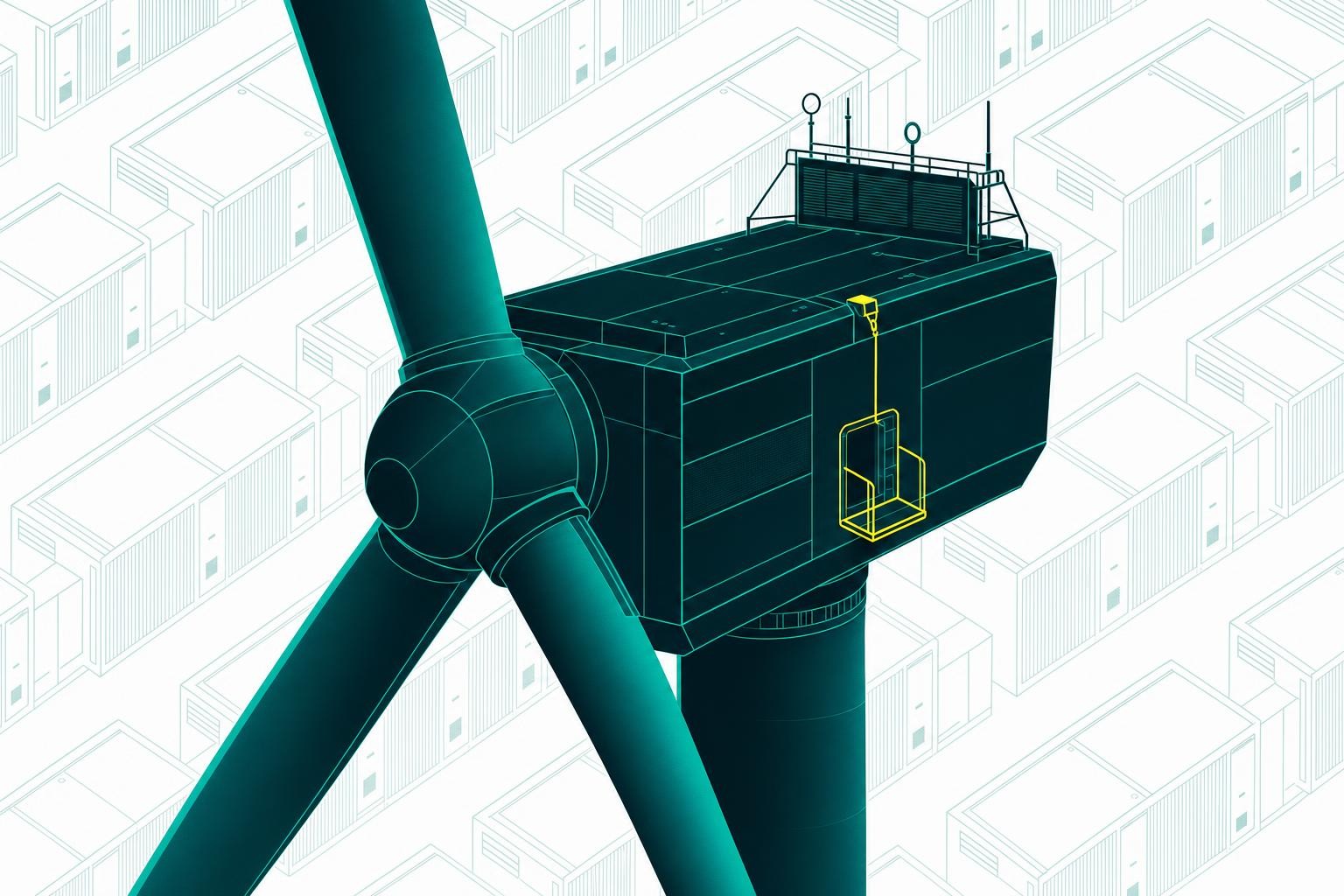
RWE and the Hamburg fire brigade have completed a joint rescue exercise at the Grauen wind farm, located southwest of Hamburg[1]. The drill involved 11 participants and centred on extracting a simulated casualty - an injured service technician - from a nacelle at a height of 65 metres[1].
What the exercise covered
The exercise covered the alarm and mobilisation of emergency services to a remote wind farm, communication between responders, initial medical treatment, and the rescue and handover of the injured person to emergency personnel on the ground. The scenario is representative of one of the more demanding situations an onshore wind operator faces: a technician incapacitated at height, in a confined space, with no direct road access for conventional rescue equipment.
The four main elements tested were:
- Alarm and mobilisation of emergency services to a remote site
- Inter-agency communication between RWE personnel and the fire brigade
- Initial medical treatment at height
- Extraction and handover to ground-level emergency crews[1]
Months of preparation, mutual knowledge transfer
RWE and the Hamburg fire brigade prepared the exercise over several months to test emergency procedures under realistic conditions. The arrangement was deliberately bilateral. The training allowed firefighters to familiarise themselves with the technical characteristics of wind turbines, access routes, and available rescue options, while RWE benefited from the fire brigade's experience in high-altitude rescue operations.
The specialised nature of wind turbine emergencies requires equipment and expertise that most local fire departments simply don't possess. Exercises of this kind are one of the few ways to close that gap without waiting for a real incident. If local emergency responders have a response time of more than four to six minutes - the recognised window before oxygen deprivation can cause irreversible brain damage - companies must also train workers in rescue; as a result, first-in engine companies and technical rescue teams regularly train alongside wind farm operators.
RWE's existing safety framework
RWE has emergency and rescue procedures in place for its wind turbines, covering first aid, defined rescue processes, crisis management, and communication with external emergency services. The Grauen exercise was not a first for the company. In April 2025, RWE ran a six-hour rescue drill at its Nordsee Ost offshore wind farm, planned together with the German Association for Maritime Emergency Management, deploying a rescue helicopter and paramedics. The Hamburg exercise extends that programme to the onshore fleet and to a municipal fire service rather than a specialist maritime body.
What to watch
The exercise was intended to identify opportunities to improve emergency procedures and coordination between RWE personnel and emergency responders, with findings to be used to further refine those procedures. Whether RWE publishes the outcomes - as it did after Nordsee Ost - will indicate how far the company intends to use these drills as a template for other sites and other municipal partners across its German onshore portfolio.
The images and texts on this page were created with the help of AI.
Related
Ready-to-build BESS projects lose their premium as Australia's NEM arbitrage spreads collapse 85%
Panellists at the Battery Asset Management Summit Australia 2026 said the venture-capital-style returns that once rewarded ready-to-build BESS projects have disappeared as NEM price spreads fell 85% in a year.
10 Sept 2026UK government opens three-month consultation on AI for clean energy, backed by 34-recommendation network review
DESNZ published its Vision for an AI-enabled clean energy system on 8 September, opening a call for evidence that closes 6 November and will feed into the UK's first AI for Clean Energy Strategy.
10 Sept 2026Heatwaves expose a three-layer risk for wind operators: resource, hardware, and people
Extreme heat cuts wind output, stresses nacelle components, and grounds maintenance crews - all at once. A look at how bad the summer of 2026 has been, and what the trend means for grid reliability.
10 Sept 2026