EIA finds super-lateral wells reached 15% of Permian completions in 2025, up from near zero before 2020
EIA data show Permian super-lateral wells exceeding 15,000 feet hit 15% of completions in 2025, driving a 284% production surge over the decade with a stable well count.
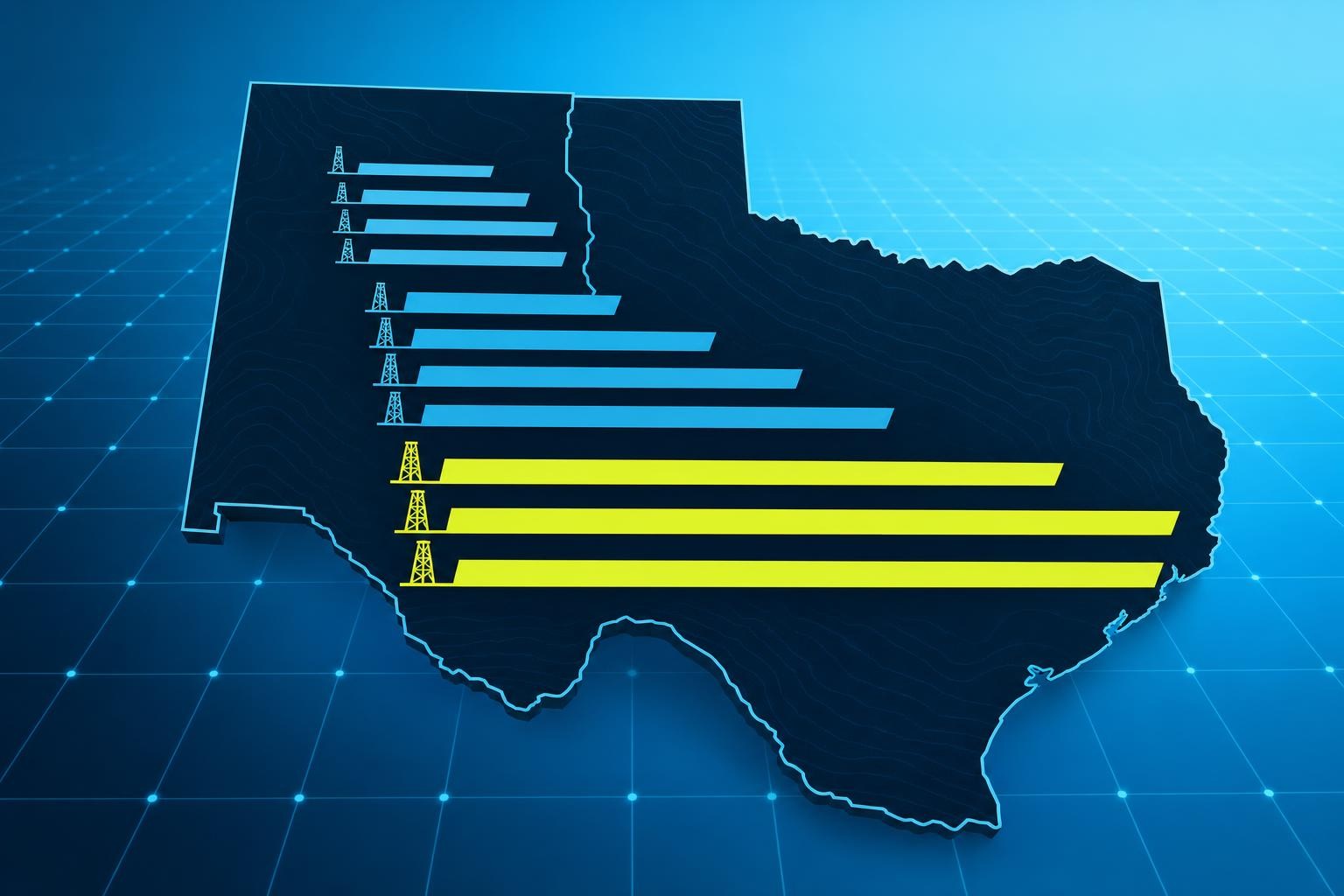
The U.S. Energy Information Administration reported on 20 August 2026 that so-called super-lateral wells - horizontal bores exceeding 15,000 feet, or roughly three miles - accounted for 15% of all new Permian well completions in 2025, up from a share that was virtually nonexistent before 2020[1].
The finding is the headline number in a broader EIA analysis of how Permian operators in western Texas and eastern New Mexico are extracting more hydrocarbons per well rather than simply drilling more of them[1].
The shift in well design
The composition of Permian completions has changed sharply over the past decade. In 2015, short-reach wells of less than 5,000 feet made up 43% of completions; by 2025 that share had fallen to just 4%[1]. Mid-length laterals - those between 5,000 and 15,000 feet - filled the gap, peaking at 90% of completions in 2021 before easing to 81% in 2025 as super-laterals took hold[1].
The trajectory in average lateral length captures the cumulative shift: the average horizontal section of a new Permian well grew 77% over the decade, from 6,149 feet in 2015 to 10,867 feet in 2025, based on data from Enverus cited by the EIA[1].
The well-type mix in 2025 breaks down as follows:
- Short-reach wells (under 5,000 ft): 4% of completions
- Mid-length laterals (5,000-15,000 ft): 81% of completions
- Super-laterals (over 15,000 ft): 15% of completions
Production up 284% on a flat well count
The production outcome is striking given that drilling activity has not expanded materially. New horizontal well completions in the Permian have held near 6,000 per year since 2022, excluding the disruptions of 2020 and 2021 when negative oil prices and the COVID-19 pandemic curtailed activity[1].
Against that stable completion rate, combined oil and natural gas output climbed from 2.9 million barrels of oil equivalent per day in 2015 to 11.2 million BOE/d in 2025 - a 284% increase over the decade[1]. Longer laterals allow each well to contact more reservoir rock, increasing productive exposure while reducing the number of individual wellbores needed to develop a given acreage block[1].
Why operators are drilling longer
The economics favour length. A single super-lateral can access reservoir that would otherwise require two or more shorter wells, spreading surface infrastructure, permitting, and completion costs across a larger hydrocarbon volume. The EIA notes that the trend reflects operators seeking to extract more from each well rather than relying on higher drilling activity to sustain output growth[1].
The shift also has implications for associated natural gas. Rising Permian gas volumes are largely a function of associated gas from oil wells, meaning that longer, more productive oil laterals directly lift gas output alongside crude.
What to watch
The 15% super-lateral share in 2025 is a floor, not a ceiling. As drilling technology matures and operators accumulate data on longer-reach completions, the super-lateral share is likely to keep rising at the expense of mid-length wells. The binding constraint will be geology - specifically, whether contiguous acreage positions are large enough to accommodate three-mile bores - and the pace at which takeaway infrastructure keeps up with the production volumes those wells generate.
The images and texts on this page were created with the help of AI.
Related
Ready-to-build BESS projects lose their premium as Australia's NEM arbitrage spreads collapse 85%
Panellists at the Battery Asset Management Summit Australia 2026 said the venture-capital-style returns that once rewarded ready-to-build BESS projects have disappeared as NEM price spreads fell 85% in a year.
10 Sept 2026UK government opens three-month consultation on AI for clean energy, backed by 34-recommendation network review
DESNZ published its Vision for an AI-enabled clean energy system on 8 September, opening a call for evidence that closes 6 November and will feed into the UK's first AI for Clean Energy Strategy.
10 Sept 2026Heatwaves expose a three-layer risk for wind operators: resource, hardware, and people
Extreme heat cuts wind output, stresses nacelle components, and grounds maintenance crews - all at once. A look at how bad the summer of 2026 has been, and what the trend means for grid reliability.
10 Sept 2026