Ørsted CEO says company would have been better off without its US offshore wind projects
Rasmus Errboe says Ørsted would have been better off without several key US offshore wind projects, as cumulative impairments from the US portfolio top DKK 40 billion.
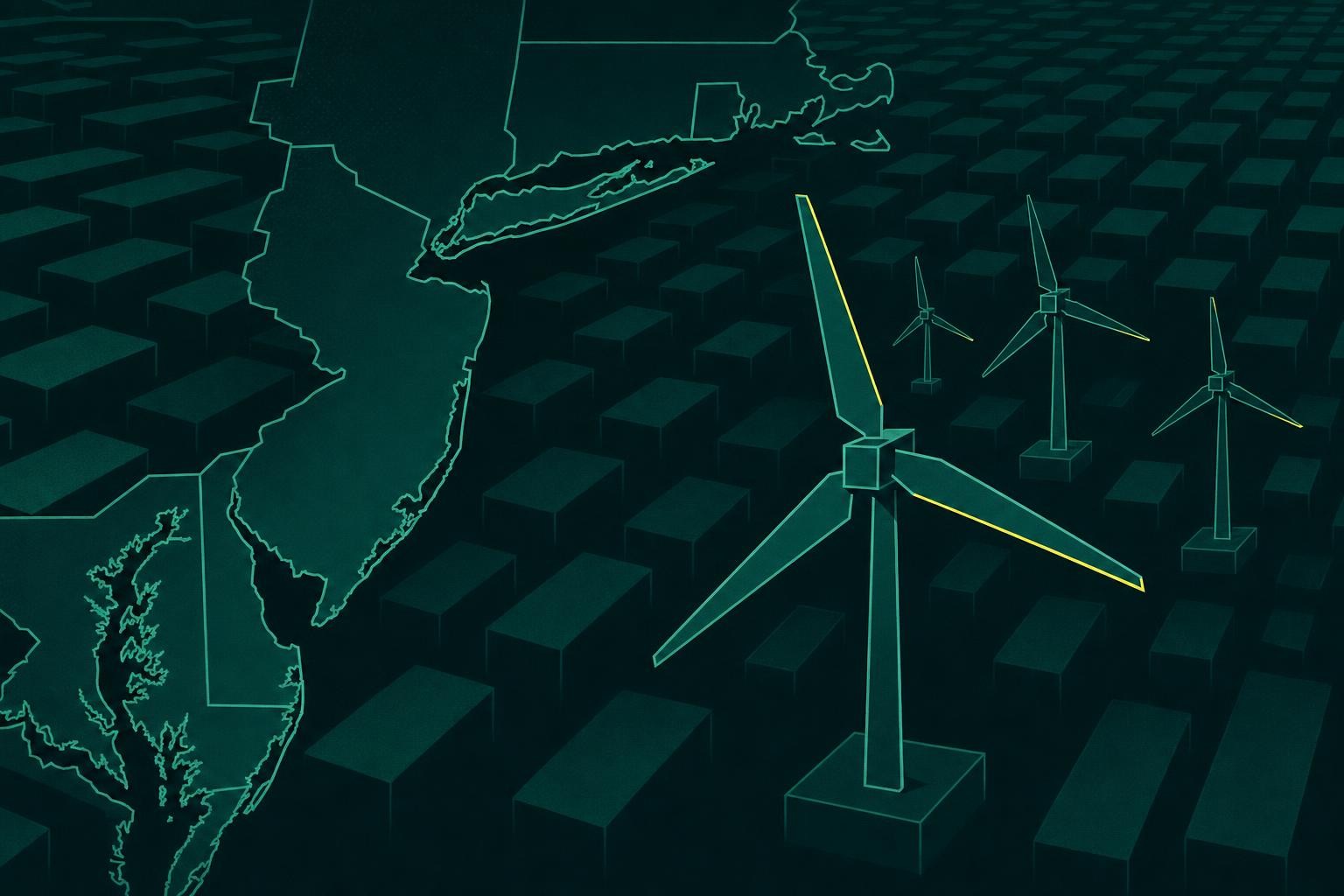
Ørsted chief executive Rasmus Errboe has said the Danish developer "would have been better off" without several of its key US offshore wind projects, in the clearest public acknowledgment yet of how badly the American bet has damaged the company[1]. The admission came as Ørsted reported H1 2026 EBITDA of DKK 15.0 billion, 8% above the same period last year, but booked a further DKK 1.2 billion non-cash impairment tied to higher long-dated US interest rates.
A decade of losses in the making
Ørsted's US offshore wind exposure has generated a sequence of write-downs that few other developers have matched. In October 2023, the company recognised DKK 28.4 billion in impairments, with DKK 19.9 billion of that tied to the cancellation of Ocean Wind 1 off New Jersey. A further DKK 12.1 billion (approximately EUR 1.62 billion) impairment followed in Q4 2024, driven by rising construction costs at the 924 MW Sunrise Wind project off New York, higher US interest rates, and a decline in the value of seabed leases off New Jersey, Maryland, and Delaware. By early 2025, cumulative impairments had wiped out roughly DKK 40.5 billion ($5.7 billion) of asset value.
Errboe, speaking on the In Good Company podcast with Norges Bank Investment Management CEO Nicolai Tangen, said Ørsted "should have stepped back sooner" when trouble first emerged. He also pointed to a Capital Markets Day in June 2023 where the company "set the bar too high" - a presentation that was followed within months by the Ocean Wind cancellations.
The damage was not only financial. Ørsted had acquired Deepwater Wind from DE Shaw in 2018 for $510 million as its entry into the US market. That bet, compounded by subsequent project commitments, left the company exposed to a combination of supply chain disruption, rising interest rates, and - from January 2025 - a Trump administration that has treated offshore wind as a policy target rather than an infrastructure category.
Two projects left to finish
Ørsted is completing two US offshore wind farms that were already under construction when the political environment turned:
- Revolution Wind (704 MW, Rhode Island/Connecticut) - delivered its first power to New England in Q1 2026 and is on track for full commissioning in the second half of the year.
- Sunrise Wind (924 MW, New York) - turbine installation has begun, with completion targeted for 2027. Ørsted was unable to sell a stake in the project to offset construction costs, leaving it to fund the build entirely from its own balance sheet.
Both projects resumed construction after federal courts overturned Trump administration suspension orders. The Q2 2026 impairment of DKK 1.2 billion was a non-cash charge reflecting higher discount rates, not a construction setback.
No new US projects planned
Errboe has been unambiguous about what comes next. "As for future offshore wind projects, it is not our strategy to develop new offshore wind projects in the US. We have no plans to develop additional projects in the US," he said. The company has instead pivoted toward Europe and select Asia-Pacific markets, where it sees upcoming government auctions and more stable regulatory frameworks.
That pivot is already visible in the balance sheet. Ørsted sold its entire European onshore business to Copenhagen Infrastructure Partners for €1.44 billion in April 2026, freeing capital for offshore construction. Its 8.1 GW global construction pipeline is concentrated in:
- Hornsea 3 (UK) - monopile foundations under installation
- Baltica 2 (Poland) - foundations commenced
- Greater Changhua 2b and 4 (Taiwan) - commissioning on track for Q3 2026
The company is also reportedly exploring the sale of its US onshore renewables assets in a deal that could exceed $1 billion, a further step in reducing its American footprint.
What to watch
The Q2 2026 results show Ørsted's core offshore business recovering - H1 EBITDA in the offshore segment reached DKK 11.9 billion, up from DKK 10.3 billion a year earlier, driven by higher wind speeds and improved construction agreement earnings. The full-year EBITDA guidance of above DKK 28 billion has been maintained. The test for the next 18 months is whether Sunrise Wind can reach commissioning without further cost overruns, and whether Ørsted can convert its European and Asian pipeline into contracted capacity before competitors lock up the same auction slots.
The images and texts on this page were created with the help of AI.
Related
Ready-to-build BESS projects lose their premium as Australia's NEM arbitrage spreads collapse 85%
Panellists at the Battery Asset Management Summit Australia 2026 said the venture-capital-style returns that once rewarded ready-to-build BESS projects have disappeared as NEM price spreads fell 85% in a year.
10 Sept 2026UK government opens three-month consultation on AI for clean energy, backed by 34-recommendation network review
DESNZ published its Vision for an AI-enabled clean energy system on 8 September, opening a call for evidence that closes 6 November and will feed into the UK's first AI for Clean Energy Strategy.
10 Sept 2026Heatwaves expose a three-layer risk for wind operators: resource, hardware, and people
Extreme heat cuts wind output, stresses nacelle components, and grounds maintenance crews - all at once. A look at how bad the summer of 2026 has been, and what the trend means for grid reliability.
10 Sept 2026