ORNL and Southern California Edison's AWARE platform wins R&D 100 award as utilities hit the ceiling on physical grid hardening
A new AI platform that detects arcing faults before they ignite wildfires has won a 2026 R&D 100 Market Disruptor award, arriving as the industry concedes that physical hardening alone cannot scale.
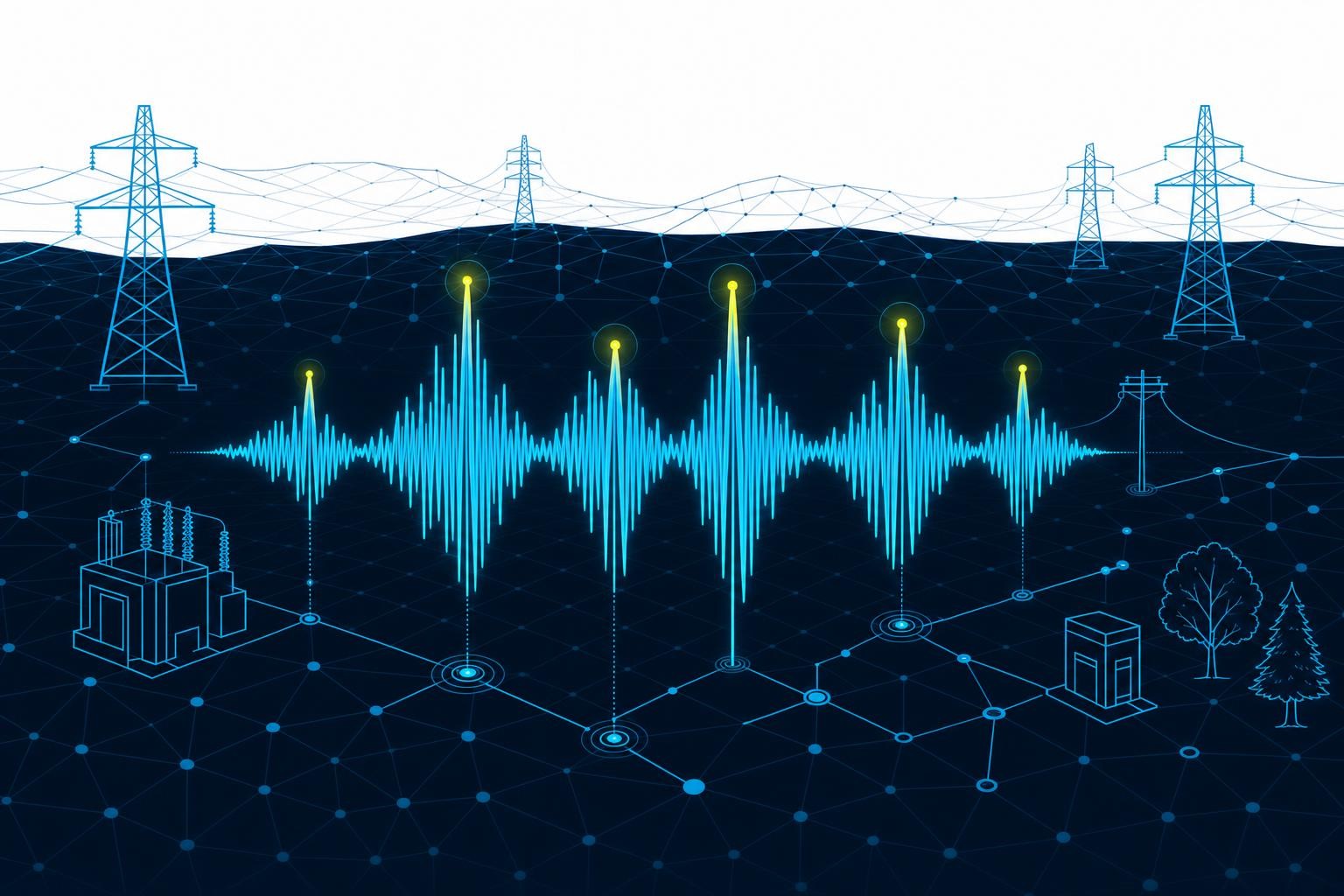
With hundreds of wildfires burning across North America this summer, a grid intelligence platform developed by the Department of Energy's Oak Ridge National Laboratory and Southern California Edison received a 2026 R&D 100 Market Disruptor Award on 14 August - recognition that the industry's next phase of wildfire mitigation will be built on software and sensing, not concrete and conduit alone.[1]
What AWARE does
The platform, formally called the Multi-Event Grid Intelligence Platform for Wildfire Prevention and Resilience (AWARE), detects, classifies, and reports abnormal power grid conditions that can lead to wildfires, equipment damage, and blackouts. Its specific target is low-current arcing - a fault type that commonly causes wildfires but has historically been difficult to detect rapidly.
The core technique is waveform analysis. Arcing faults are too subtle to appear clearly in raw voltage and current recordings, so ORNL's algorithms amplify the signal. In tests using real utility data, waveform signal visibility increased from 6% to 72% using the ORNL algorithms, revealing previously hidden grid disturbances. The platform was trained on the Grid Event Signature Library, a DOE-hosted repository of more than 5,700 waveform signatures collected from real grid events.
ORNL is now validating AWARE against five years of field-collected data at SCE, with a demonstration circuit test planned as the next step before broader integration.
Why physical hardening has a ceiling
The AWARE award lands at a moment when the industry is openly acknowledging the limits of the construction-first approach that defined the last decade of wildfire mitigation. Billions of dollars of physical work went into grid hardening - vegetation management, covered conductor, sectionalizing devices, undergrounding, faster-acting protection settings - but construction has an economic ceiling, and the industry is approaching it.[1]
Undergrounding illustrates the constraint. PG&E's cost per mile of undergrounding has fallen from $4 million in 2021 to roughly $3.1 million in 2025, with a target of approximately $2.8 million per mile by end-2026 - a meaningful improvement, but still several million dollars per mile across a service territory measured in tens of thousands of line miles.[1] The economics of applying that uniformly are prohibitive.
The deeper problem is allocation. Vegetation management cycles consume budget on the same schedule whether a circuit sits in a high-risk canyon or a suburban subdivision.[1] Hardening applied evenly across a territory spends most of its money where the risk is lowest.
The shift to risk-based operations
What AWARE and a growing class of grid intelligence tools share is a different operating logic: identify which mile, which asset, which hour, and which conditions carry the most risk - then act surgically.[1]
The DOE's CESER office has been pursuing a parallel track. Working with Sandia National Laboratories, it developed an AI-based protective relaying solution that can locate and isolate faults approximately 100 times faster than traditional protection equipment by integrating AI with high-speed sensing. Field demonstrations with utility partners are underway.
The operational sequence that grid intelligence enables looks like this:
- A fault signature appears on a high-risk line during a red-flag weather day.
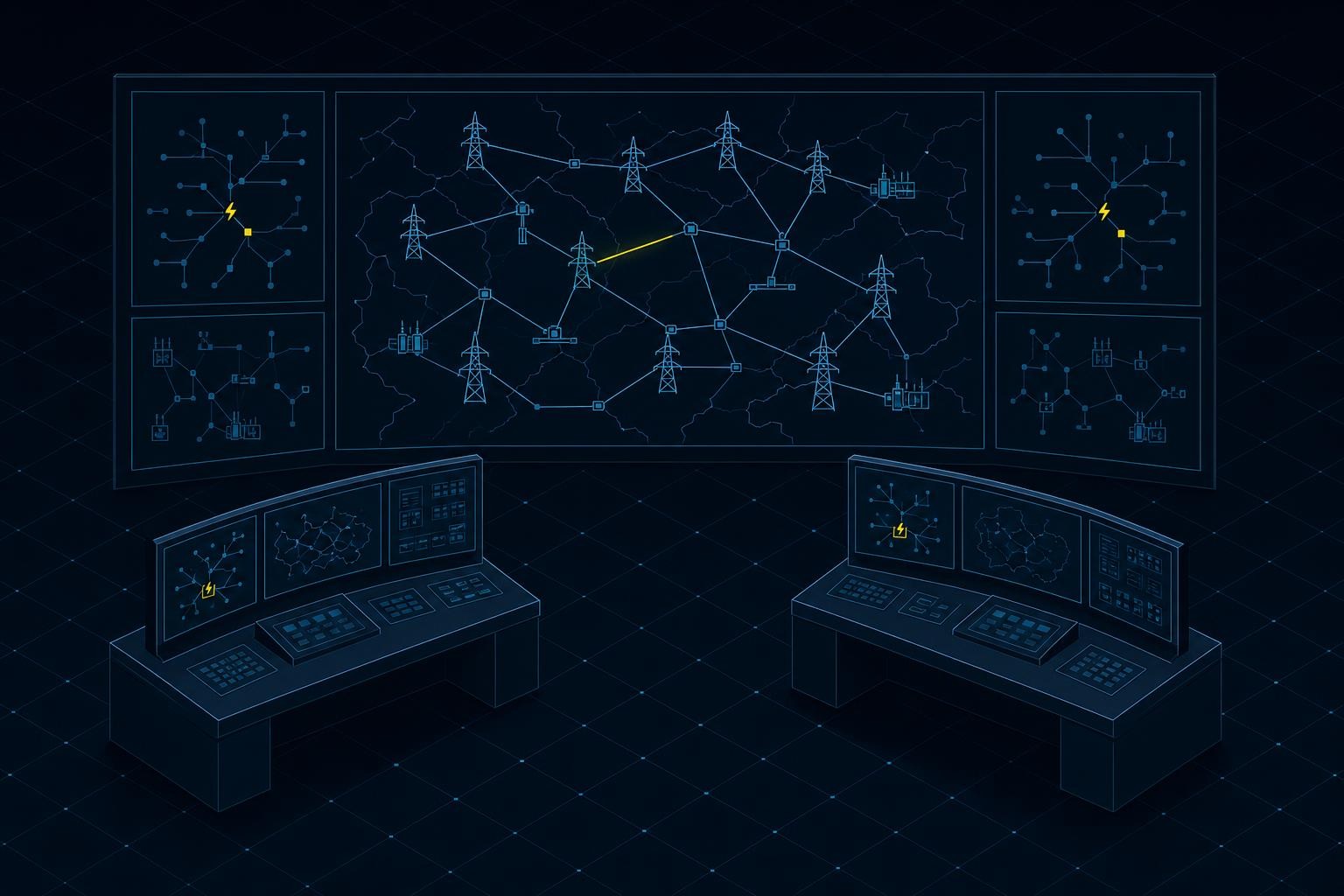
- The system classifies the anomaly in near-real time and alerts the control room.
- Protection settings trip faster; a segment is isolated automatically.
- A crew is dispatched before a failure, not after a fire.[1]
PG&E's continuous monitoring program avoided 23 ignitions in high fire-risk areas and 16 million outage minutes between January 2025 and March 2026, according to filings with California's Office of Energy Infrastructure Safety - an early signal of what targeted detection can achieve at scale.
What to watch
The AWARE demonstration at SCE will be the first real-world stress test of whether lab-validated detection accuracy holds across a live distribution system. Broader adoption depends on how quickly the platform can be integrated into utilities' existing advanced distribution management systems - and whether regulators begin treating AI-based fault detection as a creditable line item in wildfire mitigation plans, alongside the physical measures they already know how to audit.
The images and texts on this page were created with the help of AI.
Related
Ready-to-build BESS projects lose their premium as Australia's NEM arbitrage spreads collapse 85%
Panellists at the Battery Asset Management Summit Australia 2026 said the venture-capital-style returns that once rewarded ready-to-build BESS projects have disappeared as NEM price spreads fell 85% in a year.
10 Sept 2026UK government opens three-month consultation on AI for clean energy, backed by 34-recommendation network review
DESNZ published its Vision for an AI-enabled clean energy system on 8 September, opening a call for evidence that closes 6 November and will feed into the UK's first AI for Clean Energy Strategy.
10 Sept 2026Heatwaves expose a three-layer risk for wind operators: resource, hardware, and people
Extreme heat cuts wind output, stresses nacelle components, and grounds maintenance crews - all at once. A look at how bad the summer of 2026 has been, and what the trend means for grid reliability.
10 Sept 2026