Nordex takes 525 MW Sivas order from Türkerler Holding, its largest single deal in Türkiye
Nordex will supply 72 N175/6.X turbines for the YEKA-5 R25 Sivas wind project, the largest single turbine deal ever awarded in the Turkish wind market.
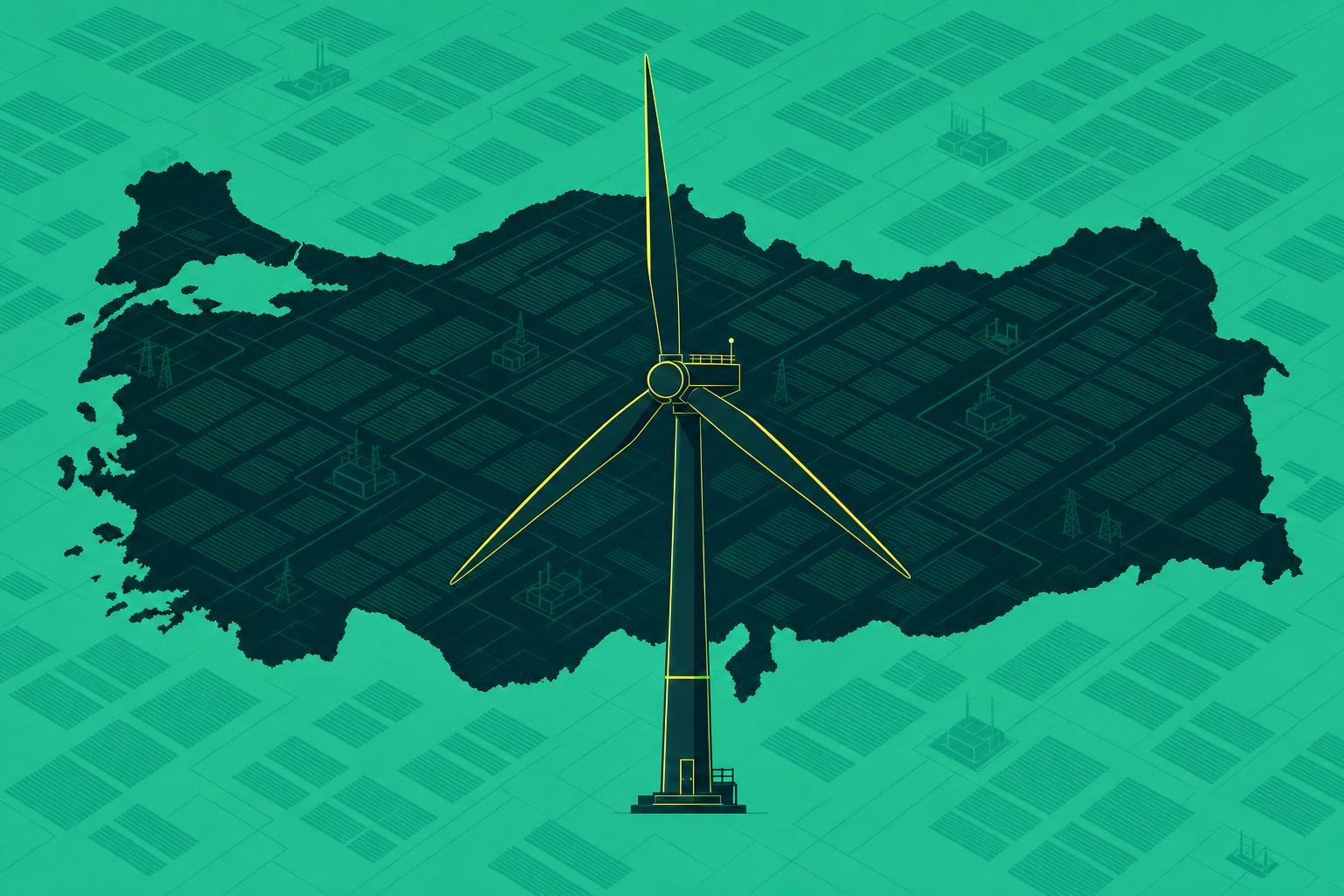
Nordex Group announced on 6 August 2026 that it has received a 525 MW turbine supply contract from Türkerler Holding for the YEKA-5 R25 Sivas wind project in central Türkiye - the largest single turbine deal ever awarded in the Turkish wind energy market, according to the company.[1]
What the contract covers
The order covers the supply and installation of 72 N175/6.X turbines from the Delta4000 series, each mounted on 108 m hub towers.[1] The contract also includes a 10-year Premium Service agreement with an option to extend to 25 years. First turbine installation is scheduled for Q3 2027.
The key contract elements:
- 72 × N175/6.X turbines (Delta4000 series)
- 108 m hub height
- Supply, installation, and commissioning
- 10-year Premium Service, extendable to 25 years
- First installation: Q3 2027
The project and its auction origin
The Sivas project sits in the Sivas province of central Anatolia, a region Nordex describes as offering "good and consistent wind conditions" suited to the N175/6.X platform. Türkerler Holding won the power deal for the project in Türkiye's fifth renewable energy auction (YEKA-5) last year. According to Windpower Intelligence, the 525 MW Sivas project is the largest wind farm currently in development in Türkiye.
Türkerler Holding is a repeat Nordex customer, active across construction, energy, healthcare, real estate, electricity distribution and trading, and textiles.
Nordex's position in the Turkish market
Nordex holds a 34% cumulative market share in the Turkish wind market and has previously supplied turbines to 3.8 GW of operational Turkish wind farms, with a further 1.2 GW in the pipeline ahead of this order. In 2024, the company booked more than 1 GW of orders in Türkiye alone.
The Sivas contract arrives shortly after Nordex opened a rotor blade manufacturing plant in Menemen, Izmir in May 2026. That facility - occupying roughly 130,000 square metres - is designed to produce up to 1,200 blades per year at full capacity and is initially focused on supplying YEKA-4 and YEKA-5 projects, with additional export capacity targeting European markets. Local blade production is directly relevant here: YEKA auction specifications require developers to meet a 55-point localisation threshold, and Nordex's in-country manufacturing gives it a structural advantage in meeting that requirement.
The broader YEKA pipeline
The Sivas order lands as Türkiye accelerates its onshore wind build-out. The government has committed to running at least 2 GW of YEKA tenders annually, with 1.5 GW of the 2026 round dedicated to wind. A separate 2.4 GW tender - covering 900 MW of solar and 1.5 GW of wind - opened applications on 13 October 2026. Türkiye's installed wind capacity has grown from 20 MW in 2005 to more than 15 GW, contributing approximately 11% of the country's electricity generation in 2025. The government's target is 30 GW of total wind capacity by 2035, including a 5 GW offshore tranche.
The pace of YEKA project conversions into turbine orders will be the number to track. Nordex's 34% installed share and its estimated 60% share among projects currently under construction suggest it is well positioned to capture a disproportionate slice of that pipeline - but the Sivas deal also sets a new scale benchmark that competitors will need to match to stay relevant in the market.
The images and texts on this page were created with the help of AI.
Related
Ready-to-build BESS projects lose their premium as Australia's NEM arbitrage spreads collapse 85%
Panellists at the Battery Asset Management Summit Australia 2026 said the venture-capital-style returns that once rewarded ready-to-build BESS projects have disappeared as NEM price spreads fell 85% in a year.
10 Sept 2026UK government opens three-month consultation on AI for clean energy, backed by 34-recommendation network review
DESNZ published its Vision for an AI-enabled clean energy system on 8 September, opening a call for evidence that closes 6 November and will feed into the UK's first AI for Clean Energy Strategy.
10 Sept 2026Heatwaves expose a three-layer risk for wind operators: resource, hardware, and people
Extreme heat cuts wind output, stresses nacelle components, and grounds maintenance crews - all at once. A look at how bad the summer of 2026 has been, and what the trend means for grid reliability.
10 Sept 2026