Noon Energy and Sabanci Renewables sign agreement to co-develop up to 1 GW of ultra-long-duration storage for data centers
Noon Energy and Sabanci Renewables will co-develop up to 1 GW / 100 GWh of co-located ultra-long-duration storage and renewables, targeting first commercial deployments in 2027.
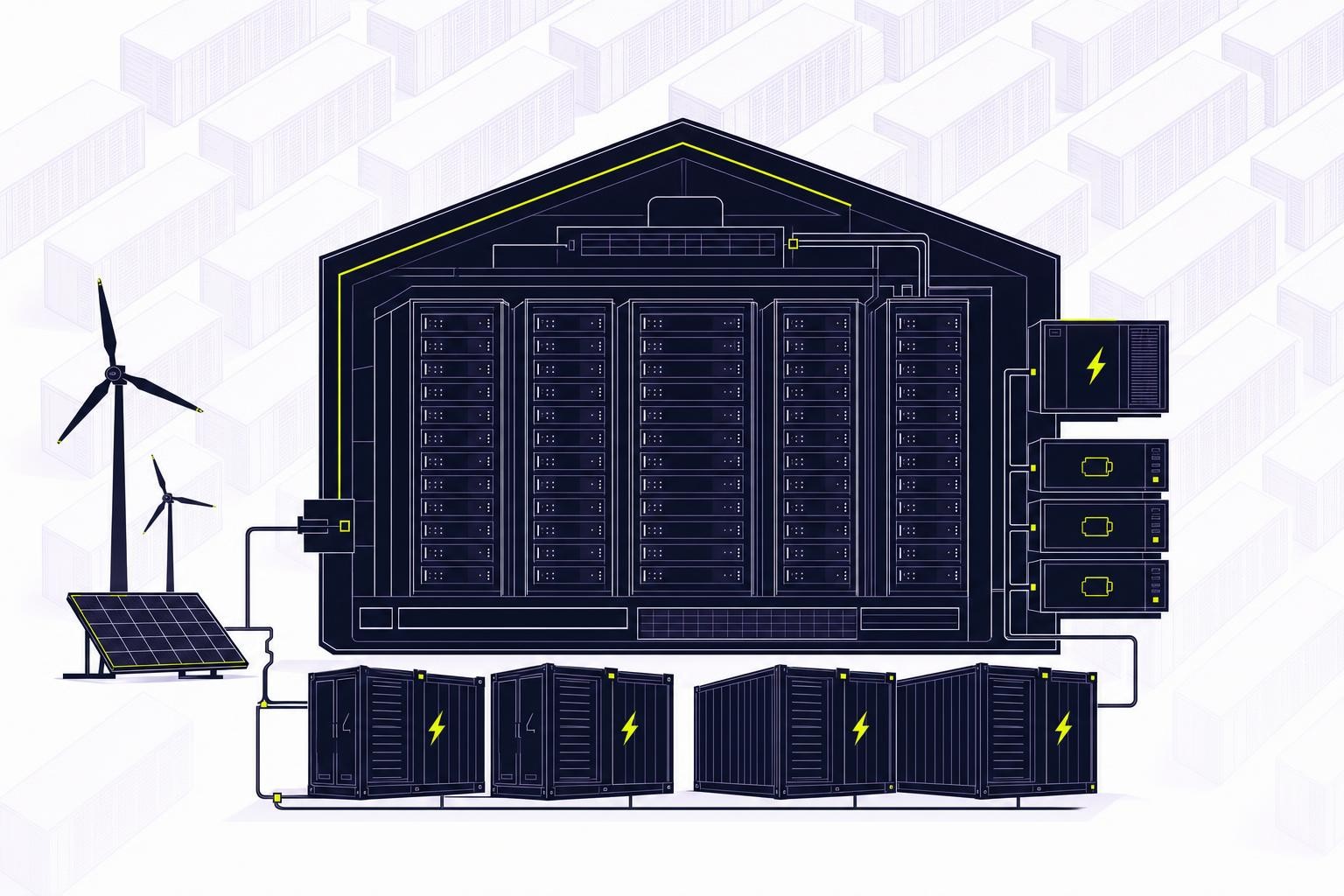
Noon Energy and Sabanci Renewables announced on 13 August 2026 a joint agreement to co-develop up to 1 GW of co-located ultra-long-duration energy storage and renewable capacity, targeting the data center sector[1]. At maximum scale the projects would deliver up to 100 GWh of storage[1], with first commercial deployments expected as early as 2027.
What the deal covers
The companies will co-develop ultra-long-duration energy storage (ultra-LDES) projects by integrating Noon Energy's reversible electrofuels battery systems with Sabanci's renewable portfolio. Projects will be structured as power purchase agreements or capacity offtake agreements for systems up to 1 GW / 100 GWh.
Sabanci Renewables is expected to contribute project development insights and capital expertise, while Noon would focus on scaling manufacturing, providing technical input, and overseeing operations and maintenance activities. The arrangement reflects Noon's stated preference for partnering with project developers rather than handling interconnection and civil works in-house.
The agreement also supports Sabanci Renewables' goal of building a 3 GW renewable portfolio in the US within five years. Sabanci Renewables is a US-based subsidiary of Türkiye's Sabanci Holding, established in 2022. As an investor in Noon Energy - and the sister company of Sabanci Renewables - Sabanci Climate Ventures has enabled this planned collaboration.
How Noon's technology works
Noon Energy's system is a reversible solid oxide fuel cell battery that stores energy as a carbon-based medium and can deliver power for more than 100 hours. The battery consists of three main parts: a power block that uses reversible solid oxide fuel cell technology to convert electricity into stored energy; a charge tank that transforms electricity into a carbon-based storage medium while releasing oxygen into the air; and a discharge tank that takes in oxygen from the air to convert stored energy back into electricity.
Instead of relying on lithium and other relatively scarce metals, the company's system stores energy using abundant elements including carbon and oxygen. Noon claims that its long discharge duration enables 100% reliable uninterrupted energy supply, while the battery's compact design has between 20 and 200 times smaller footprint than other LDES technologies such as flow batteries and pumped hydro.
In a demonstration completed in January 2026, Noon's system operated for thousands of hours and exceeded 200 hours of storage capacity - more than the company had originally projected. The system is a reversible solid oxide fuel cell battery that relies on carbon and oxygen, with tanks and power blocks that can fit inside standard shipping containers.
The Meta thread
Both Noon Energy and Sabanci Renewables have independently signed offtake deals with Meta[1], giving the partnership a shared anchor customer. In April 2026, Noon announced an agreement with Meta to reserve up to 1 GW / 100 GWh of energy storage capacity, beginning with a 25 MW / 2.5 GWh project scheduled for completion by 2028, after which Noon will begin delivering systems under the full supply contract.
Meta ranked as the largest corporate clean energy offtaker globally in 2025, contracting 10.24 GW in the year, according to BloombergNEF. The hyperscaler's involvement on both sides of this partnership reduces offtake risk at a stage when Noon has yet to reach commercial-scale deployment.
What to watch
Noon Energy has raised more than $45 million in venture capital and government grants since its founding in 2018. The 25 MW / 2.5 GWh Meta pilot, due by 2028, is the first hard milestone that will test whether the technology can hold up at commercial scale. No specific project site or final investment decision has been announced for the broader 1 GW programme. The pace at which Sabanci can advance interconnection and permitting for co-located projects in the US - and whether Noon can scale manufacturing to match - will determine whether the 2027 commercial deployment target holds.
The images and texts on this page were created with the help of AI.
Related
Ready-to-build BESS projects lose their premium as Australia's NEM arbitrage spreads collapse 85%
Panellists at the Battery Asset Management Summit Australia 2026 said the venture-capital-style returns that once rewarded ready-to-build BESS projects have disappeared as NEM price spreads fell 85% in a year.
10 Sept 2026UK government opens three-month consultation on AI for clean energy, backed by 34-recommendation network review
DESNZ published its Vision for an AI-enabled clean energy system on 8 September, opening a call for evidence that closes 6 November and will feed into the UK's first AI for Clean Energy Strategy.
10 Sept 2026Heatwaves expose a three-layer risk for wind operators: resource, hardware, and people
Extreme heat cuts wind output, stresses nacelle components, and grounds maintenance crews - all at once. A look at how bad the summer of 2026 has been, and what the trend means for grid reliability.
10 Sept 2026