NextEra unlocks $3.3 billion in U.S.-Japan funding to build 9.5 GW of gas generation for data center load
NextEra Energy executed definitive agreements with the U.S. Department of Commerce and Japan on 12 August 2026, releasing $3.3 billion to advance two gas-fired hubs in Texas and Pennsylvania.
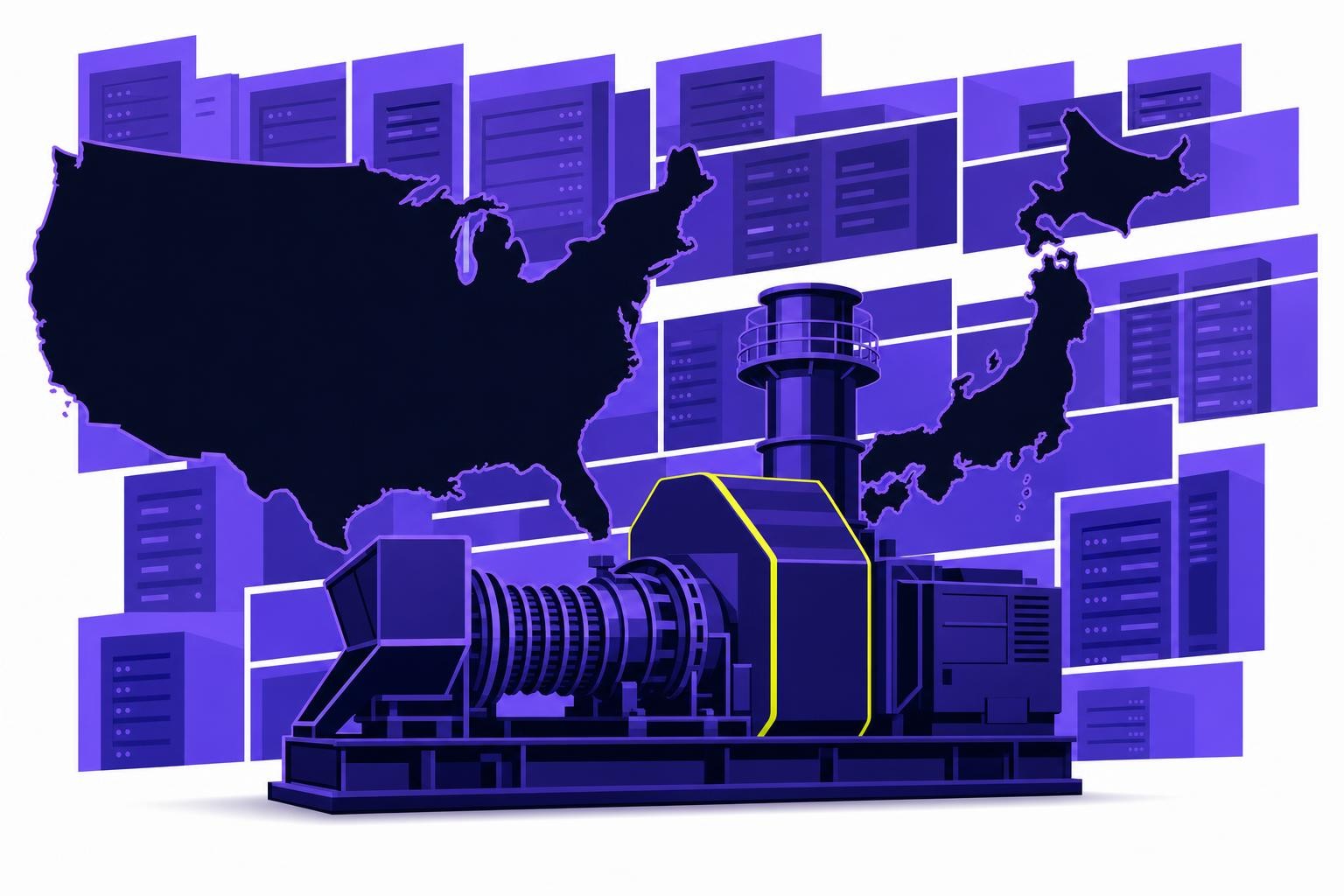
NextEra Energy executed definitive agreements with the U.S. Department of Commerce and the Government of Japan on 12 August 2026, releasing an initial $3.3 billion to advance up to 10 GW of natural gas-powered generation across Texas and Pennsylvania[1]. The funding is the first tranche tied to Japan's $550 billion investment commitment to the United States under the U.S.-Japan trade agreement, which President Trump approved in March[1].
The two projects
The two named projects - South Mon in southwest Pennsylvania and Project Anderson in Anderson County, Texas - would together add roughly 9.5 GW of gas-fired capacity at a combined cost of approximately $33 billion:
- South Mon (Pennsylvania): 4.3 GW, estimated at $17 billion, interconnecting with PJM via existing Marcellus and Utica shale pipelines, and capable of serving up to 3.5 GW of large-load demand[1].
- Project Anderson (Texas): 5.2 GW, estimated at $16 billion, sited in Anderson County in ERCOT territory, drawing on East Texas gas supply and capable of serving up to 5 GW of large-load demand.
Both projects will be jointly owned by the U.S. and Japanese governments, with NextEra building and operating them. Comstock Resources has agreed to supply natural gas to the Texas facility, with demand potentially reaching 1 billion cubic feet per day by 2031.
What the money covers
The $3.3 billion tranche is development capital, not construction finance. NextEra said the funds will cover:
- Down payments on long-lead equipment, including gas turbines
- Selection of engineering, procurement, and construction contractors
- Site development, permitting, and commercial structuring
Initial resources from the projects could come online as early as the end of 2028, with full completion targeted for 2032, subject to permitting and regulatory approvals[1].
Where this fits in NextEra's pipeline
The two projects are drawn from a broader hub strategy that NextEra has been building for more than 18 months. As of its Q2 2026 earnings, the company reported approximately 21 GW of large-load interest in its pipeline, 12 GW of which was in advanced discussions. Management said the data center hub programme is running ahead of schedule, with 30 potential hubs identified and a target of 40 by year-end.
The company's stated goal - internally labelled "15 by 35" - is to place 15 GW of new generation into service for data center hubs by 2035, with an upside case of 30 GW if demand trends hold. Gas is positioned as the firm-power backbone that follows an initial wave of renewables and storage at each site, with hyperscalers bearing the infrastructure cost rather than regulated ratepayers.
Florida Power & Light, NextEra's regulated utility, separately raised its 2032 large-load target from 6 GW to 8 GW on the same Q2 call, and expects to announce at least one large-load transaction under its new tariff before the end of 2026.
The key near-term question is whether permitting timelines in both PJM and ERCOT territory can support a 2028 first-power date - and whether the turbine slots NextEra has already secured with GE Vernova are sufficient to hold that schedule as gas generation backlogs across the industry continue to lengthen.
The images and texts on this page were created with the help of AI.
Related
Ready-to-build BESS projects lose their premium as Australia's NEM arbitrage spreads collapse 85%
Panellists at the Battery Asset Management Summit Australia 2026 said the venture-capital-style returns that once rewarded ready-to-build BESS projects have disappeared as NEM price spreads fell 85% in a year.
10 Sept 2026UK government opens three-month consultation on AI for clean energy, backed by 34-recommendation network review
DESNZ published its Vision for an AI-enabled clean energy system on 8 September, opening a call for evidence that closes 6 November and will feed into the UK's first AI for Clean Energy Strategy.
10 Sept 2026Heatwaves expose a three-layer risk for wind operators: resource, hardware, and people
Extreme heat cuts wind output, stresses nacelle components, and grounds maintenance crews - all at once. A look at how bad the summer of 2026 has been, and what the trend means for grid reliability.
10 Sept 2026