New Zealand adopts 15-recommendation solar review, targeting six-day residential approvals
New Zealand's government has accepted all 15 recommendations from its solar regulatory review, cutting residential approval times from three months to six days and legalizing plug-in solar.
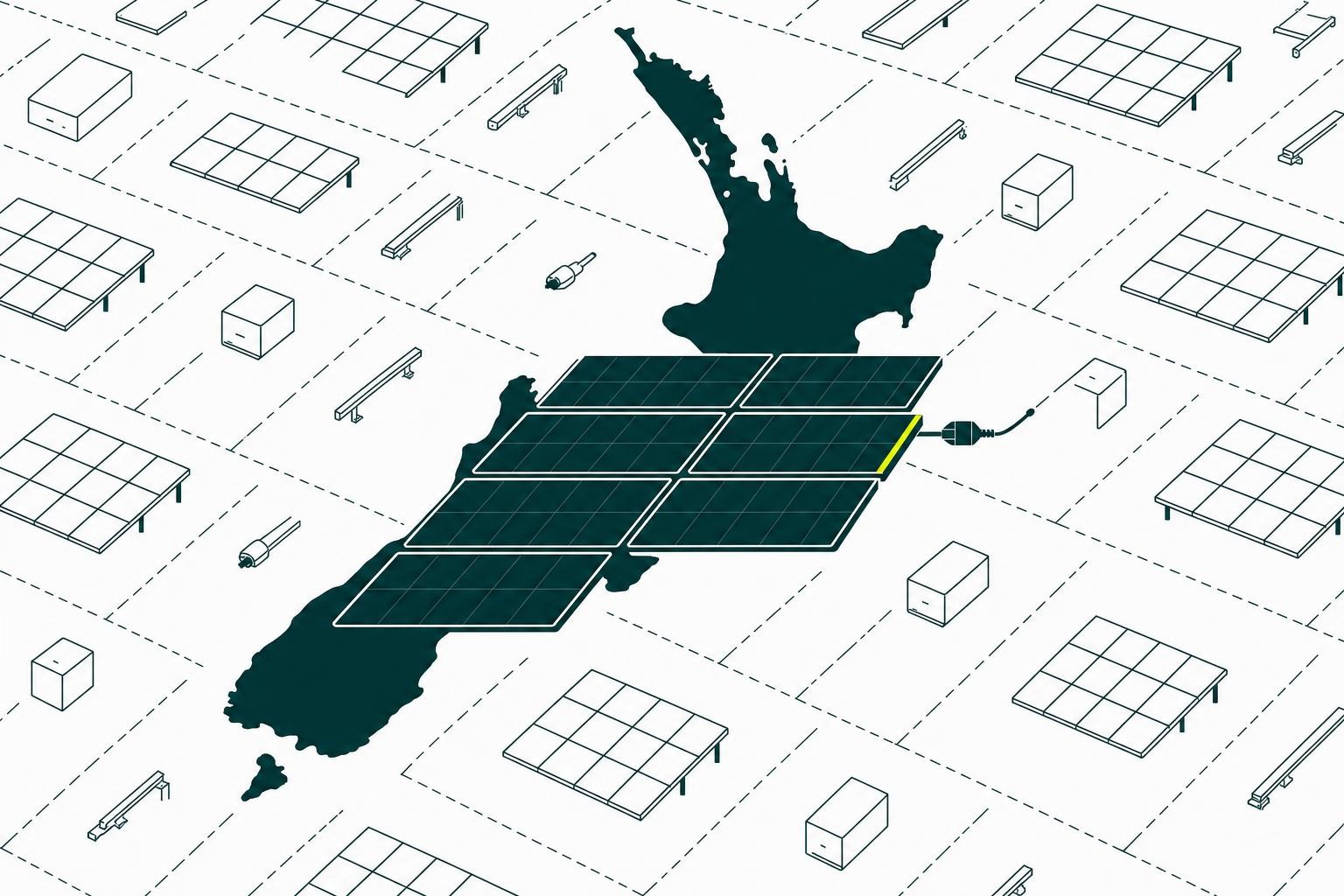
New Zealand's government confirmed on 17 August 2026 that it will implement all 15 recommendations from the Ministry for Regulation's sector review of small- and medium-sized solar installations[1]. The package is designed to cut the average residential approval from roughly three months and NZD 640 to six days and NZD 200[1].
What the review changes
The 15 recommendations cover the full installation pathway, from building consent to grid connection. The most operationally significant are:
- Sub-10 kW systems: distributor approval by the next working day[1]
- Sub-100 kW systems: accredited installers may sign off without a third-party inspection[1]
- Grid connection: a standardized process for connecting to electricity distributors, replacing the patchwork of distributor-specific requirements[1]
- Metering and retail: consumer-friendly meter information and improved retailer communications[1]
- Plug-in solar: units up to 800 W to be legalized, with a 9-12 month implementation window for the required safety standards[1]
The Ministry for Regulation estimates the package will deliver net benefits of between NZD 28 million and NZD 50 million over ten years, primarily through lower compliance costs, reduced delays, and the incremental uptake that plug-in legalization is expected to drive[1].
The plug-in angle
Plug-in solar - portable panels paired with a microinverter, typically one or two panels per unit - is currently illegal under New Zealand electrical rules. The review recommends legalizing units up to 800 W[1]. Only 3-4% of New Zealand households have solar installed, versus more than 30% in Australia, a disparity the report links partly to regulatory hurdles and the lack of subsidy programmes.
Energy Minister Simeon Brown framed plug-in legalization as a structural change for the rental market: it will allow tenants to take their solar system with them when they move[1]. The review makes the point that plug-in solar exists specifically to reach the people traditional rooftop solar cannot: renters, apartment dwellers, and anyone who does not own the roof over their head.
Market backdrop
New Zealand passed 1 GW of local solar capacity in mid-2026, adding 369 MW in the year to June 2026 - growth of 57% - and approximately 14,300 new connections. Industry forecasts project installed PV capacity will triple from roughly 860 MW in 2026 to more than 2,100 MW by 2031.
The country's largest solar farm, a 150 MW site on the North Island, came online in July 2026[1]. In April, the Electricity Authority set a 10 kW default export limit for residential solar and battery systems to standardize grid access[1] - a grid-side measure that the new approval reforms now complement on the permitting side.
New Zealand's cumulative solar capacity stood at 836 MW at the end of 2024, according to IRENA figures.[1]
What to watch
The plug-in solar pathway carries the longest lead time - safety standards must be finalized before units can legally go on sale, a process the review puts at 9-12 months[1]. The standardized distributor connection process will require coordination across multiple network companies and is the reform most likely to slip on implementation. Whether the approval-time targets translate into actual throughput gains will depend on how quickly accredited installer registers are expanded to handle increased volume.
The images and texts on this page were created with the help of AI.
Related
Ready-to-build BESS projects lose their premium as Australia's NEM arbitrage spreads collapse 85%
Panellists at the Battery Asset Management Summit Australia 2026 said the venture-capital-style returns that once rewarded ready-to-build BESS projects have disappeared as NEM price spreads fell 85% in a year.
10 Sept 2026UK government opens three-month consultation on AI for clean energy, backed by 34-recommendation network review
DESNZ published its Vision for an AI-enabled clean energy system on 8 September, opening a call for evidence that closes 6 November and will feed into the UK's first AI for Clean Energy Strategy.
10 Sept 2026Heatwaves expose a three-layer risk for wind operators: resource, hardware, and people
Extreme heat cuts wind output, stresses nacelle components, and grounds maintenance crews - all at once. A look at how bad the summer of 2026 has been, and what the trend means for grid reliability.
10 Sept 2026