LG Energy Solution opens 35 GWh battery cell plant in Lansing, Michigan on 18 August 2026
LG Energy Solution began production at its 226-acre, 35 GWh Lansing facility on 18 August 2026, targeting grid-scale ESS and EV cells as U.S. domestic battery capacity surges.
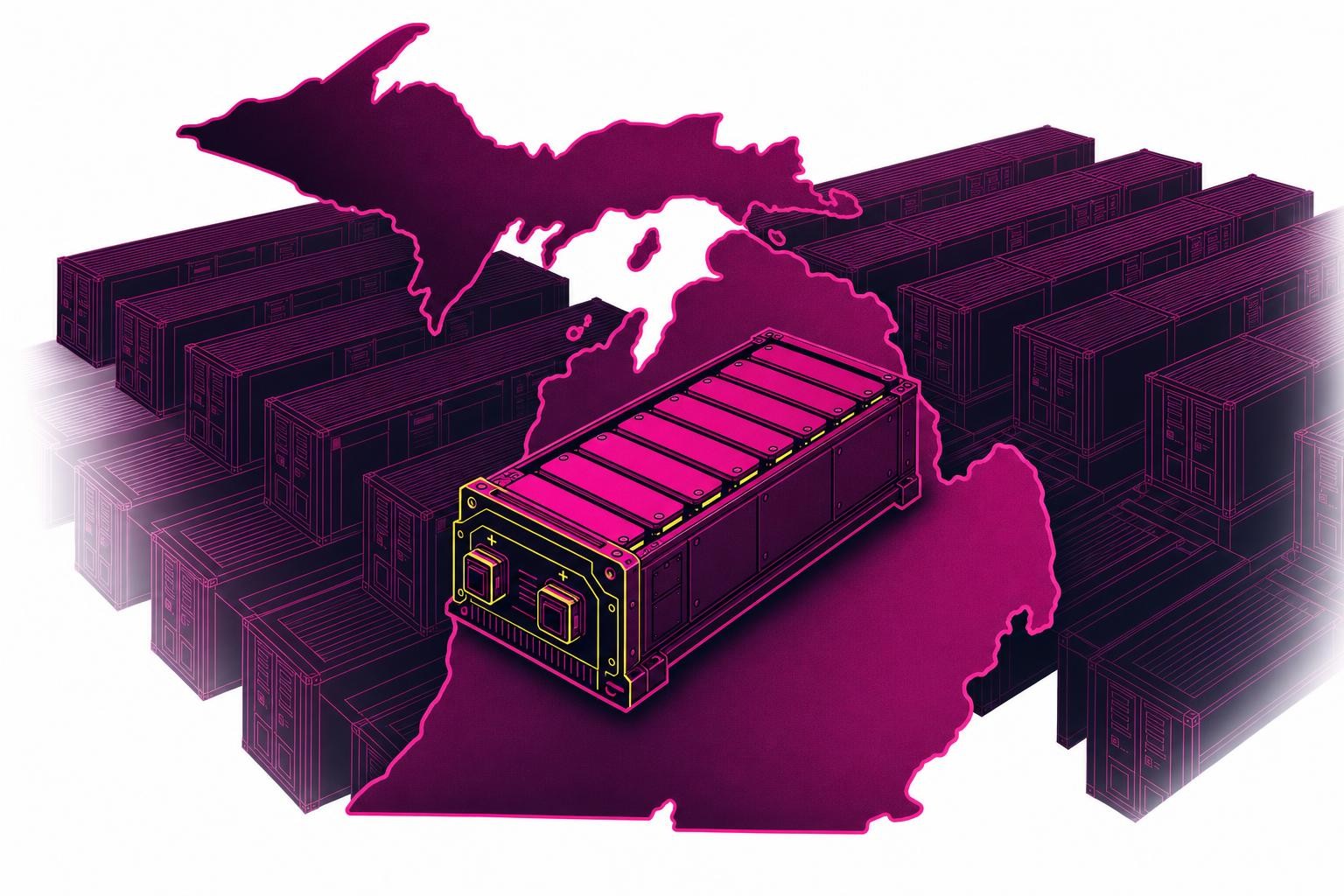
LG Energy Solution began production at its new 226-acre facility in Lansing, Michigan on 18 August 2026, marking the opening of one of the largest battery cell plants in the United States[1]. The plant targets more than 35 GWh of annual cell-making capacity at full-scale production, with more than $2 billion invested in the site since 2022.
What the plant makes
The Lansing facility produces lithium iron phosphate (LFP) battery cells for energy storage systems (ESS), integrated by LG Energy Solution's U.S. storage subsidiary Vertech into complete systems for utility, grid-scale, and commercial and industrial applications. NMC cells for Toyota electric vehicles - including the 2027 Highlander - are also planned for the site.
The plant's anchor ESS customer is Tesla. The U.S. Department of the Interior confirmed in March 2026 that LG had secured a $4.3 billion supply agreement to deliver LFP prismatic cells to Tesla's Megapack 3 production line in Houston, with deliveries beginning in 2027. Michigan utility DTE Energy is also among the customers lined up to use Lansing-produced cells for future grid storage projects.
LFP chemistry has historically been dominated by Chinese manufacturers. By sourcing cells from Michigan, Tesla's Megapack systems can meet domestic content requirements under the Inflation Reduction Act, while sidestepping tariffs on Chinese battery imports that Tesla's CFO had previously flagged as an outsized risk to the energy business.
From GM joint venture to sole LG ownership
The facility has a complicated history. It was originally announced in 2022 as Ultium Cells, a joint venture between LG and General Motors intended to supply battery cells for GM's EV lineup[1]. By 2024, slowing EV demand and the Trump administration's hostility to federal EV support had changed the calculus. GM sold its stake to LG - giving the Korean company full ownership and the freedom to pivot the plant toward LFP production for stationary storage[1].
The Trump administration subsequently eliminated the $7,500 consumer EV tax credit and canceled more than $700 million in federal battery and EV manufacturing funds. It did, however, preserve tax credits for clean energy manufacturing facilities and for the installation of stationary storage systems[1]. That distinction matters for Lansing: the plant's ESS focus keeps it within the surviving incentive perimeter.
Scale and workforce
Key figures for the Lansing plant at full-scale operation:
- 226 acres (approximately 2.8 million square feet) of manufacturing floor space
- 35+ GWh annual cell production capacity targeted
- 1,700 jobs at full capacity, with roughly 90% of workers expected to come from Michigan
- ~900 workers currently employed as production ramps
LG Energy Solution has invested more than $5 billion in Michigan since 2010, and its total Michigan workforce is projected to exceed 3,300 by end-2026, making it one of the state's top 50 employers. The Lansing site is the company's seventh production facility in North America and its second in Michigan, alongside the existing Holland plant.
U.S. cell capacity context
The opening lands at a pivotal moment for domestic battery manufacturing. The U.S. had no domestic battery cell production until 2025, when companies including LG added a combined 20 GWh of manufacturing capacity[1]. The U.S. Energy Storage Coalition projects that figure will rise nearly fivefold to 96 GWh by end-2026[1]. LG alone is targeting more than 50 GWh of total LFP cell capacity in North America by end-2026 across three wholly owned plants.
The political optics at the opening ceremony were notable. Interior Secretary Doug Burgum attended and framed the factory as evidence of the administration's "American energy dominance" agenda[1] - a posture that sits in tension with the same administration's rollback of EV and clean energy policy, but aligns with its stated goal of reducing dependence on Chinese battery supply chains.
The next milestone to watch is the ramp of Tesla-specific LFP cell production, scheduled to begin in the second half of 2027. Whether the plant reaches its 35 GWh nameplate capacity on schedule will depend on how quickly the Toyota NMC line comes online alongside the ESS ramp - and on whether the broader U.S. grid storage market absorbs supply at the pace LG's 140 GWh ESS order backlog implies.
The images and texts on this page were created with the help of AI.
Related
Ready-to-build BESS projects lose their premium as Australia's NEM arbitrage spreads collapse 85%
Panellists at the Battery Asset Management Summit Australia 2026 said the venture-capital-style returns that once rewarded ready-to-build BESS projects have disappeared as NEM price spreads fell 85% in a year.
10 Sept 2026UK government opens three-month consultation on AI for clean energy, backed by 34-recommendation network review
DESNZ published its Vision for an AI-enabled clean energy system on 8 September, opening a call for evidence that closes 6 November and will feed into the UK's first AI for Clean Energy Strategy.
10 Sept 2026Heatwaves expose a three-layer risk for wind operators: resource, hardware, and people
Extreme heat cuts wind output, stresses nacelle components, and grounds maintenance crews - all at once. A look at how bad the summer of 2026 has been, and what the trend means for grid reliability.
10 Sept 2026