Impact Drones launches autonomous interceptor service for data centers and grid infrastructure, targeting Q3 2026 pilot
Y Combinator-backed Impact Drones has launched a containerized autonomous drone-interceptor service aimed at data centers and power grid operators, with a pilot deployment targeted for Q3 2026.
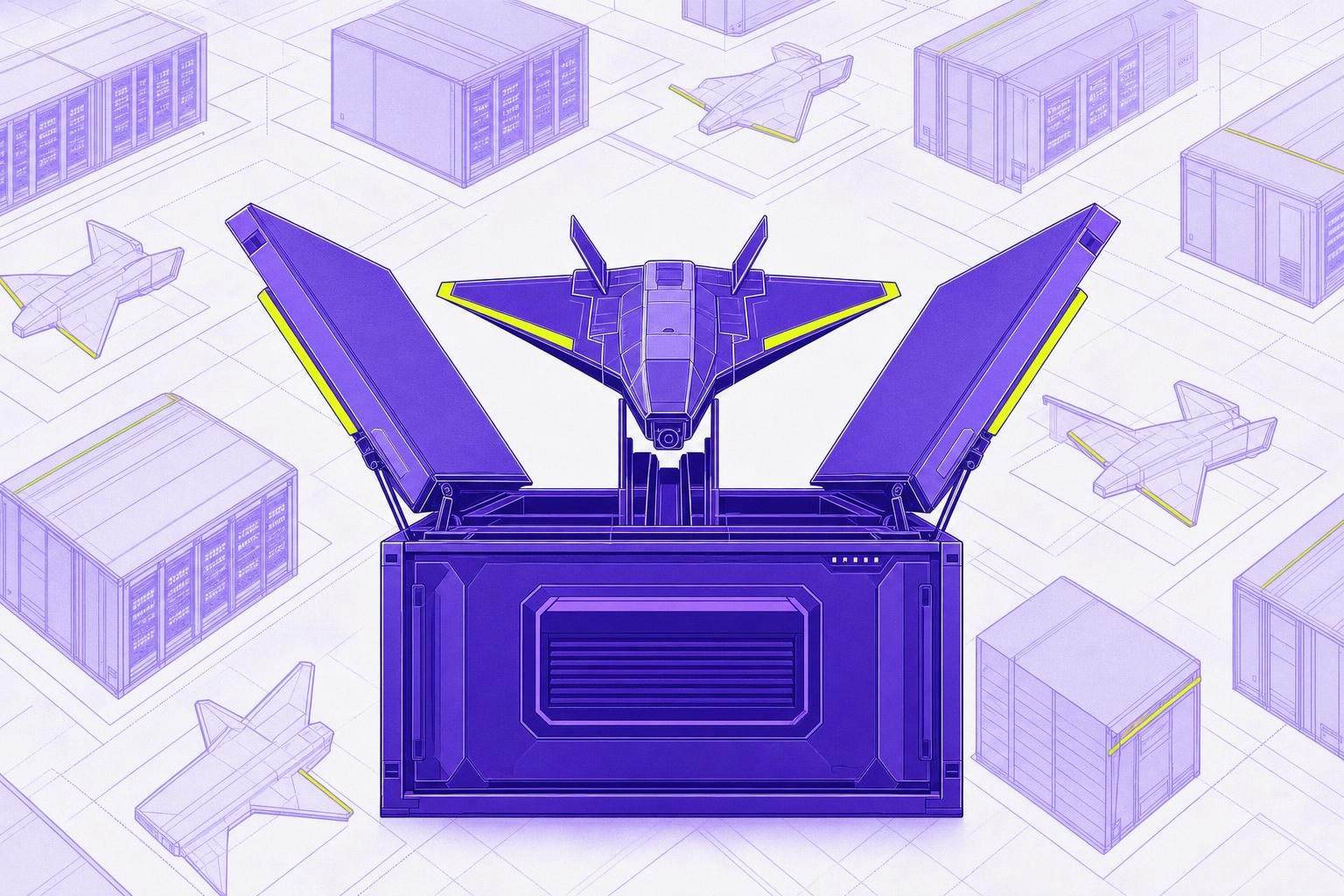
A two-person San Francisco startup has entered the data center physical-security market with an autonomous drone-interception service, positioning itself as a direct response to the March 2026 strikes on Amazon Web Services facilities in the Middle East. Impact Drones, part of Y Combinator's S26 batch, launched publicly in early August 2026 with a pilot deployment target of Q3 2026.[1]
What the product does
The system consists of a sealed, shippable container housing autonomous interceptor drones that remain charged and ready at the protected site - no crew required.[1] When onboard sensors detect a hostile drone, an interceptor pierces the container's frangible lid and launches autonomously, guided by visual navigation that the company says continues to function when GPS is jammed.[1]
Impact Drones offers two interceptor models:
- Hunter - a close-range interceptor designed for slow, low-altitude threats that swarm a site
- Sable - a turbine-powered, delta-airframe pursuit interceptor built to run down fast movers and longer-range threats before they reach the perimeter[1]
The company frames its commercial model as "air defense as a service": operators subscribe rather than purchase outright, with hardware, reloads, and monitoring bundled into the fee.
The cost argument
The economic pitch rests on a well-documented asymmetry in conventional air defense. A single Patriot missile costs more than $1 million to shoot down a drone that may cost as little as $30,000 - a ratio that makes legacy systems economically unsustainable for routine civilian infrastructure protection.[1] Impact Drones argues that its interceptors are priced closer to the threat, allowing deployments to scale with swarm-size attacks rather than losing the cost-per-interception battle.
The company's two founders bring relevant backgrounds. Co-founder Jasper Lortije previously built GNSS-denied navigation systems - the same technology underpinning the Hunter and Sable's GPS-independent guidance.[1]
The threat context
On 1 March 2026, Iranian drone strikes hit three AWS facilities - two in the United Arab Emirates and one in Bahrain - in what Uptime Institute confirmed as the first deliberate military attack on a hyperscale cloud provider. The strikes knocked out two of the three availability zones in AWS's ME-CENTRAL-1 UAE region simultaneously, defeating the redundancy model designed to survive single-zone failures. AWS confirmed structural damage, power disruption, fires, and water damage from suppression systems.
The outages cascaded into consumer-facing services across the Gulf, affecting banks including Emirates NBD and First Abu Dhabi Bank, payments platforms Hubpay and Alaan, and ride-hailing platform Careem. The IRGC subsequently claimed a further cruise missile strike on an AWS facility in Bahrain in late July 2026.[1]
Impact Drones is not the only startup to identify the gap. The broader counter-UAS market has grown rapidly since the Ukraine conflict demonstrated the economics of drone warfare at scale, but most existing solutions - RF jammers, net-capture systems, and layered military packages - were designed for military or government procurement rather than commercial infrastructure operators subscribing to a managed service.
What to watch
Impact Drones has not disclosed pilot customers, pricing tiers, or the regulatory pathway it intends to navigate for autonomous kinetic interception over civilian sites in the United States - a non-trivial hurdle given FAA and Department of Defense jurisdiction over counter-UAS operations. Whether the Q3 2026 pilot deployment proceeds on schedule, and in which jurisdiction, will be the first real test of whether the "air defense as a service" model can clear the regulatory and commercial barriers that have kept this capability inside government programs until now.
The images and texts on this page were created with the help of AI.
Related
Ready-to-build BESS projects lose their premium as Australia's NEM arbitrage spreads collapse 85%
Panellists at the Battery Asset Management Summit Australia 2026 said the venture-capital-style returns that once rewarded ready-to-build BESS projects have disappeared as NEM price spreads fell 85% in a year.
10 Sept 2026UK government opens three-month consultation on AI for clean energy, backed by 34-recommendation network review
DESNZ published its Vision for an AI-enabled clean energy system on 8 September, opening a call for evidence that closes 6 November and will feed into the UK's first AI for Clean Energy Strategy.
10 Sept 2026Heatwaves expose a three-layer risk for wind operators: resource, hardware, and people
Extreme heat cuts wind output, stresses nacelle components, and grounds maintenance crews - all at once. A look at how bad the summer of 2026 has been, and what the trend means for grid reliability.
10 Sept 2026