Illinois coal-to-solar initiative delivered three small farms and no stand-alone storage, new report finds
A University of Illinois and Prairie Rivers Network report finds Illinois' Coal to Solar and Energy Storage Initiative produced far less than planned, pointing to a $30 REC price, coal ash, and site constraints as the main culprits.
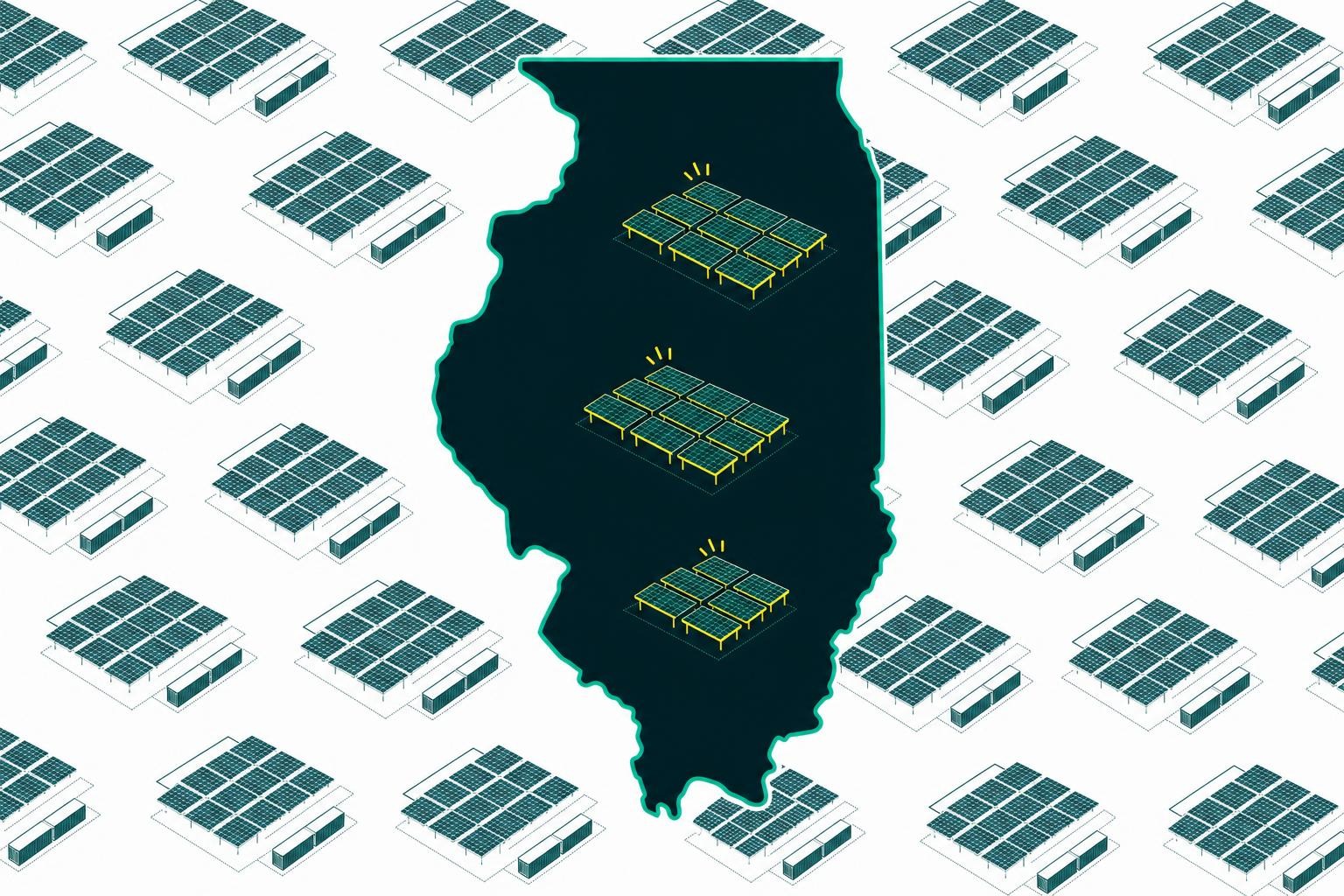
Illinois set out in 2021 to convert its retiring coal fleet into a network of solar farms and battery banks. Five years on, a new report by the University of Illinois' Climate Jobs Institute and the nonprofit Prairie Rivers Network concludes the program has largely failed to deliver: only three relatively small solar farms with co-located storage were built, and not a single stand-alone battery project came online[1].
What the program was supposed to do
Illinois' Climate and Equitable Jobs Act (CEJA), signed into law on 15 September 2021, created the Coal to Solar and Energy Storage Initiative with two parallel tracks. The Illinois Power Agency (IPA) would procure renewable energy credits (RECs) from solar built at or adjacent to coal plant sites, while the state's Department of Commerce and Economic Opportunity would award storage grants to five retiring coal plants[1].
The targets were specific:
- At least six solar-plus-storage arrays under 20-year REC contracts
- Five larger stand-alone battery banks, sharing $280.5 million in grant funding over ten years, capped at $28.05 million per year
- First payments and commercial operations expected by 2025
The logic was straightforward: coal sites already have transmission infrastructure and land, so redeveloping them should be faster and cheaper than greenfield development. The program also aimed to replace some of the tax revenue and jobs lost when plants close[1].
Where it went wrong
The solar REC track ran into a pricing problem almost immediately. The IPA set a fixed price of $30 per REC - a level Vistra had argued was too low during negotiations, but which legislators accepted based on market conditions at the time[1]. In the spring 2022 procurement, six Vistra projects were selected. But when the fall 2022 round opened for the storage-only track, the state received only one proposal and made no awards[1].
The report identifies several structural barriers that compounded the pricing problem:
- On-site build requirement. The 2021 law required clean energy to be installed directly on the coal plant site, not merely nearby - a constraint that proved commercially unworkable in many cases.
- Coal ash contamination. Toxic coal ash on plant sites made construction impossible in many areas, and the Trump administration's rollback of federal coal ash cleanup rules means the problem is unlikely to ease soon[1].
- Interconnection costs. Securing grid connection was expensive and time-consuming even when reusing existing transmission infrastructure[1].
- Eligibility gaps. Municipal utilities and rural electric cooperatives were excluded from participating, shrinking the pool of potential developers[1].
The tax revenue gap
One of the program's stated goals - replacing coal plant tax revenue for host communities - also proved harder than expected. The solar installation Vistra built at its Baldwin coal plant is projected to generate about $6 million in property taxes over its lifetime, while the coal plant contributed more than $3.1 million in tax year 2025 alone, and $4.8 million in 2016 at peak operations[1]. Renewable tax revenue "can be a piece of the puzzle," report co-author Roshan Krishnan said, "but not a one-to-one replacement."
Developers are moving anyway - just outside the program
The report's authors are careful to separate the program's design from the underlying concept. Vistra is pursuing several coal-site solar projects in Illinois, but outside the CEJA framework that required on-site construction. The company is building a solar array eight miles from its Joppa coal plant, using the coal plant's existing interconnection infrastructure to connect to the grid[1] - an arrangement the program's rules would not have permitted.
Illinois has other policy levers that can support coal-site redevelopment, including a brownfield solar program and community solar incentives targeted at communities near fossil fuel plants. The report's lead author, Amanda Pankau of Prairie Rivers Network, argued the concept should be broadened: the goal should be ensuring that coal communities and workers are not left behind as the grid changes, not tying investment to a specific parcel of land[1].
What to watch: Illinois passed the Clean and Reliable Grid Affordability Act in 2025, which directs the IPA to run new utility-scale storage procurements. Whether that legislation draws lessons from the Coal to Solar program's design failures - particularly on REC pricing and site flexibility - will determine whether the state's next attempt at coal-site redevelopment fares better.
The images and texts on this page were created with the help of AI.
Related
Ready-to-build BESS projects lose their premium as Australia's NEM arbitrage spreads collapse 85%
Panellists at the Battery Asset Management Summit Australia 2026 said the venture-capital-style returns that once rewarded ready-to-build BESS projects have disappeared as NEM price spreads fell 85% in a year.
10 Sept 2026UK government opens three-month consultation on AI for clean energy, backed by 34-recommendation network review
DESNZ published its Vision for an AI-enabled clean energy system on 8 September, opening a call for evidence that closes 6 November and will feed into the UK's first AI for Clean Energy Strategy.
10 Sept 2026Heatwaves expose a three-layer risk for wind operators: resource, hardware, and people
Extreme heat cuts wind output, stresses nacelle components, and grounds maintenance crews - all at once. A look at how bad the summer of 2026 has been, and what the trend means for grid reliability.
10 Sept 2026