Hyundai Motor Group consolidates V2X services under AllDayEnergy brand, starting UK rollout in H2 2026
Hyundai Motor Group launched AllDayEnergy on 24 July 2026, unifying V1G, V2G and V2H services across Hyundai, Kia and Genesis vehicles under a single global identity.
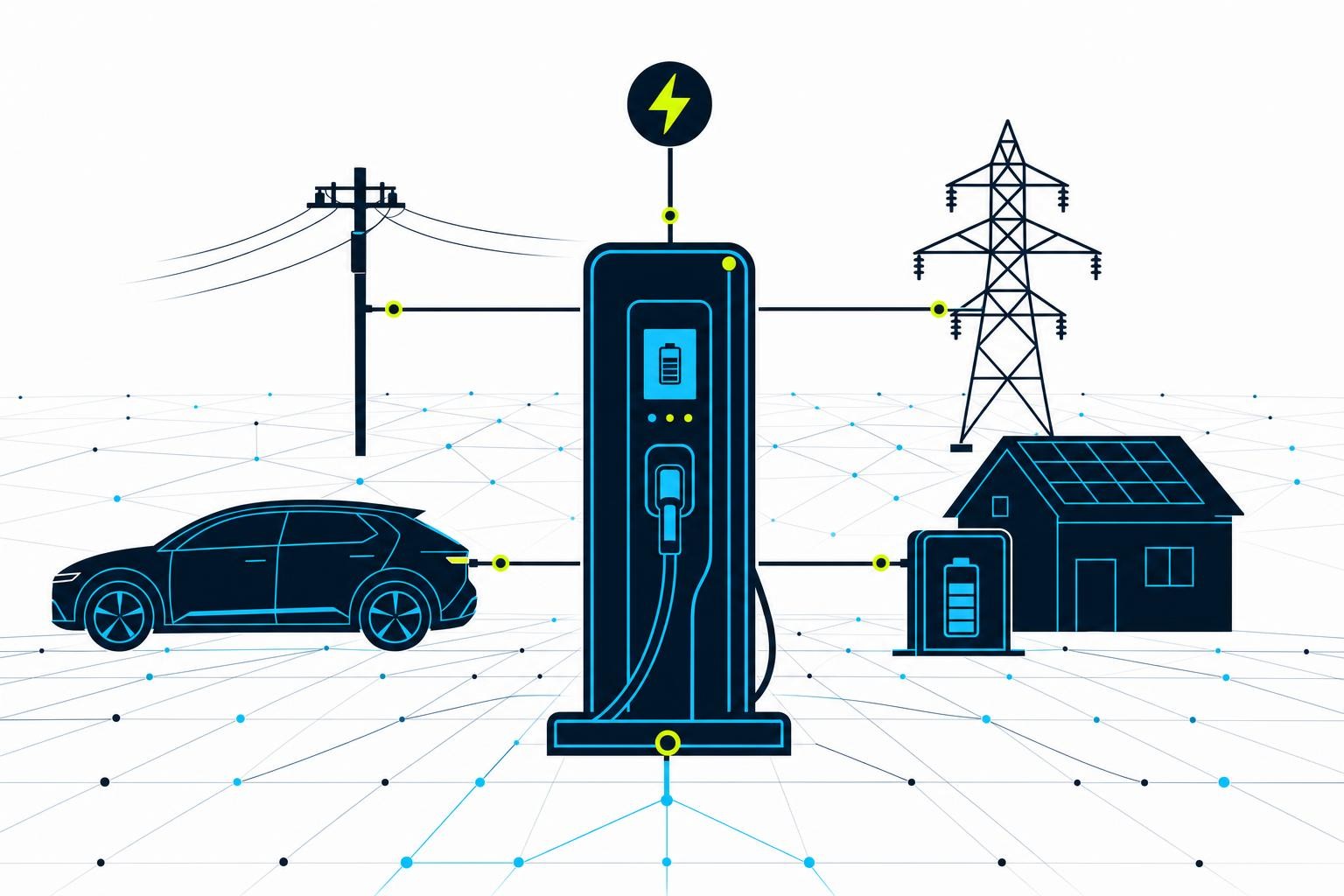
Hyundai Motor Group announced AllDayEnergy on 24 July 2026, a single global brand that consolidates its vehicle-to-everything (V2X) energy services - smart charging, vehicle-to-grid, and vehicle-to-home - across Hyundai, Kia and Genesis vehicles[1]. The first deployment is V1G smart charging in the United Kingdom, delivered through the Kia App in the second half of 2026, with expansion planned to continental Europe, the United States and South Korea.
What AllDayEnergy covers
AllDayEnergy bundles three distinct service tiers under one identity: V1G smart charging, which adjusts when a vehicle charges in response to real-time electricity prices and grid conditions; V2G, which enables an EV battery to return energy to the grid when required; and V2H, which allows stored energy to meet household electricity needs including backup power during outages. Drivers access the services through the vehicle apps of Hyundai Motor and Kia.
The sequencing is deliberate. V1G launches first because it requires no bidirectional hardware beyond what most current EVs already support. Full V2G and V2H capabilities follow as the rollout extends to new markets.
Pre-existing deployments
The brand consolidation sits on top of programmes already running in three markets:
- South Korea - V2G technology is being piloted in Jeju Special Self-Governing Province.
- Netherlands - V2G and smart charging services are live, optimising charge schedules against dynamic electricity prices.
- United States - V2H services have been deployed to provide emergency household backup power during wildfire events.
The Group has already developed and operated V2X services in Korea, the Netherlands and the United States ahead of the AllDayEnergy launch. AllDayEnergy gives those dispersed programmes a common identity and a shared delivery mechanism through the vehicle apps.
Grid relevance
The grid-side case for V2X rests on scale. A large fleet of bidirectional-capable EVs can, in aggregate, act as a distributed balancing resource - absorbing excess generation during low-demand periods and returning it during peaks. V1G alone, by shifting charge timing away from system peaks, reduces the coincident load that utilities must plan for. V2G goes further, turning parked vehicles into dispatchable capacity that can participate in ancillary services markets.
V2X technology enables bidirectional energy flow between an electric vehicle and the grid, allowing an EV to function as a mobile energy storage system rather than only drawing power during charging. The practical value depends on the regulatory frameworks in each market - specifically whether aggregators can bid EV capacity into balancing or capacity mechanisms. The Netherlands deployment, tied to dynamic pricing, is the closest current analogue to a grid-services model.
What to watch
The UK launch is the first test of whether a unified brand and app-based interface can drive meaningful V1G enrolment at scale. The more consequential question is whether Hyundai's V2G expansion into the U.S. and Europe arrives in time to intersect with the regulatory frameworks - PJM's demand response rules, Ofgem's flexibility market reforms - that would allow EV fleets to be compensated for grid services. Without those market structures, the grid-balancing potential of AllDayEnergy remains largely theoretical.
The images and texts on this page were created with the help of AI.
Related
Ready-to-build BESS projects lose their premium as Australia's NEM arbitrage spreads collapse 85%
Panellists at the Battery Asset Management Summit Australia 2026 said the venture-capital-style returns that once rewarded ready-to-build BESS projects have disappeared as NEM price spreads fell 85% in a year.
10 Sept 2026UK government opens three-month consultation on AI for clean energy, backed by 34-recommendation network review
DESNZ published its Vision for an AI-enabled clean energy system on 8 September, opening a call for evidence that closes 6 November and will feed into the UK's first AI for Clean Energy Strategy.
10 Sept 2026Heatwaves expose a three-layer risk for wind operators: resource, hardware, and people
Extreme heat cuts wind output, stresses nacelle components, and grounds maintenance crews - all at once. A look at how bad the summer of 2026 has been, and what the trend means for grid reliability.
10 Sept 2026