Gulf Coast waterborne petroleum shipments to the West Coast more than quadrupled year-on-year in April and May after Jones Act waiver
EIA data show Gulf Coast-to-West Coast petroleum shipments more than quadrupled year-on-year in April and May 2026 after DHS issued a broad Jones Act waiver on 17 March.
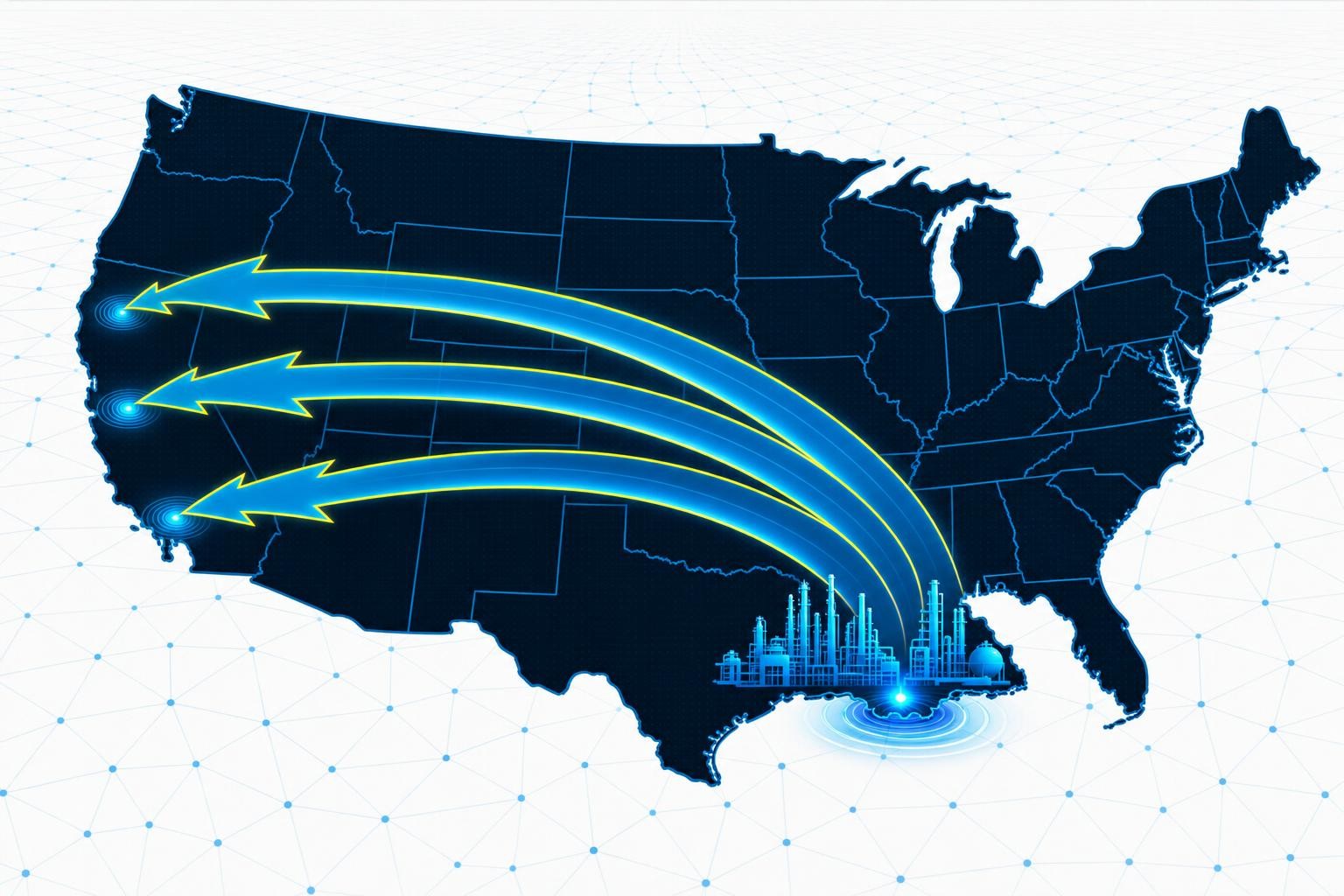
Waterborne shipments of crude oil and petroleum products from the U.S. Gulf Coast (PADD 3) to the West Coast (PADD 5) more than quadrupled year-on-year in April and May 2026, according to EIA data published this week[1]. The driver was a Jones Act waiver that the Department of Homeland Security issued on 17 March 2026, which permitted a broader group of ships - including foreign-flagged vessels - to carry energy commodities between U.S. ports[1].
The waiver and what it unlocked
DHS issued the waiver on 17 March 2026 at the request of the Department of Defense, citing the need to mitigate short-term oil market disruptions tied to U.S. military operations. The initial 60-day window was set to expire on 17 May 2026 and was subsequently extended. The waiver covered roughly 659 commodity categories at launch, including crude oil, refined petroleum products, natural gas, coal, and fertilizers.
Before the waiver, the Jones Act required goods moved between U.S. ports to be carried on vessels that are U.S.-built, U.S.-flagged, U.S.-owned, and crewed by U.S. citizens[1]. That constraint had effectively closed the Gulf-to-West Coast tanker route for most petroleum products: from 2021 through February 2026, renewable diesel was the only product that moved by tanker and barge from the Gulf Coast to the West Coast in most months[1].
East Coast flows also hit records
The West Coast surge was the headline figure, but Gulf Coast-to-East Coast (PADD 1) shipments also set records[1]. Total waterborne shipments from the Gulf Coast to the East Coast reached a record 1.2 million barrels per day in April, 11% above the pre-waiver record[1]. Florida's dependence on waterborne receipts from Gulf Coast refining centers for much of its transportation fuel supply makes this corridor the largest inter-PADD waterborne transfer route in the country[1].
Product-level records were also broken in April:
- Gasoline blending components reached a record 620,000 b/d[1]
- Distillate fuel reached a record 220,000 b/d[1]
Total waterborne movements from the Gulf Coast to the East Coast declined 12% in May from April's peak, though crude oil shipments on that route continued to climb, reaching a record 180,000 b/d[1].
West Coast: a route that barely existed before
Total petroleum shipments to the West Coast in April exceeded more than double the previous record, and remained elevated in May[1]. The scale of the shift reflects how thoroughly the Jones Act had suppressed this trade route. In the waiver's first 70 days, more gasoline and jet fuel moved Gulf-to-West Coast than in the entirety of 2020-2025 combined.
The waiver was extended a second time through 16 August 2026, and DHS has since issued a further 90-day extension through 15 November 2026 - though the latest renewal narrowed the covered commodity list by roughly two-thirds, from more than 600 to 237 HTS codes, and introduced new pre-voyage authorization requirements.
The key question now is whether the waiver's demonstrated trade volumes - and the infrastructure relationships they have begun to establish - translate into any durable policy change. The Jones Act fleet cannot replicate the capacity that foreign-flagged tankers have provided since March; if the waiver lapses without reform, West Coast and Puerto Rico markets revert to the supply constraints the EIA data have now quantified in detail.
The images and texts on this page were created with the help of AI.
Related
Ready-to-build BESS projects lose their premium as Australia's NEM arbitrage spreads collapse 85%
Panellists at the Battery Asset Management Summit Australia 2026 said the venture-capital-style returns that once rewarded ready-to-build BESS projects have disappeared as NEM price spreads fell 85% in a year.
10 Sept 2026UK government opens three-month consultation on AI for clean energy, backed by 34-recommendation network review
DESNZ published its Vision for an AI-enabled clean energy system on 8 September, opening a call for evidence that closes 6 November and will feed into the UK's first AI for Clean Energy Strategy.
10 Sept 2026Heatwaves expose a three-layer risk for wind operators: resource, hardware, and people
Extreme heat cuts wind output, stresses nacelle components, and grounds maintenance crews - all at once. A look at how bad the summer of 2026 has been, and what the trend means for grid reliability.
10 Sept 2026