Geothermal's turbine supply chain is standardizing - but grid-connection hardware remains the parallel bottleneck
As foreign ORC turbine makers lock in framework deals for US geothermal, a May 2026 RMI report flags transformer and switchgear lead times as the parallel constraint on how fast EGS capacity reaches the grid.
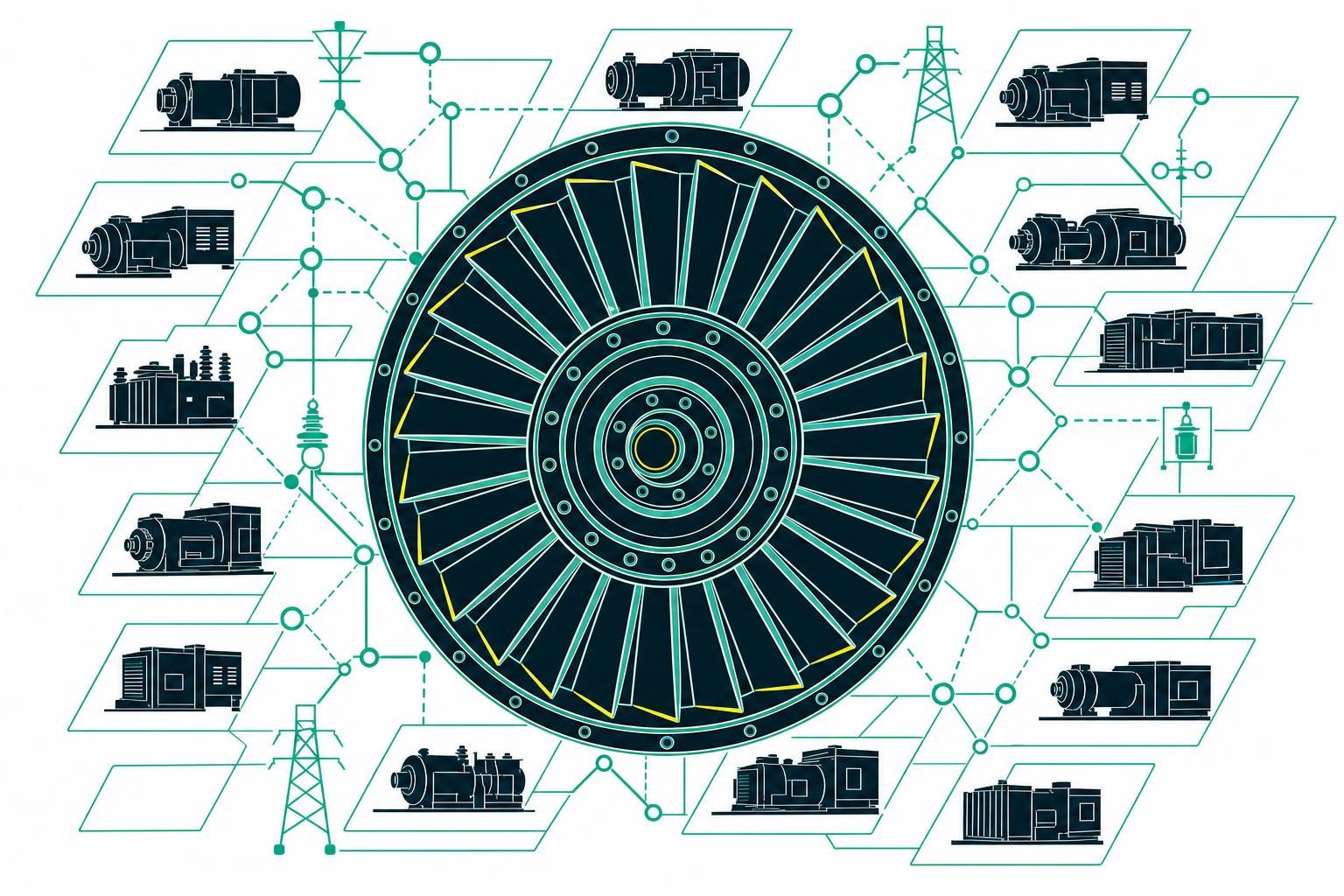
Fervo Energy's Cape Station Phase I is on track to begin delivering power to the grid in late 2026, reaching approximately 100 MW of operating capacity by early 2027[1] - the first commercial-scale enhanced geothermal system to hit that milestone anywhere in the world. The turbine supply chain that will get it there has been secured: six of twelve organic rankine cycle (ORC) units manufactured by Italy's Turboden, a Mitsubishi Heavy Industries subsidiary, have already been delivered to the Utah site[1]. But a May 2026 RMI report on the geothermal supply chain identifies a second hardware constraint that is less discussed: grid-connection equipment.
From bespoke to standardized
Historically, geothermal surface plant equipment was engineered project by project. A developer would locate a resource, determine its output, and commission turbines built to that exact specification - a process that could take well over a year[1]. Next-generation developers like Fervo are changing that by engineering the reservoir itself, using horizontal drilling techniques borrowed from oil and gas to control subsurface conditions. That greater control over reservoir output is what makes standardized surface equipment viable[1].
Fervo's entire project architecture is built around the result: a modular 50 MW unit it calls a GeoBlock, each using ORC equipment[1]. Turboden America has a three-year framework agreement with Fervo to supply ORC units for up to 35 GeoBlocks, totaling 1,750 MW of dispatchable power capacity. Baker Hughes has also been awarded a contract to design and deliver equipment for five ORC power plants at Cape Station Phase II near Milford, Utah. Once operational, those five plants will generate approximately 300 MW; Baker Hughes' scope covers turboexpanders and generators for five 60 MWe units.
The competitive landscape for ORC turbines is narrow. Almost all ORC turbine production for large-scale geothermal plants happens outside the United States; suppliers Turboden, Exergy, Ormat, and Baker Hughes have manufacturing capacity spread across Europe, the Middle East, and Asia[1].
The grid-hardware gap
Standardizing turbine supply removes one bottleneck, but the RMI report published in May 2026 identifies a parallel constraint that sits squarely on the grid side. Some grid-connection equipment, like transformers and switchgear, is available from domestic manufacturers, but long procurement timelines have plagued the energy sector since the pandemic. That problem is not specific to geothermal - it affects every new generation project trying to reach the interconnection queue - but it applies to EGS just as it does to solar and wind.
Although many surface-plant components are made in the United States, geothermal turbomachinery for power conversion largely is not; the ORC turbines used for EGS are made mostly abroad, though industry stakeholders express optimism about the ability of US gas turbine manufacturers to enter the geothermal market. The RMI report notes that this creates a structural bind: uncertain deployment trajectories for next-generation geothermal deter dedicated manufacturing investment, but the absence of a dedicated supply chain raises investor perception of risk and project development costs.
On the policy side, expanding the 45X advanced manufacturing production tax credit to the geothermal supply chain would encourage domestic investment and bridge equipment production cost gaps with overseas suppliers. That extension has not yet been enacted.
What the grid sees
Cape Station Phase I is fully contracted through power purchase agreements with Southern California Edison, Shell Energy, and community choice aggregators. The project will begin delivering first power to the grid in 2026, reaching approximately 100 MW of operating capacity by early 2027, with plans to scale to 500 MW. An additional 400 MW is slated to come online in 2028.
The capacity profile matters for grid planners. Geothermal carries a high capacity factor and dispatches around the clock - characteristics that distinguish it from the variable resources that dominate most interconnection queues today. Cape Station has received permitting approval to expand up to 2 GW, which would make it a material contributor to Western grid resource adequacy if the full pipeline executes on schedule.
The near-term watch item is whether grid-connection hardware - transformers and switchgear - tracks the turbine supply chain's shift toward standardized, faster-delivery models, or whether long lead times on that equipment become the binding constraint on how quickly EGS capacity can follow Phase I onto the grid.
Key figures at a glance
- Cape Station Phase I: ~100 MW, grid connection targeted late 2026
- Cape Station Phase II: ~400 MW additional, targeted 2028
- Full site permit: up to 2 GW
- Turboden framework: 1,750 MW over three years (35 × 50 MW GeoBlocks)
- Baker Hughes Phase II award: five 60 MWe ORC units (~300 MW)
- RMI May 2026 finding: transformer and switchgear lead times flagged as parallel supply-chain constraint
The images and texts on this page were created with the help of AI.
Related
Ready-to-build BESS projects lose their premium as Australia's NEM arbitrage spreads collapse 85%
Panellists at the Battery Asset Management Summit Australia 2026 said the venture-capital-style returns that once rewarded ready-to-build BESS projects have disappeared as NEM price spreads fell 85% in a year.
10 Sept 2026UK government opens three-month consultation on AI for clean energy, backed by 34-recommendation network review
DESNZ published its Vision for an AI-enabled clean energy system on 8 September, opening a call for evidence that closes 6 November and will feed into the UK's first AI for Clean Energy Strategy.
10 Sept 2026Heatwaves expose a three-layer risk for wind operators: resource, hardware, and people
Extreme heat cuts wind output, stresses nacelle components, and grounds maintenance crews - all at once. A look at how bad the summer of 2026 has been, and what the trend means for grid reliability.
10 Sept 2026