Georgia's municipal moratorium wave is becoming a material data center siting constraint
With the state legislature having failed to act, Georgia counties and cities are filling the regulatory vacuum themselves - and the patchwork is now large enough to redirect gigawatt-scale projects.
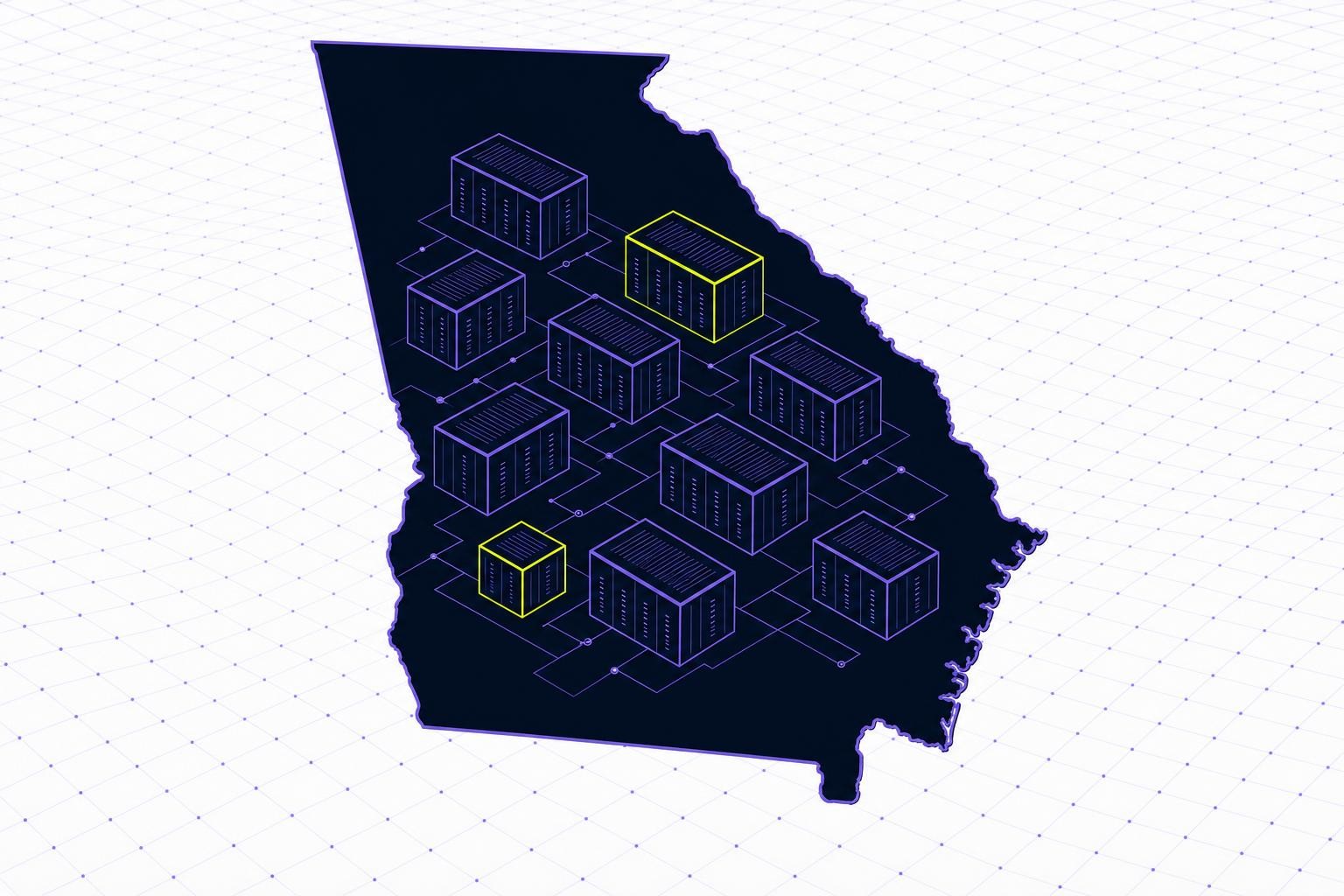
The withdrawal of Stillwater Development's 1.25 GW data center application in Lovejoy on 6 August 2026 is the most recent in a string of project retreats across Georgia[1] - but the more consequential story is the regulatory environment that produced it. Across the state, local governments are moving faster than developers anticipated, and the cumulative effect is a siting landscape that looks materially different from the one that existed twelve months ago.
The legislature left a vacuum; counties filled it
Georgia's General Assembly spent its 2026 session debating data center regulation and ended it having done nothing. A statewide moratorium bill - House Bill 1059, the Data Center Impact Assessment and Development Moratorium Act of 2026 - was introduced but never seriously advanced. The Public Service Commission did pass rules it said would shield Georgia Power ratepayers from bearing the cost of generation and transmission built to serve data centers, but no siting framework emerged at the state level.
Into that gap stepped local governments. Since last October, the number of Georgia counties and cities creating a data center ordinance has grown threefold; as of early June 2026, one in five Georgia counties had an ordinance in place or was drafting one, with 34 counties and 23 cities part of a wave of moratoriums or drafted ordinances.
The actions are not uniform. Albany commissioners voted unanimously on 28 July 2026 to halt new data center development for 12 months, with an option to extend by a further six months. Augusta imposed a 49-day pause on new data centers in June 2026 to allow public input. Athens-Clarke County began its own moratorium in December 2025. Bulloch, Decatur, and Monroe counties have also imposed moratoriums, bringing the count of jurisdictions with such positions to at least eleven as of April 2026.
Project withdrawals are accumulating
The Lovejoy withdrawal follows a recognisable pattern. Crow Holdings Development and CHI Acquisitions withdrew their data center application in Fayetteville, Georgia, on 18 March 2026 after the planning commission denied it. A "pop-up" power plant being built without permits to serve a data center near Covington - the first off-grid generator setup of its kind in Georgia - was ordered to stop construction and cited for a breach of state law by the Georgia Environmental Protection Division. At least six proposed projects in Georgia have now been cancelled or withdrawn.
The common thread is community process. Lovejoy's city council noted that the decision followed months of public engagement, with the mayor describing civic participation as a significant aspect of the evaluation.
What the pipeline still looks like
Individual withdrawals have not reversed the overall trajectory. Georgia has emerged as one of the fastest-growing data center markets in the country, anchored by the Atlanta metropolitan region, and today hosts more than 200 facilities statewide. Public records tie roughly 22.7 GW of power demand to Georgia's data center pipeline. The top developers by planned capacity include Meta, Taurus Investment Holdings, Atlas Development, and Amazon Web Services.
EPIcenter faculty at Georgia Tech have noted that data centers supporting AI workloads are projected to consume nearly 10 percent of U.S. electricity by the end of the decade - a figure that gives both sides of the debate their talking points.
What to watch
The next pressure point is whether Georgia's legislature acts in a special session or waits until 2027, leaving local governments to continue improvising. Developers with projects in counties that have not yet adopted ordinances face a narrowing window: the moratorium map is still expanding, and a project that clears site control today may encounter a formal pause before it reaches permitting. The Lovejoy outcome suggests that community opposition, sustained over months, can move faster than a gigawatt-scale development timeline.
The images and texts on this page were created with the help of AI.
Related
Ready-to-build BESS projects lose their premium as Australia's NEM arbitrage spreads collapse 85%
Panellists at the Battery Asset Management Summit Australia 2026 said the venture-capital-style returns that once rewarded ready-to-build BESS projects have disappeared as NEM price spreads fell 85% in a year.
10 Sept 2026UK government opens three-month consultation on AI for clean energy, backed by 34-recommendation network review
DESNZ published its Vision for an AI-enabled clean energy system on 8 September, opening a call for evidence that closes 6 November and will feed into the UK's first AI for Clean Energy Strategy.
10 Sept 2026Heatwaves expose a three-layer risk for wind operators: resource, hardware, and people
Extreme heat cuts wind output, stresses nacelle components, and grounds maintenance crews - all at once. A look at how bad the summer of 2026 has been, and what the trend means for grid reliability.
10 Sept 2026