Fuyao Group confirms mass-production capability for solar sunroof glass as commercialization advances
Fuyao Group, the world's largest automotive glass maker, has confirmed it can manufacture solar sunroof glass at scale, embedding PV cells in laminated glass to power auxiliary vehicle loads.
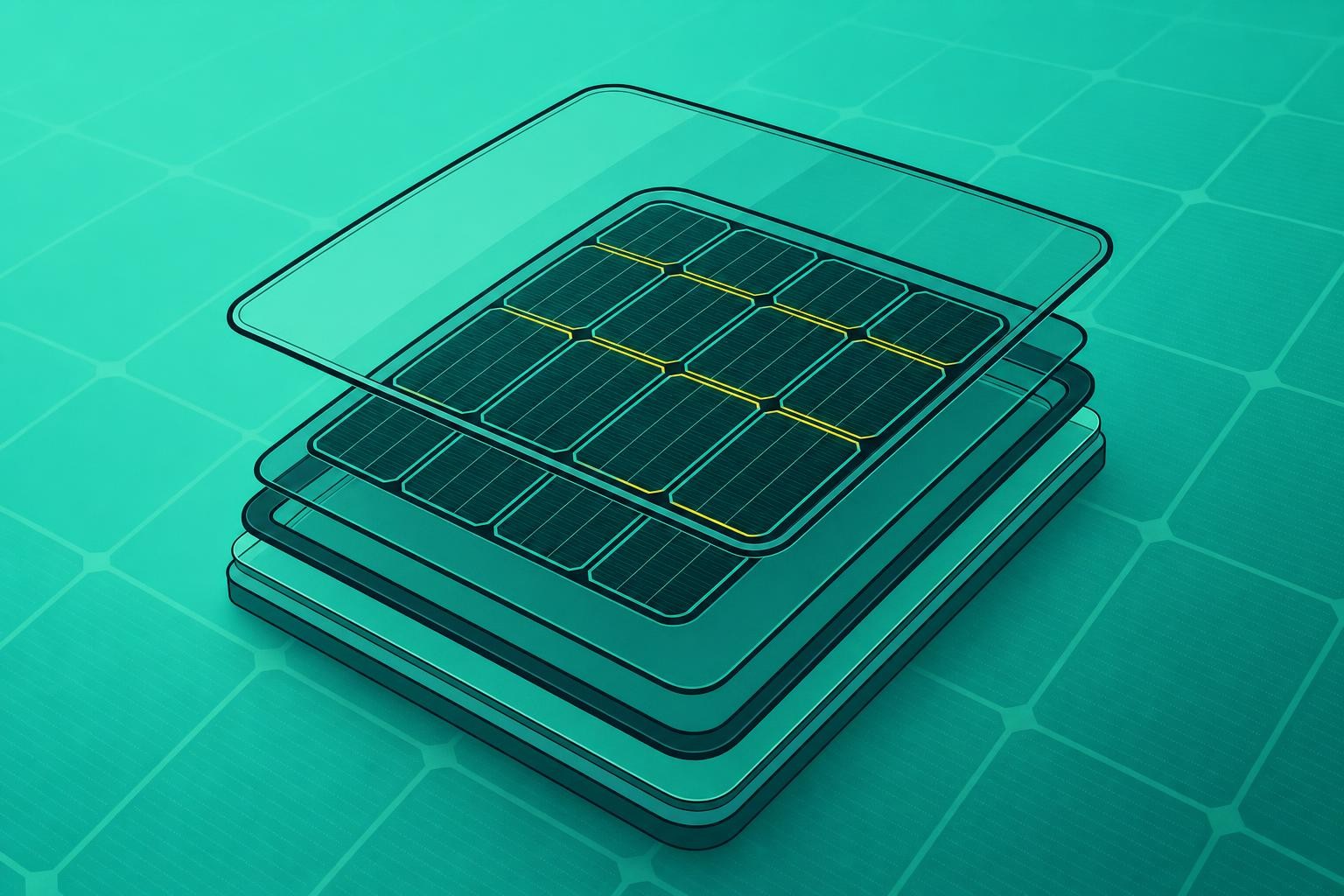
Fuyao Group, the world's largest automotive glass manufacturer, confirmed on 19 August 2026 that it has developed solar sunroof glass incorporating photovoltaic cells and has the capability to manufacture the product at scale[1]. The disclosure follows months of Chinese automotive media reports linking the technology to BYD vehicles, but it is Fuyao's own confirmation - not a joint announcement - that marks the clearest signal yet that vehicle-integrated PV is moving toward volume production.
What the product does
The system embeds solar cells within laminated automotive glass, converting sunlight into electricity for auxiliary vehicle loads[1]. Fuyao describes it as a "solar sunroof" rather than a full-roof photovoltaic system - a distinction that matters for how the output is used. According to the company's official product information, the electricity powers onboard electrical equipment rather than contributing directly to drivetrain propulsion[1].
The technology is not new to Fuyao. In May 2024, the company told investors it had achieved mass-production capability for solar sunroof glass and was already supplying the product for vehicle programs where customers required it[1]. The latest disclosures therefore signal progress toward broader commercialization rather than a technology breakthrough.
Unverified figures and a silent BYD
Chinese automotive media reports circulating since February have attached specific numbers to the product:
- A claimed peak output of 720 W[1]
- A conversion efficiency of 23.18%, based on heterojunction (HJT) solar cell technology[1]
- An optional price of CNY 8,000 ($1,190) for fitment on BYD Han and Tang models[1]
None of those figures have been confirmed by either company. During a March 2026 investor briefing, Fuyao declined to identify its customers or disclose pricing, describing both as commercially confidential[1]. BYD has published no joint announcement.
HJT cells combine crystalline and amorphous silicon layers and carry a lower temperature coefficient than conventional silicon cells - a relevant property for a surface that heats up inside a parked car. The 23.18% efficiency figure, if accurate, would sit within the range achievable with current HJT technology but would be at the high end for a laminated glass application.
Production capacity and the VIPV ceiling
Fuyao's factories in Fuqing Yangxia and Hefei each reached production capacity of 3 million sets of automotive glass by the end of 2025 and were ramping up further in 2026[1]. The company has not disclosed what share of that capacity, if any, is allocated to solar sunroofs.
The structural constraint on vehicle-integrated PV is physics, not manufacturing. The limited surface area of a passenger car roof means VIPV cannot substitute for conventional EV charging[1]. Its practical role is narrower: supplying low-power auxiliary loads while a vehicle is parked, reducing battery drain and supporting ventilation and standby functions. That is a real but bounded value proposition, and it is the one Fuyao appears to be selling.
The VIPV market remains small in absolute terms - one market research estimate put the global figure at around $115 million in 2024 - but the entry of a manufacturer with Fuyao's scale and existing OEM relationships changes the supply-side picture. Whether the BYD link is confirmed, and at what volume, is the next disclosure to watch.
The images and texts on this page were created with the help of AI.
Related
Ready-to-build BESS projects lose their premium as Australia's NEM arbitrage spreads collapse 85%
Panellists at the Battery Asset Management Summit Australia 2026 said the venture-capital-style returns that once rewarded ready-to-build BESS projects have disappeared as NEM price spreads fell 85% in a year.
10 Sept 2026UK government opens three-month consultation on AI for clean energy, backed by 34-recommendation network review
DESNZ published its Vision for an AI-enabled clean energy system on 8 September, opening a call for evidence that closes 6 November and will feed into the UK's first AI for Clean Energy Strategy.
10 Sept 2026Heatwaves expose a three-layer risk for wind operators: resource, hardware, and people
Extreme heat cuts wind output, stresses nacelle components, and grounds maintenance crews - all at once. A look at how bad the summer of 2026 has been, and what the trend means for grid reliability.
10 Sept 2026