Evergy signs 3 GW of large-load agreements and files a 5 GW generation plan to match
Evergy has executed electric service agreements covering 3 GW of large-load demand and filed IRPs calling for more than 5 GW of new generation through 2032, with 1-2 GW more in advanced talks.
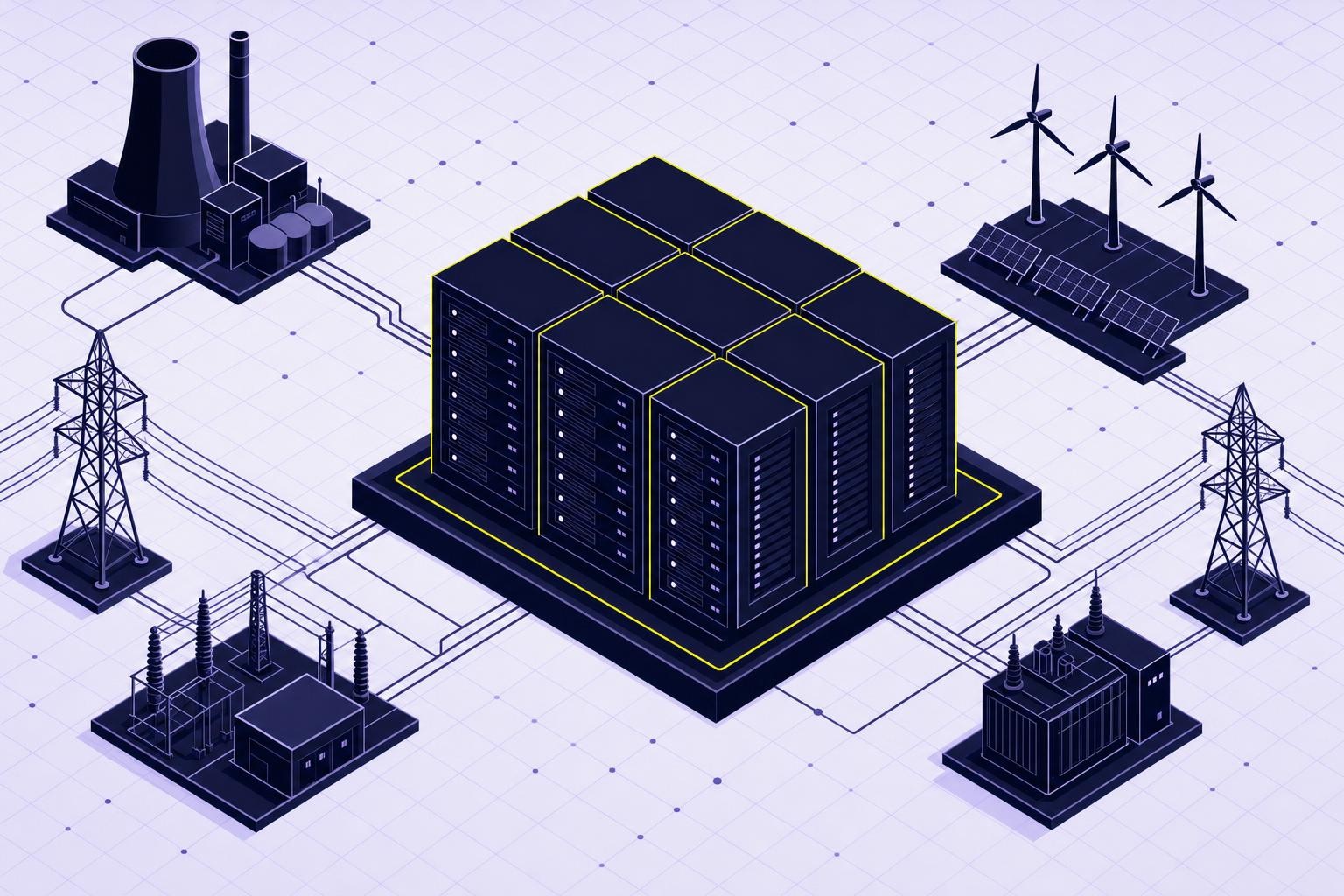
Evergy has executed electric service agreements covering 3 GW of large-load demand - 2.5 GW under its large-load power service tariff across five data center customers, plus roughly 500 MW of smaller loads outside the tariff - and filed integrated resource plans in Kansas and Missouri calling for more than 5 GW of new generation through 2032[1]. CEO David Campbell disclosed the figures on the company's Q2 2026 earnings call on 7 August 2026.
What has been signed
Digital Realty was the fifth and final customer to execute an electric service agreement under Evergy's large-load tariff, bringing the data-center-only tranche to approximately 2.5 GW of steady-state peak demand[1]. The signed agreements carry minimum monthly billing commitments spanning 16 to 17 years, whether or not the contracted capacity is fully utilised[1].
The 3 GW total includes:
- Projects already in operation, progressing toward a steady-state of 1.3 GW
- 1.7 GW of additional projects with executed ESAs but not yet at full load
- Roughly 500 MW of large customers served outside the formal large-load tariff
Campbell said Evergy is in "advanced discussions" with customers representing another 1 to 2 GW[1], and the company is "highly confident" it will execute at least one more ESA before the end of 2026. The broader prospect queue exceeds 10 GW.
The generation plan
The 2026 IRPs filed in both states set out a preferred resource portfolio of more than 5 GW of additions through 2032. The mix is weighted heavily toward firm capacity:
- Approximately 3.9 GW of natural gas
- Close to 800 MW of solar
- 450 MW of battery storage
That build-out sits outside Evergy's existing $21.6 billion five-year capital plan and is expected to add roughly $1 billion of incremental capital, lifting the projected rate base compound annual growth rate to approximately 12%. Campbell was explicit that any load beyond the 3 GW already signed will require further incremental generation investment and additional capex on top of that.
Load growth and rate implications
The signed agreements support a revised retail load growth forecast of 7% to 8% annually through 2030 - up from a prior estimate of 6% - driven almost entirely by data center and industrial demand. Q2 2026 adjusted earnings per share came in at $0.88, up from $0.82 a year earlier, with management attributing roughly $0.10 per share of quarterly benefit to data center and Panasonic-driven load.
Missouri West customers may face above-inflation rate increases over the next five years as new generation assets are built and rolled into rates. Most residential customers elsewhere are expected to see increases at or below inflation, according to management.
What to watch
The next milestone is a third-quarter earnings call in November 2026, when Evergy has said it expects to provide further detail on any additional ESA executed in the interim. The more consequential question is whether the 1 to 2 GW of customers in advanced discussions convert to signed agreements - each gigawatt of incremental load triggers a fresh round of generation procurement and capex revision. Regulators in Kansas and Missouri will also need to approve the IRP preferred plans before construction can begin on the bulk of the 3.9 GW gas programme.
The images and texts on this page were created with the help of AI.
Related
Ready-to-build BESS projects lose their premium as Australia's NEM arbitrage spreads collapse 85%
Panellists at the Battery Asset Management Summit Australia 2026 said the venture-capital-style returns that once rewarded ready-to-build BESS projects have disappeared as NEM price spreads fell 85% in a year.
10 Sept 2026UK government opens three-month consultation on AI for clean energy, backed by 34-recommendation network review
DESNZ published its Vision for an AI-enabled clean energy system on 8 September, opening a call for evidence that closes 6 November and will feed into the UK's first AI for Clean Energy Strategy.
10 Sept 2026Heatwaves expose a three-layer risk for wind operators: resource, hardware, and people
Extreme heat cuts wind output, stresses nacelle components, and grounds maintenance crews - all at once. A look at how bad the summer of 2026 has been, and what the trend means for grid reliability.
10 Sept 2026