DTE ties a two-year rate freeze to the Oracle data center coming online by end of 2027
DTE Energy's proposed electric rate pause is contingent on its 1.4 GW Oracle facility in Saline Township beginning operations on schedule - and on a steady 7.4 GW pipeline holding together.
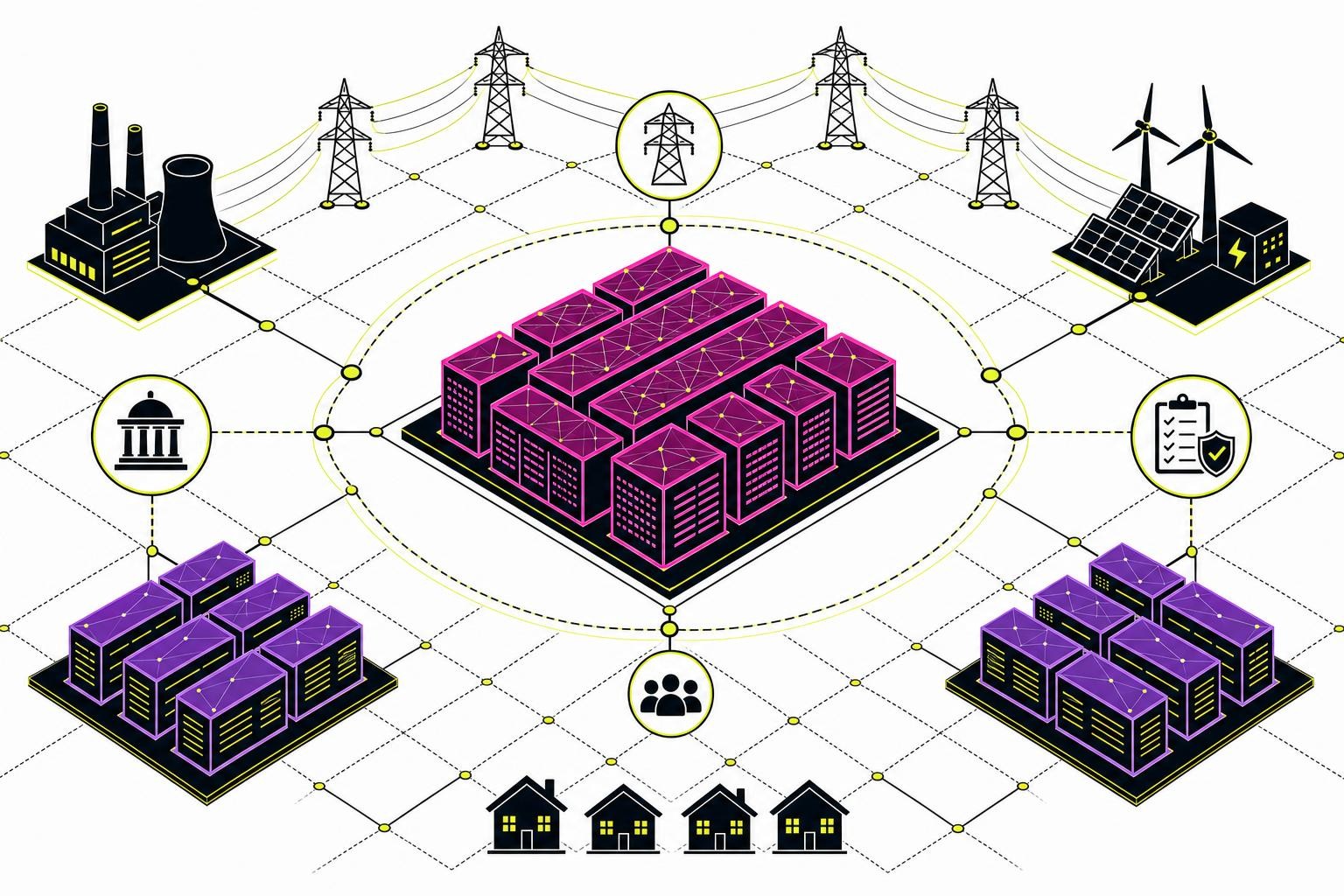
On 28 July 2026, DTE Energy told analysts it would refrain from filing another electric rate request until at least 2028 - but only if the 1.4 GW Oracle data center in Saline Township, Michigan, comes online as planned by the end of 2027 and the company receives other regulatory approvals[1]. The conditional pledge, made during the utility's second-quarter earnings call, links retail affordability directly to the execution of its largest-ever commercial load agreement.
The rate-freeze mechanism
DTE's proposed two-year rate pause is contingent on the Oracle facility beginning operations by 31 December 2027 and on a "constructive" outcome in the utility's current rate case. "As long as the first data center project DTE is supporting comes online as planned by the end of 2027 and the company receives other regulatory approvals, DTE plans to refrain from filing another electric rate request until at least 2028," the utility said in its 28 July earnings announcement.
The backdrop is a pending rate increase. DTE has proposed a $474.3 million rate increase that would add $9.39 monthly to residential bills. The freeze offer is therefore conditional relief, not a rollback. Michigan Attorney General Dana Nessel has challenged the Oracle contract approval in the Michigan Court of Appeals, arguing the Michigan Public Service Commission was only authorised to grant ex parte approval without hearings when it would not increase the cost of service to customers.
Where the pipeline stands
DTE has 2.4 GW of executed data-center agreements, including Oracle's 1.4 GW project under construction and Google's 1 GW project awaiting regulatory approval. The Google contract has been submitted to the Michigan Public Service Commission, with a decision targeted for September 2026. Oracle is expected to deliver $300 million in annual customer benefits once fully ramped, while Google will generate roughly $1.7 billion over its contract life.
Beyond those two executed deals, DTE has a further 2 GW in advanced discussions, with agreements targeted by the end of 2026, and an additional pipeline of 3-4 GW[1]. That total - up to 7.4 GW across all stages - is unchanged from the first-quarter earnings report[1], a signal that the pipeline has neither grown nor materially eroded since February.
Capital plan and grid investment
DTE's 2026-2030 capital investment plan for its electric operations remained unchanged from the first quarter at $30 billion, though it represents a 22% increase over the 2025-2029 prior plan of $24 billion. The $6 billion increase is "primarily driven by the Oracle data center project and other customer-focused initiatives," according to DTE's earnings presentation.
The company invested over $2.6 billion in utilities in the first half of 2026, including $900 million for electric reliability and a $1.6 billion battery storage initiative. The Oracle agreement has received regulatory approval and construction has begun, with demand expected to ramp in the 2027-2028 timeframe; the project alone will require nearly $2 billion in capital investment for energy storage and supporting infrastructure.
DTE expects to file its next Integrated Resource Plan in the third quarter of 2026, with the base case including the Oracle and Google agreements, while a higher-demand case will account for DTE's full data-center pipeline.
What to watch
The September MPSC decision on the Google contract is the next hard date: approval would add 1 GW to the confirmed load base and, by DTE's own account, push long-term EPS growth "solidly to eight" percent. The Michigan Court of Appeals challenge to the Oracle contract approval remains a live risk to the rate-freeze timeline. If the Oracle facility slips past the 2027 deadline - or if regulators impose conditions that DTE does not consider "constructive" - the freeze offer lapses and another rate filing becomes likely before 2028.
The images and texts on this page were created with the help of AI.
Related
Ready-to-build BESS projects lose their premium as Australia's NEM arbitrage spreads collapse 85%
Panellists at the Battery Asset Management Summit Australia 2026 said the venture-capital-style returns that once rewarded ready-to-build BESS projects have disappeared as NEM price spreads fell 85% in a year.
10 Sept 2026UK government opens three-month consultation on AI for clean energy, backed by 34-recommendation network review
DESNZ published its Vision for an AI-enabled clean energy system on 8 September, opening a call for evidence that closes 6 November and will feed into the UK's first AI for Clean Energy Strategy.
10 Sept 2026Heatwaves expose a three-layer risk for wind operators: resource, hardware, and people
Extreme heat cuts wind output, stresses nacelle components, and grounds maintenance crews - all at once. A look at how bad the summer of 2026 has been, and what the trend means for grid reliability.
10 Sept 2026