Darłowo port completes two KPO-backed upgrades to serve Poland's Baltic offshore wind fleet
Two KPO-funded projects at Poland's Darłowo port - a rebuilt breakwater and expanded quays - position the Baltic Sea facility as an O&M base for the country's first offshore wind farms.
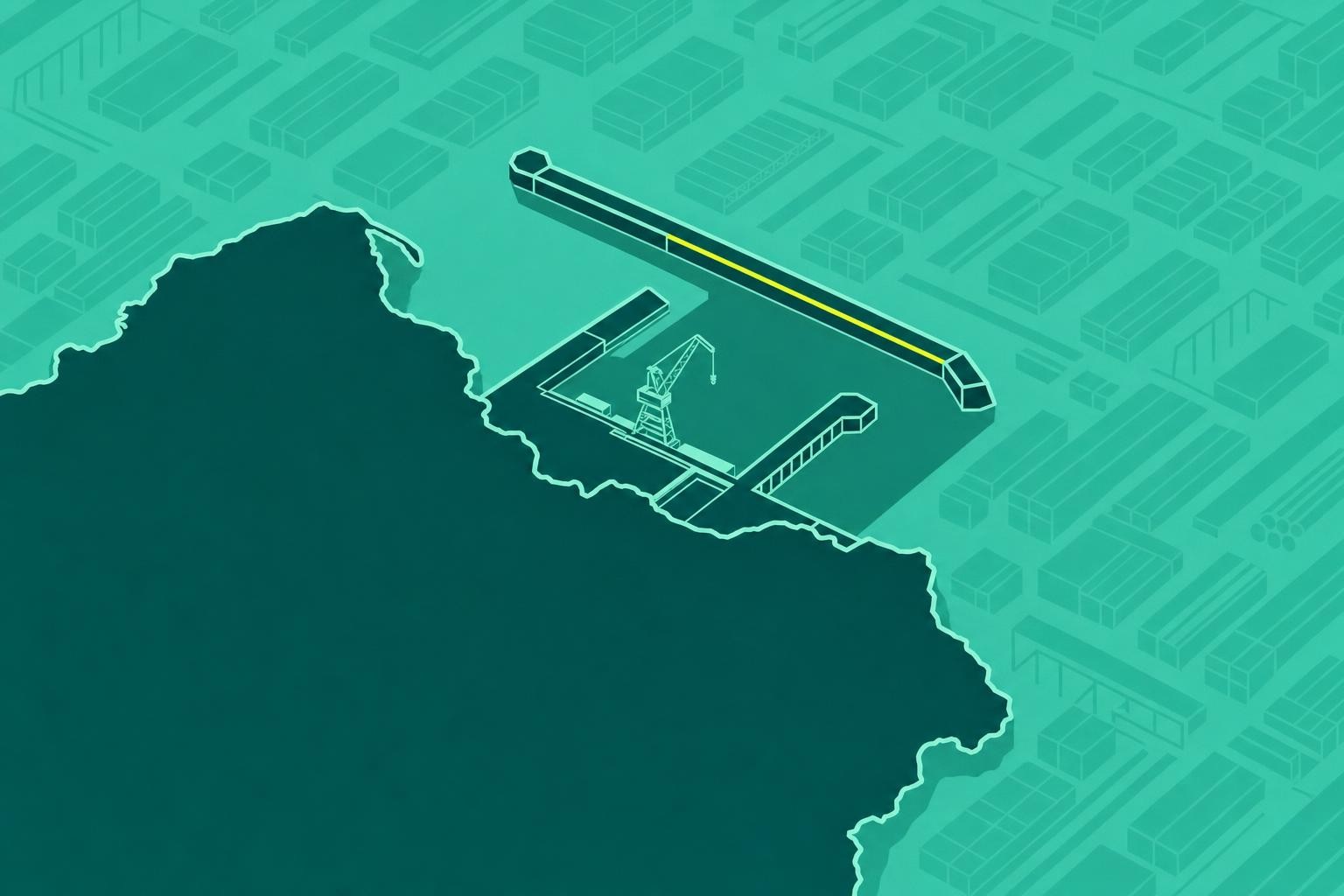
The Port of Darłowo on Poland's Baltic coast has completed two infrastructure projects backed by the EU's National Recovery and Resilience Plan (KPO), repositioning the facility as an operation-and-maintenance base for the country's emerging offshore wind fleet[1]. The upgrades - one contracted through the Maritime Office in Szczecin, the other through the City of Darłowo - together add roughly 8 ha of usable investment land and nearly 700 m of new or modernised quay capacity to the port.
What was built
The larger of the two works was carried out by contractor Korporacja Budowlana DORACO under a contract with the Maritime Office in Szczecin. Using close to PLN 130 million in KPO funding, the Maritime Office rebuilt the western breakwater - approximately 357 m in length - and constructed a new 100 m groyne designed to reduce wave action inside the outer harbour. The scope also included lighting and associated infrastructure.
The second project was funded directly through the municipality. The City of Darłowo received PLN 35 million from KPO to modernise close to 400 m of existing quays and build a new 299 m cargo quay. The port gained 8 ha of investment-ready land as a result.
The two workstreams address different constraints:
- The breakwater and groyne improve navigation safety and reduce wave exposure for larger vessels entering the port.
- The quay modernisation and new cargo berth expand the port's capacity to handle the supply and maintenance logistics that offshore wind O&M requires.
The combined contract value of the two Darłowo works is PLN 123 million, with completion targeted by end-2026.[1]
Where Darłowo fits in the wider supply chain
Szczecin and Świnoujście already play a significant role in the offshore sector; Darłowo, at the other end of the West Pomeranian region, is intended to complement the regional supply chain for both the construction and operational phases of wind farm development.
Poland's KPO allocated more than PLN 1.5 billion for Baltic Sea offshore port infrastructure in total, with the largest single item being a new installation terminal in Gdańsk. Funds were also directed to port infrastructure and breakwater works at Łeba, Ustka, and Darłowo.
Darłowo was the last of the three service-port sites - after Ustka and Łeba - to be added to the KPO programme, but it is completing its works first.
The projects Darłowo is built to serve
Poland's first offshore wind farm, Baltic Power, with a capacity of 1.2 GW, is expected to go online in 2026. The joint venture between Orlen and Canada's Northland Power is installing 76 Vestas V236-15.0 MW turbines, each rated at 15 MW. The service port at Łeba, which completed construction in February 2025, serves the Baltic Power project.
Further back in the pipeline, a larger installation terminal in Gdańsk - a 21-hectare facility with an 800 m transhipment quay and 17.5 m water depth - is planned for completion in Q3 2026 and is being prepared primarily to support the Baltica 2 and 3 wind farms, being developed by PGE and Ørsted.
Poland has set a target of 5.9 GW of offshore wind installed capacity by 2030 and 8-11 GW by 2040. A detailed analysis of the Baltic Sea's potential puts the long-run ceiling at 33 GW, with an expected average annual energy yield of 130 TWh.
What to watch
The Darłowo works are timed to KPO spending deadlines, and the port's role will depend on which Phase II projects - currently totalling around 2.5 GW in the pipeline - secure contracts and move to construction. The main developers active in the Polish offshore market include Polenergia, Equinor, PGE, Ørsted, RWE, Ocean Winds, Northland Power, Iberdrola, and Orlen. Whether Darłowo attracts long-term O&M agreements from any of those developers will be the test of whether the port infrastructure investment translates into sustained operational activity.
The images and texts on this page were created with the help of AI.
Related
Ready-to-build BESS projects lose their premium as Australia's NEM arbitrage spreads collapse 85%
Panellists at the Battery Asset Management Summit Australia 2026 said the venture-capital-style returns that once rewarded ready-to-build BESS projects have disappeared as NEM price spreads fell 85% in a year.
10 Sept 2026UK government opens three-month consultation on AI for clean energy, backed by 34-recommendation network review
DESNZ published its Vision for an AI-enabled clean energy system on 8 September, opening a call for evidence that closes 6 November and will feed into the UK's first AI for Clean Energy Strategy.
10 Sept 2026Heatwaves expose a three-layer risk for wind operators: resource, hardware, and people
Extreme heat cuts wind output, stresses nacelle components, and grounds maintenance crews - all at once. A look at how bad the summer of 2026 has been, and what the trend means for grid reliability.
10 Sept 2026