The Daily Baseload Brief
Clean energy beats fossil fuels on cost for US demand growth, the FCC's foreign inverter ban creates supply-chain uncertainty, and US solar faces a domestic steel crunch. Power sector digest for 5 August 2026.
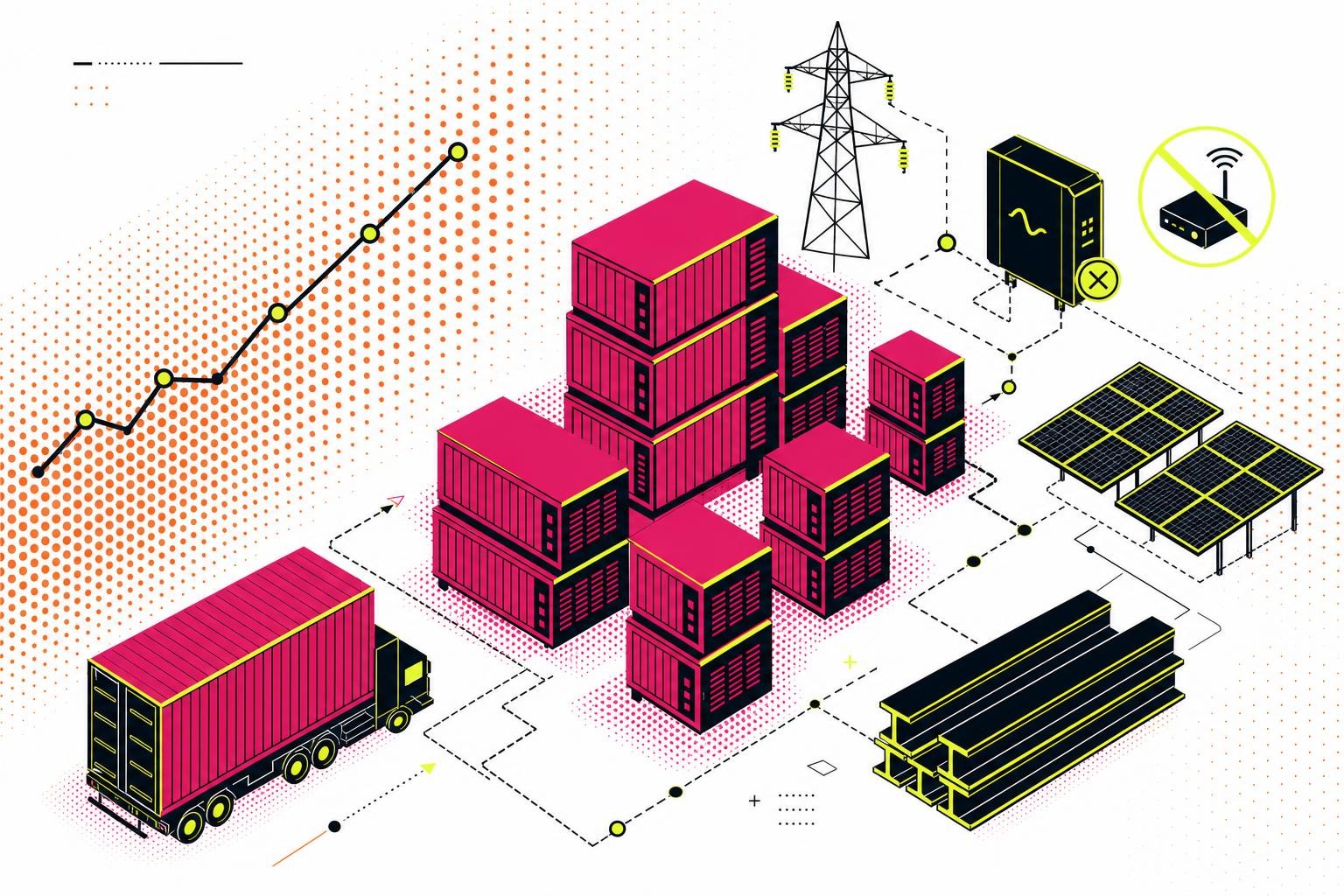
A new report finds that meeting projected US electricity demand growth with clean energy would cost $5 billion less per year than a fossil-fuel pathway - the sharpest cost-comparison framing yet as the grid-capacity debate intensifies in Washington.
Clean energy is the cheaper path to 2030 demand. Energy Innovation published "Let the Sun In" on 29 June 2026, and it landed in trade coverage on 4 August. The modelling finds that meeting forecast US electricity demand growth with fossil fuels would add $29.7 billion annually to customer bills by 2030, while a clean energy build-out saves $5 billion per year against that baseline[1]. The demand backdrop: US peak electricity demand is projected to rise 24% by 2030, driven by data centres, industrial load, and electrification, according to Vote Solar[1]. The report comes as federal policy has been pushing in the opposite direction - forcing ageing coal plants to stay online and stalling planned wind and solar projects.
FCC's foreign inverter ban leaves the new-model pipeline frozen. On 28 July 2026, the Federal Communications Commission added foreign-produced power inverters to its Covered List on national security grounds, executing an immediate ban on equipment authorisations for new, unapproved foreign models. The restriction covers networked inverters - the hardware that connects utility-scale solar and battery storage to the AC grid. Existing models that already hold FCC authorisation remain legal to import, sell, and install, so most active builds face little immediate disruption. The longer-term problem is structural: around 80% of solar inverters in the US were imported, primarily from China and Germany, according to a 2024 Idaho National Laboratory analysis cited in the FCC determination. Manufacturers seeking approval for new models must now open supply chains and firmware architecture to federal auditors before the FCC will process their applications.
US solar's steel supply chain is tightening ahead of a record build year. Developers plan to add 43.4 GW of utility-scale solar capacity in 2026, roughly 60% more than was installed in 2025. The domestic supply chain for piles, torque tubes, tracker components, and galvanised structural products is not expanding at the same pace. Rising steel costs, strict domestic-content thresholds - now at 50% for manufactured products in 2026, rising to 55% in 2027 - and fragmented scrap recycling are turning steel procurement into a scheduling and compliance risk for projects racing to meet federal deadlines. The bottleneck compounds the inverter uncertainty: two of the most capital-intensive components in a utility-scale solar BOM are simultaneously under supply pressure.
Indonesia moves on 100 GW solar programme. The government announced a groundbreaking ceremony for the first phase of its flagship 100 GW solar initiative, with Minister of Energy and Mineral Resources Bahlil Lahadalia making the announcement in recent days. No capacity figure for the first phase has been confirmed in primary documents reviewed for this brief.
The images and texts on this page were created with the help of AI.
Related
Ready-to-build BESS projects lose their premium as Australia's NEM arbitrage spreads collapse 85%
Panellists at the Battery Asset Management Summit Australia 2026 said the venture-capital-style returns that once rewarded ready-to-build BESS projects have disappeared as NEM price spreads fell 85% in a year.
10 Sept 2026UK government opens three-month consultation on AI for clean energy, backed by 34-recommendation network review
DESNZ published its Vision for an AI-enabled clean energy system on 8 September, opening a call for evidence that closes 6 November and will feed into the UK's first AI for Clean Energy Strategy.
10 Sept 2026Heatwaves expose a three-layer risk for wind operators: resource, hardware, and people
Extreme heat cuts wind output, stresses nacelle components, and grounds maintenance crews - all at once. A look at how bad the summer of 2026 has been, and what the trend means for grid reliability.
10 Sept 2026