The Daily Baseload Brief
Antora Energy closes $550M Series C for thermal batteries; Pakistan's distributed solar hits 27% of national generation; US peak demand projected up 24% by 2030. Power sector digest for 17 August 2026.
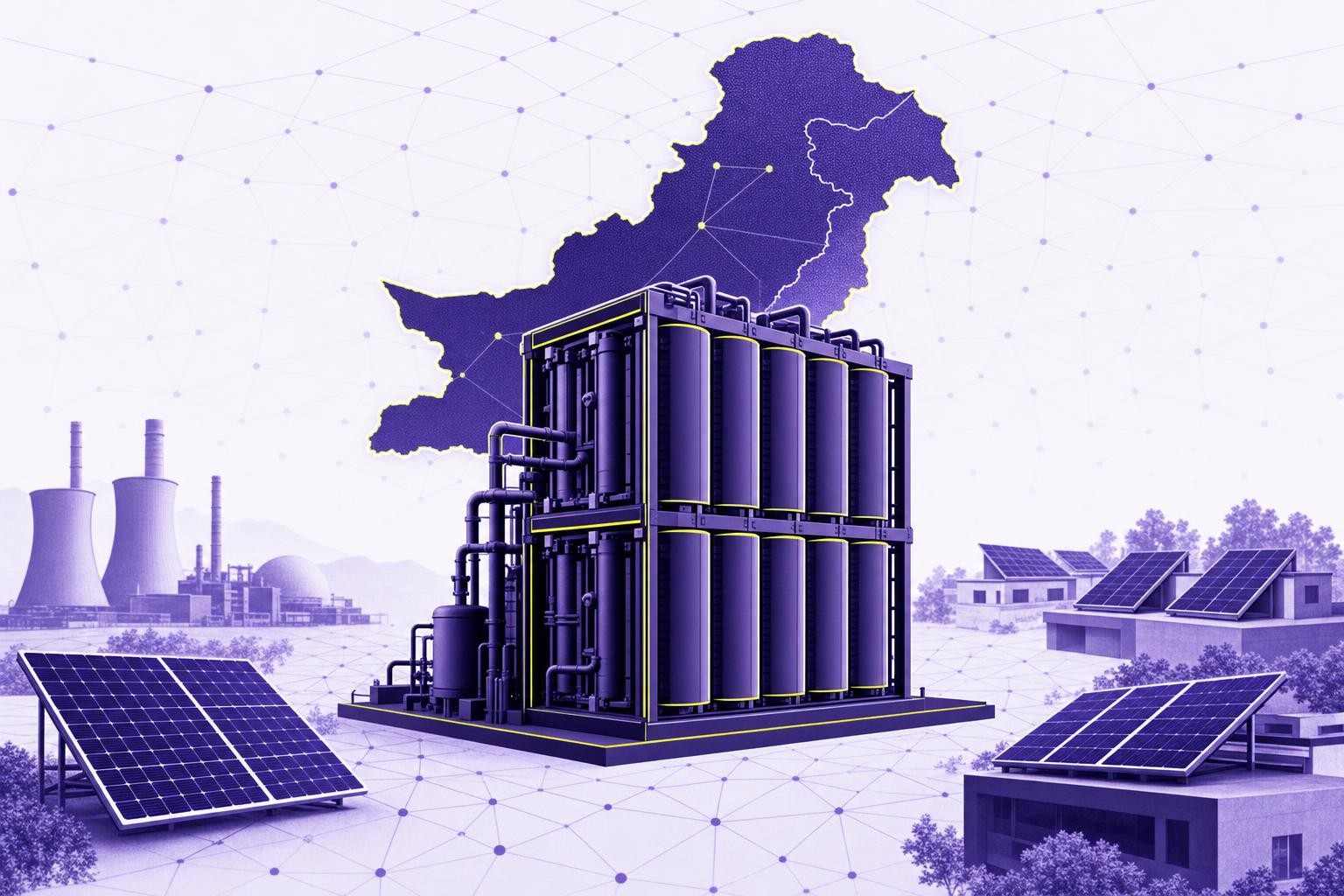
Antora Energy closed a $550 million Series C on 30 July 2026, one of the largest cleantech raises of the year, to fund a second US thermal battery factory and accelerate deployment of its solid-carbon heat-storage technology targeting data centers and heavy industry[2].
The round was co-led by G2 Venture Partners and Eclipse, with participation from Breakthrough Energy Ventures and Decarbonization Partners, a BlackRock-Temasek joint venture, bringing Antora's total corporate and project financing to around $1 billion. The company's reference project - a 50 MW / 5 GWh thermal battery system at POET's Big Stone City bioprocessing facility in South Dakota - went from construction start to commissioning in under 12 months[2].
Pakistan's distributed solar sector supplied roughly 27% of the country's total electricity generation in fiscal year 2025, according to analysis by the Pakistan Solar Association published 4 August 2026, with approximately 51 TWh of behind-the-meter output absent from official grid-side statistics[3]. The association warns that the invisible generation is already distorting system planning, with a deepening midday demand trough the clearest signal that network operators are working with incomplete data[3].
Georgia Power completed the 49.5 MW / 198 MWh Moody Battery Facility near Valdosta, Georgia, on 27 July 2026, co-located with the existing Moody solar site adjacent to Moody Air Force Base[2]. The project was delivered ahead of schedule and is one of several BESS projects the utility is bringing online as part of a broader storage build-out across the state.
US peak electricity demand is projected to rise 24% by 2030, according to Vote Solar, driven by data centers, industrial load growth, and electrification[1]. A concurrent report from Energy and Environment Innovation finds that meeting that demand with clean energy would cost less than a fossil-fuel pathway - a finding that sits in direct tension with current federal policy direction toward gas[1].
Data centers continue to concentrate in Texas, with the state's combination of available land, deregulated power markets, and permissive zoning drawing the bulk of new hyperscaler site selection activity in the US[2].
The images and texts on this page were created with the help of AI.
Related
Ready-to-build BESS projects lose their premium as Australia's NEM arbitrage spreads collapse 85%
Panellists at the Battery Asset Management Summit Australia 2026 said the venture-capital-style returns that once rewarded ready-to-build BESS projects have disappeared as NEM price spreads fell 85% in a year.
10 Sept 2026UK government opens three-month consultation on AI for clean energy, backed by 34-recommendation network review
DESNZ published its Vision for an AI-enabled clean energy system on 8 September, opening a call for evidence that closes 6 November and will feed into the UK's first AI for Clean Energy Strategy.
10 Sept 2026Heatwaves expose a three-layer risk for wind operators: resource, hardware, and people
Extreme heat cuts wind output, stresses nacelle components, and grounds maintenance crews - all at once. A look at how bad the summer of 2026 has been, and what the trend means for grid reliability.
10 Sept 2026